By Annmarie Geddes Baribeau
 Consumer advocates have been cautioning that some automobile insurance companies are using “price optimization” to collect more money from loyal customers. Whether your insurance company is engaging in price optimization or not, the good news is it does not have to affect you.
By shopping around, you can make sure you are getting the right auto insurance coverage at the most reasonable cost. It’s a good idea because auto insurance prices are increasing just like virtually everything else. According to the Insurance Information Institute (III), the average cost for car insurance is projected to have risen 2.6 percent in 2013 to $836 and 2.9 percent in 2014 to $860.
People should shop around every two years, said J.D. Howard, executive director of Insurance Consumer Advocate Network, LLC. “Every two years it seems the marketplace gets shaken up so shop every two years to verify that you have reason to be happy with the company you already have,” he added.
It is wise to review your coverage at renewal time to make sure your insurance needs haven’t changed, said Robert Hartwig, president of the III, which also publishes a free booklet on buying car insurance at.
Double-checking coverage when you move to a new city or state also ensures your current insurer remains the best choice, said Professor Robert E. Hoyt, Moore Chair and Professor of Risk Management and Insurance at the University of Georgia’s Terry College of Business.
While comparing auto insurance policies and prices might seem intimidating, knowing what kind of coverage you need, being aware of applicable discounts and searching some helpful websites might even make buying auto insurance kind of fun!
When it is time to shop around for car insurance, consider the following steps:
- Figure out how much insurance you legally need. States require different types and minimum levels of auto insurance. To learn your state’s requirements, visit the National Association of Insurance Commissioners’ (NAIC) website and choose your state of residence, Hartwig said.
- Determine how much insurance you need for full protection. The whole point of auto insurance is it covers costs from accidents that most consumers cannot pay themselves. Buy liability limits twice the value of your net worth (assets),” Howard said.
How much? “I typically recommend $100,000 for liability coverage to take care of injuries sustained due to your negligence for one injured person, $300,000 for two or more people and $50,000 for property damage,” he added. For “combined single limit” coverage, he advises adding up those totals, which is $450,000.
If you have higher levels of wealth to protect, Hoyt recommends umbrella coverage of at least $1 million. “Worth noting is the fact that a personal umbrella policy, if in force for $1 million, would pay the additional costs that are not covered under the auto policy,” he said.
- Consider your need for other coverages.
Howard also advises purchasing uninsured motorist coverage, whether it is state required or not, so you are covered if the other driver lacks car insurance or does not have enough insurance. “You need to make sure your uninsured motor coverage equals your liability coverage,” Howard said.
“Uninsured motorist coverage is often overlooked, and the difference in premium is so small it should be a no brainer. Just do it,” he added. He also recommends getting “auto med-pay coverage,” which reimburses medical expenses for treatment of any injuries sustained while in – on – entering – or alighting from the insured vehicle for up to $10,000 of expense. It does not have a deductible.
Also consider your need for collision insurance, which covers vehicle damage and comprehensive coverage, which will address costs from theft, fire, falling objects, explosions or other unexpected problems, Hartwig said.
If you have an outstanding loan, Hoyt said, the lender will require collision and comprehensive coverage because it protects car loan collateral.
However, if you have an older car, consider dropping collision and/or comprehensive coverage, Hartwig said.
“If your car is worth less than 10 times the premium, purchasing the coverage may not be cost effective, Hartwig added. To find the value of your car, ask auto dealers and banks or check out Kelley’s Blue Book (www.kbb.com).
He also recommends purchasing towing coverage if you are not already a member of the American Automobile Association (AAA) and buying rental reimbursement coverage. Check your state insurance department website, which will likely offer price comparisons and insurer consumer complaints, Howard said.
- Figure out the deductible amount you can afford. Two of the most common car insurance purchasing mistakes are purchasing both deductibles and limits that are too low, Hoyt said.
“A consumer would be best served to move their collision deductible from $250 up to $500 or $1,000,” he added. “The premium reduction associated with a higher deductible will often pay for the increased cost of the higher liability limits and will protect the consumer from potential financial ruin,” Hoyt said.
- Prepare to shop. After sorting how exactly how much insurance you need, have your current insurance policy, drivers’ license and vehicle registration on hand, Hartwig said.
- Start shopping. Ask friends and relatives for their recommendations or body shops that work with insurers, Hartwig said. Visit websites or contact insurance companies or insurance agents and get at least three price quotes, he added. You should ask them to quote the same coverage that you currently have,” Hoyt said. “That way you can compare costs on an apples to apples basis.”
- Ask about money-saving discounts. Depending on the insurer, discounts can apply for buying multiple coverages (combining auto coverage with home, renters or umbrella policies); multiple vehicles, low use (mileage); driving record, antitheft devices; defensive driving courses; a good credit record or good grades (for students), Hartwig said.
- Don’t shop by price alone. Make sure your insurer is solid financially. Rates from the A.M. Best Company should be at least B+, Hartwig said. A rating from Standard & Poor’s should be at least BBB, he added.
Check your state insurance department website, which will likely offer price comparisons and insurer consumer complaints, Howard said. Saving a few bucks, Hoyt said, “by moving to an insurer that is not good at paying claims is ‘penny wise and pound foolish.’”
Further, a quality insurer should offer a toll-free phone number for questions. Choose an agent or company representative that takes the time to answer your questions, Hartwig said. And when you get a quote, be sure to confirm the price and request quote confirmation via fax or e-mail.
By Aaron Crowe
 Buyers of electric vehicles have always paid a premium when compared to their gas counterparts, often due to the high costs of technology and the batteries needed to run them.
That premium for new cars — sometimes as much as $20,000 before a federal tax incentive is taken into account — disappears in three years, with used electric vehicles, or EVs, costing up to $3,000 less than their gas sister models or at least coming close.
Used cars are usually cheaper than new cars. New data from Black Book, a vehicle pricing service, along with data from Kelley Blue Book, show that used EV prices are dropping a lot faster than their gasoline counterparts and that EVs are retaining a lot less of their original value.
EV Leaf retains 26% of original value
For example, a new 2012 Nissan Leaf SV hatchback sells for an MSRP of $36,380, which drops to $28,880 after federal tax incentives for buying a new EV. Its gas counterpart, a new 2012 Nissan Versa SL hatchback, sells for an MSRP of $19,320, or $9,560 less than the EV.
But the EV Leaf sells for $900 less than the gas Versa three years later, for $7,400 for the Leaf vs. $8,300 for the Versa, according to Black Book data from July 15, 2015. That equates to a 26 percent retention rate for the Leaf from its $28,880 price after the tax incentive, while the gas-powered Versa has a better 43 percent retention rate in value after three years.
Here are some other examples of used car prices for 2012 EVs and their gasoline counterparts in July 2015. EVs are listed first, followed by their used price and three-year retention rate. The cheaper car is in bold.
Mitsubishi i-Miev ES 4D hatchback: $5,350, 25%.
Mitsubishi Lancer ES 4D hatchback: $8,450, 43%.
The EV is $3,100 cheaper.
Ford Focus Electric 4D hatchback: $10,250, 31%.
Ford Focus SE 4D hatchback: $9,100, 44%.
The gas car is $1,150 less.
Chevrolet Volt 4D hatchback: $10,500, 32%.
Chevrolet Cruze LT 4D sedan: $9,850, 49%.
The gas car is $650 less. The Volt, it should be noted, is a hybrid that runs on electric and gas power.
EV and hybrid prices dropping
“This premium really doesn’t stick around when you’re selling in the used market,” says Anil Goyal, vice president of automotive valuation and analytics at Black Book.
Not only are pure elective vehicle prices dropping for used cars, but so are hybrids that use gas and electricity, says Sean Foyil, a supervisor for the vehicle evaluations team at Kelley Blue Book, or KBB, another car valuation website.
For 2012-14 cars, the average price drop for an EV so far this year was 28 percent, which is “astronomical,” Foyil says. Hybrid alternative energy vehicles dropped 17.5 percent during the same time, he says.
That compares to gas-only vehicle price drops of 8.7 percent for compact cars, 7.4 percent for midsize gas cars, and a 3.6 percent drop for fullsize vehicles, according to KBB.
How used EV prices drop so low
Why the big drop in used EV prices? Demand is low for a variety of reasons, including:
Low gas prices. New EVs cost an average of $17,000 more than new gas cars, Goyal says. Gasoline prices have dropped since mid-2014 to a national average low of $2.02 a gallon in January 2015, and are now around $2.36 per gallon nationally.
Paying $17,000 more for a new car when gas prices are low would require a steep increase in gas prices to make up for that extra expense, Goyal says.
“Gas prices certainly aren’t helping,” he says. “That’s a primary driving factor.”
Gas-only cars are getting more efficient every year, Foyil says. Even as more types of hybrids come out, gas-only cars still sell more.
“They’re actually taking market share from the hybrids,” he says.
Battery life. “Range anxiety” is a new phrase for EVs. It’s when an EV driver worries that the battery will run out of power before they get to their destination or a charging station.
Range anxiety is becoming less of an issue as better battery technology is introduced. The 2016 Nissan Leaf gets 107 miles on a full charge, compared with about 80 miles on its first model in 2011.
The charge on an EV battery deteriorates over time, Goyal says, as much as 20 percent in five years, which could be enough to turn off used EV buyers.
The higher range still “doesn’t cut it” for many commuters, Foyil says, even though their car may be parked at an office most of the day, where they can recharge and still have plenty of juice to get home.
Until EVs get a range that most people can get comfortable with, range anxiety will exist and there won’t be a strong secondary market for them, he says.
However, range anxiety may be more of a mental roadblock to potential EV buyers, especially if the range fits their needs and driving habits. The average American drives less than 40 miles per day, less than half the range of EVs like the Leaf. With most U.S. households having two or more vehicles, an EV would leave a gas-powered alternative for longer drives.
Short trips are just what Michael Saltzman of Los Angeles has in mind while shopping for an EV, mainly because an electric car now fits in with his driving needs. Saltzman says he’s considering leasing a 2016 Kia Soul EV because he can get about 100 miles on a charge, and it’s enough to get him to his nearby office and to client meetings. He expects to lease because, as he says, “I think a lot will change in the next three years.”
His two children have left for college and his wife has a gas car that they’ll use for long trips. On the rare days when Saltzman needs a car to go further, he’ll exchange cars with her.
Only early adopters want EVs. There isn’t much of a used car market for EVs because the people who most want EVs are early adopters who want their cars new and are willing to pay a premium for them, Foyil says. They don’t want “old” technology, even if it’s only three years old, and don’t want a used EV, he says.
“The people who are willing to buy an electric car are early adopters,” Foyil says, who would rather have a new car than one with 50,000 miles on it.
“People who are paying these premiums are paying these premiums to get a new car,” he says.
For some of these buyers, saying that they’re helping keep the air clean with a zero emission car is enough of an incentive to buy an EV, Foyil says.
“I see EVs as more of a lifestyle factor where it’s not going to affect them,” he says.
This is similar to the “Apple effect,” where each new model is reputed to be so much better and advanced that old ones must be worth less than nothing, says Mike Arman, 69, a car enthusiast for more than 50 years who has owned more than 150 cars and is the director of business development for the city of Oak Hill, Fla. Arman is shopping for a used 2011 or 2012 EV, and says he’s leaning toward buying a used Volt.
Last year’s electric car model may be deemed obsolete by people who want the newest and “best,” he says, though last year’s model still runs just fine.
Lower leasing prices and oversupply. Leasing a new EV can be cheaper than buying, and an oversupply of leased EVs two to three years later can result in lower used EV prices, Goyal says.
The lease price is based on the residual value three years later, Foyil says. With used EV prices dropping so much, Nissan, for example, needs to raise the Leaf lease price enough to make up for that depreciation, he says.
Little choice. Even though there’s an oversupply of used EVs, some consumers may be waiting for more of a choice among electric models. There hasn’t been a major upgrade in less expensive EVs, but one is coming next year, says Joseph Nagle, director of marketing at EverCharge, a builder of EV charging stations.
Other than Tesla, there hasn’t been a major release in the EV market, Nagle says. In 2016 “the mid-range EV market is going to get crowded,” he says. This includes the Leaf and the Volt, and the Chevy Bolt and Tesla Model 3 are set to release in the next few years with 200-mile ranges and a $35,000 price, he says: “This is what most people are waiting to pounce on.”
Of the choices they do have, consumers may be waiting for Tesla to come down in price and are “impressed and intrigued” with its vehicles, Nagle says. The “Tesla effect” creates high demand for Tesla while slowing down the competition, he says.
“People want the brand with the appeal behind it and that happens to be Tesla,” Nagle says.
No tax rebate for used EVs. Used EVs aren’t eligible for the $7,500 federal tax rebate, which quickly gives them less of a pull in that market, Arman says.
“This rebate is only available to the first purchaser, so if an electric car’s list price is $40,000 before the rebate, it is $32,500 after the rebate,” Arman says. “If you were to find a current year used electric car with one mile on it, since it isn’t eligible for the rebate, it is automatically worth $7,500 less than a factory new one.
“That is a very expensive mile, but it works in favor of a used car buyer.”
EVs don’t feel new. Despite the uniqueness of being electric, many EVs aren’t “brand new cars but electrified versions of existing models,” Nagle says.
“Unfortunately this makes them feel slapped together, throw-in type vehicles designed to meet government standards rather than genuine attempts to make great vehicles,” he says. “People have noticed and are steering clear, so to speak, and finding their way toward something designed to be electric from the bottom up.”
By Aaron Crowe
 Speeding can be expensive, as anyone who has been caught by a police officer’s radar gun already knows.
An infraction on a driving record comes with a fine and can lead to an increase in the driver’s auto insurance premium.
In California, driving 5 mph over a 25 mph speed limit can result in a $238 fine, along with one penalty point on a driving record that can cause insurance to go up $538, according to Fixed.com, an app that helps people fight tickets. That’s 776 for one speeding ticket.
Fixed.com and other websites and apps can help drivers get out of speeding, traffic and parking tickets. You start by using something you likely have with you all of the time: a smartphone.
How to dismiss parking tickets
If you get a parking ticket in San Francisco — one of four cities Fixed.com works in — you upload a photo of your car where the ticket was issued and parking ticket experts at Fixed will tell you the chances of dismissal. If they fight the ticket for you and win, you pay them a fee of 35 percent of the fine. You only pay the fee if Fixed wins your case.
Fixed is available in New York City and the California cities of San Francisco, Oakland and Los Angeles. On average it beats 20-30 percent of the tickets it contests, according to its founder, David Hegarty.
Hegarty came up with the idea after paying four parking tickets in San Francisco one morning, then coming out to his car to find two more on his car. He figured out how to contest them collected his evidence and submitted his appeal and won both appeals.
The app prompts for evidence, depending on the violation code. For example, a “red curb” violation may prompt the user to take a photo of the faded curb paint, and Fixed would get curb maintenance records from the city. For a “wheels not curbed” ticket, Fixed would query its database of street guides across San Francisco because a grade of 3 percent or more is required for curbing a vehicle.
Errors by the ticketing agency are the most common, according to Fixed. Street signs warning of street cleanings must be less than 100 feet from the car. There are lots of rules and lots of fine print, and parking officers can make mistakes under stressful working conditions. Fixed can also help with tickets for speeding, red light cameras and stop signs.
Look ahead for police
Radar detectors have been around for years to help drivers avoid police using radar to catch speeders, but smartphones can help by using crowdsourcing where other drivers let you know what’s coming up down the road.
The Escort Live radar detector app works with a radar detector and connects users to the cloud where a phone and radar detector provide real-time police spotted alerts, speed trap alerts and alerts from other radar detectors in your area.
Without a radar detector added to the service, users won’t spot radar being used in the area. They’ll see “police spotted” speed trap alerts. A premium service for $5 a month or $50 a year adds features such as real-time alerts from other users and warning icons.
 The free app Waze also uses its community to post alerts about where police are in real-time, though it’s mostly used to get driving directions and avoid traffic jams, auto accidents and road hazards before users get to them on the road.
“Waze has been awesome,” says Nick Santora, chief executive officer of GetCurricula.com. “We use it all the time on our trips from Atlanta to Florida.
“The community has grown so much and the community is the one actually messaging and putting alerts up,” Santora says. “We know about cops or anything else way before it even hits.”
Proof of insurance
Not having proof of insurance when you’re pulled over by police can also lead to a fine. A simple way to avoid it is to have electronic proof on your phone from your insurance carrier in states that allow it as proof to a police officer.
If you don’t forget your phone, 37 states accept electronic proof of insurance, which insurers offer in different ways. Some display your insurance card in their app, and some have digital ID cards that can be downloaded to a phone.
Geico, for example, offers digital ID cards through its mobile app that can be viewed, emailed or printed from a phone. They can also be accessed through a tablet or laptop, if you have one in your car with wireless connections.
Ways to get out of tickets aren’t just limited to your smartphone. As The Fixed blog notes in a post where cops give tips on how to prevent getting a ticket, the non-technical methods can be a good first defense.
After being pulled over by an officer, the methods include keeping your hands on the steering wheel throughout the entire encounter, knowing where your registration and proof of insurance is, asking permission to remove your wallet and retrieve your driver’s license and registration, and not admitting to speeding.
It also helps, the police say, to not have an attitude. If only there was a smartphone app to detect that.
 By Aaron Crowe
Before getting the keys to their rental car, the average driver this summer was pushed by car rental desk clerks to spend $393 more on extras such as insurance and a GPS system, adding up to a 73 percent increase from the average $554 to rent the car.
Once the four “extras” of an extra driver, GPS, child’s car seat and insurance are added, drivers saw their average cost for a one-week, mid-size rental go up to $947 on average, according to data collected by Insure My Rental Car.
One in five people felt “pressured” to spend more money at the rental desk, a survey by the company found, and 19 percent were “shocked” at the price of the extras.
Car insurance the priciest extra
Of the four extras the report looked at, Collision Damage Waiver (CDW)/Loss Damage Waiver (LDW) was the costliest, at $143 on average. CDW/LDW was described by 36 percent of the customers surveyed to be a “ripoff.”
LDW covers damage to the rental car and loss of use of the car to the rental car company. Most people rely on their car insurance — and whatever deductible they have — to cover a rental car accident where they’re not at fault, says Ernesto Suarez, CEO of Insuremyrentalcar.com. It’s insurance that 40 percent of people buy at the rental counter, Suarez says.
A lot of the damage to a rental car happens when it isn’t being driven. Of the rental cars that are damaged, 33 percent happen when the car is immobile, he says.
Suarez’ company sells CDW/LDW from $5 per day, $17.50 per trip or $94 for an annual policy. LDW coverage is for up to $100,000 and can be bought from six months to a day in advance.
Of the five national rental car companies in seven U.S. cities it surveyed, Hertz was the most expensive, charging $213 for a week’s policy in Dallas, Denver, Orlando and Seattle.
Orlando had the highest average for the extra insurance: $192, with Dallas only $1 behind at $191. Buying the extra insurance in Dallas added up to 43 percent of the original car rental charge — the largest percentage among the seven cities.
“Many people choose their rental car provider because they offer the best price, but the added extras make this a false economy,” Suarez says.
Insurance through credit card
If you use a credit card to rent a car, chances are the card provides free CDW coverage for the rental car. There are some caveats.
Most credit card collision coverage is secondary, meaning it only pays what you can’t recover from other insurance. You may not want to file a claim with your insurer, which could lead to your insurance premiums rising.
Secondary coverage requires you paying for the full damage upfront and getting reimbursed later.
Also, most credit card coverage requires you decline the rental company’s CDW, but rentals in some foreign countries may include some CDW in the base rate, which you can’t decline. That CDW has a high deductible, and your credit card company may refuse to cover it if you didn’t decline it.
For primary coverage or more complete coverage than a credit card offers, third-party collision coverage can be a lot less expensive than what a rental car company charges.
Why people buy rental insurance
Car renters may want or need to buy the insurance for a few reasons. Without LDW insurance on their own car, renters may be required by the rental company to buy their car rental insurance policy. Liability requirements vary by state, so check your state’s minimum liability limits before renting.
If you don’t have any auto insurance at all, you also may have to buy CDW/LDW from the rental car company or elsewhere.
Another reason to buy it is if your car — the one you own at home that you’re not renting — has a low market value. Many people don’t realize that insurers only pay the value of your car, not the rental car that’s damaged, Suarez says, so if your car is old and isn’t worth nearly as much as a new rental car is, you’d have to pay out of pocket.
“You could find yourself in a financial gap” if the rental car is worth more than your car, he says.
Costs of other extras
The average weekly rental car price is $554, according to the report. Here are the the average costs of the “extras” it looked at:
- Add a driver: $80
- Child seat: $80
- CDW/LDW: $143
- GPS: 88
Those costs can easily be avoided by driving yourself, bringing your own child carseat, not buying the extra insurance, and using your smartphone for directions.
Buying all four extras results in paying $393 more on average, or 73 percent of the original car rental price.
Aaron Crowe is a journalist who covers the auto industry for CheapCarInsurance.net.
By Aaron Crowe
 Hackers remotely killed a Jeep Cherokee on a highway in St. Louis in July, using the vehicle’s 3G data connectivity to kill the engine, turn on the air conditioning, hijack the infotainment system, track it via GPS, disable the brakes and control the steering.
Fiat Chrysler Automobiles quickly came up with a fix for the Sprint-powered Uconnect vulnerability in its cars with the 8.4-inch touchscreen systems. It recalled about 1.4 million affected vehicles to perform the software update.
But the fixes to the automaker’s vehicles — which include Ram, Cherokee, Grand Cherokee, Durango, Viper, Challenger and Chrysler models — raised questions about how difficult car hacking is to fix and if other cars could be hacked.
In St. Louis, hackers Charlie Miller and Chris Valasek used a hacking technique called a zero-day exploit to gain wireless control through the Internet to any of thousands of vehicles. Like many carmakers, Fiat Chrysler is turning its fleet into a smartphone that enables phone calls, controls the vehicle’s navigation and entertainment, and can be used as a Wi-Fi hot spot.
The vulnerability that Miller and Valasek found was unveiled at the Black Hat security conference in Las Vegas. Their hack allowed anyone who knows the car’s IP address to gain access from anywhere in the country. They’ve also shared their research with Chrysler, which provided the patch.
Fatal accidents predicted
Don’t expect this to be the last time you hear of a car being hacked remotely.
“With the increasing convergence of cyber and physical worlds, attacks are no longer limited to office computers and networks,” says Steve Durbin, managing director of the Information Security Forum.
“This latest hack once again demonstrates the need to build security in to systems from the beginning, rather than ignoring and hoping for the best,” Durbin says. “In today’s connected world, if its connected, its hackable and if its hackable someone will find a way to hack it.”
ISF anticipates in the next few years some deaths through such digital systems, starting with accidents in smart and self-guided cars.
“Hype around ‘cyber deaths’ will grow and incidents that we are seeing today including low-level hacking, data breaches, and even espionage, will seem insignificant by comparison,” Durbin says.
Because the proprietary systems are closed, few experts can work with each device to find solutions, says Mark Parker, senior product manager at iSheriff, a cloud-based security system.
“Any computing device is subject to being exploited, whether it be in a vehicle, or the climate control system for a building,” Parker says.
“In cases where a closed device has been exploited, consumers are at the whim of the manufacturer,” he says. “If widespread attack against a single automobile type was in the wild, the implications on passenger safety and traffic will have a very real impact on commerce as roads, driveways and parking lots are blocked worldwide. Opening these systems up so that responsible security experts can provide solutions is an important step in the right direction.”
Other hacks
Sammy Kamkar recently unveiled his $32 “RollJam” radio device that’s smaller than a cellphone and defeats the codes used to secure keyless entry and alarm systems in most modern cars and trucks, along with garage door openers. The gadget picks up and records the wireless command from a key fob, and the thief can get into the garage and car a few minutes or days later without a trace.
The tipoff for a vehicle owner that a RollJam is nearby is if their key fob doesn’t work on the first try. The RollJam could be left near a vehicle or garage, retrieved later by the attacker.
“While the media is abuzz over the arrival of driverless cars, what many don’t know is just how ‘connected’ you car is already,” says Darren Guccione, CEO of Keeper Security, Inc.
In July, GM announced a software update to its OnStar service’s iPhone app, which allows users to perform many car functions remotely, because it had a major security vulnerability. The hack could have been used to track GM vehicles, unlock their doors, start ignitions and access the car owner’s email and address.
“Although OnStar quickly patched the hole, the incident underscores that the more car functions we automate and can access remotely, the more attractive they will be for hackers,” Guccione says.
“And when the age when age of driverless cars does arrive,” he says, “they will be able to drive themselves because their systems will be connected and communicating with the systems of other cars, satellites, and roadway sensors. Which means that hacking one car can put every other car on the road at risk.”
How to prevent hacking
There are high-tech and no-tech ways to prevent hackers from taking over your car. The no-tech way is to have an old car that doesn’t have Internet connectivity, and little to no internal connectivity.
For example, the radio isn’t connected to anything except power, ground, an antenna and the speakers. The ignition system isn’t connected to anything but the power and spark plugs. Steering is mechanical and braking is non-electric.
Most cars built before 1990 don’t have on-board diagnostics, called OBD plugs, so driving an old car may be the easiest solution, though not the most practical.
If you have a modern car with a computer in it, start by contact your automaker to see if it has updates on the car’s computer that will help secure the vehicle, says Nick Espinosa, chief information officer at BSSi2, a computer consultancy firm in Illinois.
“You can disable services like OnStar so the vehicle cannot get data signals,” Espinosa says, adding that some people physically remove the OnStar units from their cars, though it’s not recommended by the manufacturer.
“You can also attempt to disable the Bluetooth feature or configure it to not search for other devices once yours is paired, though not all vehicles will have this configuration option,” he says.
“When considering a new vehicle you can look for one that uses either CarPlay by Apple or Android Auto,” Espinosa says. “These two features actually use your mobile phone to run the entertainment system connectivity and mobile phones typically have good security built in and turned on.
“At the moment there is really no need to lose sleep over this issue but it is important to be aware,” he says. “As the car manufacturers address and correct this issue the potential threat will become less and less. The good guys are always playing catchup to the bad guys but in this case the bad guys are very rare for now.”
Aaron Crowe is a journalist who covers the auto industry for CheapCarInsurance.net.
By Aaron Crowe
 Driving during the summer sounds easy enough: good weather and a relaxing drive to a vacation hideaway are what summer’s all about.
The best driving conditions of the year come during the summer — dry roads, excellent visibility and longer daylight hours. Summer driving has got to be a lot safer than driving through a winter blizzard, right?
Not exactly. Those seasonal benefits are negated by a host of other factors. Here are some of the culprits that makes summer the deadliest time of the year to drive:
Driving while under the influence of alcohol
According to the National Highway Traffic Safety Administration, or NHTSA, there are more alcohol-impaired drivers during the summer months, causing nearly twice the number of auto deaths than during the rest of the year combined.
Add in a holiday with summer travel and alcohol, and summer has some of the deadliest days of the year on the road.
During Labor Day weekend in 2010, according to the NHTSA, 147 people in the U.S. were killed as a result of drunk driving, representing 36 percent of highway fatalities during that period.
The Fourth of July holiday is the deadliest day of the year to drive. The Insurance Institute for Highway Safety, or IIHS, analyzed every day of the year and found July 4 to be the worst, with an average of 144 people killed on the nation’s highways on that day. A high proportion involved impaired drivers.
More teens driving
School is out for summer, giving unexperienced teenage drivers more time to be on the road. And that can lead to more deadly car crashes, though not necessarily with more teens dying.
Nearly two-thirds of people injured or killed in a crash involving a teen driver are people other than the teen behind the wheel, according to a report by the AAA Foundation for Traffic Safety. In 2013, 371,645 people were injured and 2,927 were killed in crashes involving a teen driver.
Many of these crashes come during what’s commonly called the “100 Deadliest Days” of the year — the summer vacation time between Memorial Day and Labor Day when teen crash fatalities historically climb.
Teenage alcohol consumption is partly to blame. An estimated 5.8 percent of teens ages 16-17, and 15.1 percent of 18- to 20-year-olds reported driving under the influence of alcohol in 2010, according to the U.S. Department of Health and Human Services. A total of 3,115 teens ages 13-19 died in vehicle crashes that year, and about two out of three fatalities were males.
Teen drivers are more likely to engage in distracted driving, including texting, using a phone or grooming while in a car. Their brains also aren’t fully developed, leading to poor decision making such as taking chances while driving.
Jessie Gill, a holistic registered nurse who has written about how adolescent brains are significantly different than adults, says teens don’t have a fully developed prefrontal cortex. That area is responsible for reasoning, planning, judgement and understanding consequences, Gill says.
Teens have a very well developed nucleus accumbens, the “pleasure center” of the brain that seeks out pleasure and reward, she says.
“This is why spur decisions are made such as speeding or reckless driving,” Gill says. They’re seeking thrill and excitement without fully comprehending the consequences.”
To help teens drive better, parents need to lead by example, such as never getting emotional behind the wheel, says Shannon McGurk, 54, a father of 12 children who coaches men to be better men.
Other than a meteor landing on your car, “everything else is driver error,” McGurk says, adding that “situational awareness” can be taught. “You can anticipate almost everything.”
Poor parental supervision, lack of involvement and lack of credible consequences for bad decisions contribute to the problem of poor teenage driving, he says. McGurk says that before his children drive off, he tells them that he loves and trusts them, and reminds them to call him if they’re in a bind. Still, he worries.
“I worry all the time and I’m always waiting for that call,” McGurk says.
Summer celebrations and road trips
Vacations, family get-togethers and a number of holidays during the summer make it peak driving season. With more people on the road, the chances of an accident increases.
While July 4 is the deadliest day of the year as the nation celebrates its birthday, other summer days are deadly too. The IIHS found that after July 4, the next-deadliest days of the year are Sept. 2, Aug. 13, July 15, May 20 and Nov. 11.
Seven of the 25 deadliest days in the U.S. happened during August, making it the deadliest month on the road. September and July rank as the second and third deadliest months, according to the NHTSA.
Summer road construction
Road construction is popular during the summer because the good weather makes it easier for workers to do their jobs. But not every driver is a cautious as they should be around construction zones.
Construction and maintenance work zones averaged 669 driving fatalities per year from 2007 through 2012, according to the Centers for Disease Control and Prevention, or CDC. Most of those deaths are in Texas, California and Florida.
There were 105 worker fatalities at road construction sites in 2013, according to the Bureau of Labor Statistics, with transportation incidents accounting for 66 percent of those fatalities. From 2003 to 2013, Texas had the most worker deaths in work zones at 131.
More bikes and motorcycles
The warm weather of summer also brings out more cyclists and bikers, requiring drivers to learn to share the road with them and making right turns and other maneuvers more difficult.
The IIHS reports that 741 cyclists were involved in fatal accidents with vehicles in 2013.
Summer romance
This may be a problem for teens more than anyone else, but summer romance in a car can be a distraction, especially if it’s a first, says April Masini, a relationship advice expert at AskApril.com.
“Teenage romance is particularly poignant because it’s a first in many cases, and when teens should be focusing on the road, they’re usually not,” Masini says. “They’re thinking about summer loving.”
Mix all of these hazards together in various forms, and you’ve got a summer where doing anything except driving can be the safest thing to do.
Aaron Crowe is a journalist who covers the auto industry for CheapCarInsurance.net.
By Aaron Crowe
 Depending on where you live, deciding between flying and driving to your vacation destination can be a complicated weighing of time vs. cost.
The 400-mile trip from the Bay Area to Los Angeles, for example, can take about six hours by car with less than two tanks of gas for the average car, and can be an inexpensive way to travel. Flying, however, can be a lot faster but costs much more.
Another factor to consider is how much energy is used to make that trip, and using the method of travel that’s most efficient. It’s called energy intensity — the amount of energy needed to transport one person a given distance.
In an April report by the University of Michigan Transportation Research Institute, author Michael Sivak expands on a 2014 report he did comparing energy intensities of flying and driving from 1970 through 2010. The main finding of the 2014 report was that flying domestically in the United States used to be much more energy intensive than driving.
Driving is double the energy intensity of flying
Sivak’s most recent analysis found the reverse. The energy intensity of driving is now greater than flying — twice as much.
If you want to use less of the world’s energy, flying makes more sense over driving — unless your car is more than twice as fuel efficient as the average car.
Among the findings by Sivak, who is director of Sustainable Worldwide Transportation at the University of Michigan, are that the amount of British thermal unit, or BTU, in 2012 for driving was 4,211 per person mile and 2,033 for flying domestically. The energy intensity of driving was double that of flying.
44 mpg need to equal flying
The energy intensity of driving, along with other means of transportation, Sivak writes, depends on two primary variables: vehicle fuel economy and vehicle load (the number of people aboard). In 2012, light-duty vehicles in the U.S. had an average vehicle load of 1.38 people and 21.6 miles per gallon, or mpg.
To match the energy intensity of driving to flying would require improving vehicle fuel economy by the current ratio of the energy intensities of driving and flying, which is 2.07, according to the study. Fuel economy would have to improve to 44.7 mpg for driving energy intensity to equal that of flying.
But just as vehicle fuel economy improves over time, so does the energy intensity of flying continue improving, Sivak notes. That could push up higher mpg needed to make driving lower than or equal to the energy intensity of flying.
Driving vs flying trips
Flying is less energy intense than driving, but that doesn’t make it a feasible alternative. The average driving trip is nine miles, but the average domestic flying trip is 100 times longer at 895 miles, according to the study.
Each serves a different purpose, with driving used mostly for trips that are too short for flying. Long-distance driving, however, is an area where flying may be a viable alternative.
“As the trip length increases, so does the average fuel economy of driving,” according to the study. That’s because long-distance driving is frequently done on highways where vehicle fuel economy is better than average.
The average fuel economy of flying also increases as the trip length increases, partly because airplanes us a disproportionate amount of fuel during takeoffs. On short flights, takeoffs can use as much as 25 percent of the total fuel consumed.
Other factors for drivers
Energy intensity and cost aren’t the only factors used to determine if driving 600 miles is a better choice than driving. Driving long distances can also take a physical toll on the driver.
“When driving long distances, the driver must be constantly alert and focused on the road,” says Jared Heathman, a family psychiatrist in Cypress, Texas. “If children are traveling as well, this can put added stress on the driver.”
“Instead of focusing on the road, the driver may end up consoling or breaking up fights in the back seat,” Heathman says. “Multitasking drivers will expend quite a bit of energy. Solo fliers in comparison have the option of reading books and magazines. Parents can focus on their children and not worry about constantly monitoring the road.”
The exception, he says, is people with a severe anxiety to flying in the enclosed space of a plane and the inability to escape until the plane lands.
Another factor is the type of fuel used. While some airlines are adding biodiesel and other alternative fuels to their fleets, most airplanes don’t have all the options that cars do.
“Cars can now be propelled by electricity, hydrogen and even natural gas, which makes them ultimately more potentially efficient,” says Bill Seavey, who writes about green cars.
The University of Michigan study didn’t include plug-in hybrid electric and fully electric vehicles, though it pointed out that the energy intensities of driving may be slightly underestimated by the use of electric vehicles. In 2012, less than 1 percent of all vehicles on the road were electric or plug-in hybrids.
Lastly, there’s the headache of getting through an airport that can make the lower energy intensity of a flight not worthwhile to some people.
“While airplanes get you there faster, the hassles of airports and security are big downers,” Seavey says.
That may be reason enough to take a long road trip in your car.
Aaron Crowe is a journalist who covers the auto industry for CheapCarInsurance.net.
By Aaron Crowe
 Some auto dealers regularly use bait and switch sales tactics — where they deceive consumers by “baiting” them with a low price and “switch” to a higher price with a similar car — partly because the illegal practice is rarely questioned.
Among the Southern California auto dealerships that auto fraud attorney Pauliana Lara deals with, bait and switch practices happen at least once a day at each dealership, Lara says.
“Bottom line — they get away with it,” says Lara, of the Consumer Action Law Group in Los Angeles.
Bait and switch is illegal, though the term that the Federal Trade Commission uses is deceptive practices, says Duane Pozza, an attorney for the FTC.
Whatever it’s called, it comes in a few main categories:
Add-ons
These include undercoating, paint protection, wheel locks and other dealer add-ons that are only revealed when the consumer arrives at the car dealership.
Sometimes the dealer will say they’ve been added by the manufacturer and the dealer can’t remove them, and thus can’t remove the added fee of $1,000 or so.
They include a dealer or other third party adding to the vehicle sales, lease or finance agreement charges for other products or services, such as extended warranties, payment programs, guaranteed auto protection (GAP insurance), credit life insurance, road service and theft protection.
“The dealer is obligated to disclose them,” Pozza says of add-ons, which must be optional.
Douglas H., a Yelp reviewer of a Toyota dealership in Fairfield, Calif., wrote in June that after getting an initial price of $21,000 for a new Prius, $6,000 in add-ons and other services were added to the final price before taxes.
This included a $3,000 “pro-pack” of LoJack, wear and tear protection, and paint protection. He accepted and when the salesman passed him on to the finance person, $1,795 was added to get the car serviced, along with a $995 charge to sign the contract. If he didn’t agree to that price, he wouldn’t get the low financing terms they agreed to, he says in his review.
He bought the car and a week later the dealer called to make an appointment to install the LoJack tracking system and the paint protection that were supposedly already pre-installed.
Among the six FTC cases the agency announced in March was one charging National Payment Network, Inc., of San Mateo, Calif., of deceptively pitching consumers an auto payment program that it claimed would save consumers money. NPN didn’t disclose the significant fees it charged for the service that cancelled out any actual savings, according to the FTC. The enrollment fees for NPN’s program averaged $775 for a five-year auto loan.
Matt Blatt dealerships in New Jersey was accused of not adequately disclosing the fees for this add-on service. The dealerships received a commission for each of the more than 1,000 consumers they enrolled, the FTC said.
Deceptive advertising
Three auto dealers settled charges by the FTC that they ran deceptive ads that violated the FTC Act, among other acts.
“Ads touted sales, lease or financing options that seemed attractive but were cancelled out by fine-print disclaimers,” the FTC says. Some disclaimers didn’t disclose relevant terms, such as required down payments.
The fine print, as anyone who has read a full-page ad for an auto dealer has seen, can be where auto dealers hide details. These include having only one car in stock at the advertised price, charging thousands of dollars more for a similar vehicle, and offering the deal to military members only.
Highlighting the higher prices and restrictions in fine print at the bottom of an advertisement doesn’t make it legal, Pozza says. It can still be a deceptive practice that’s illegal, he says.
“If you’re going to advertise a certain price, it must be clearly and conspicuously disclosed —not in small print,” Pozza says.
Lara, the Los Angeles attorney, says a common response from a salesman to a customer coming in with a VIN of a car advertised at a low price is, “We just sold it this morning.” And then they point them to a higher-priced, similar car with options they may not want.
“They get the client very excited, and the client is very emotional, and they end up buying the car,” she says.
Lara said she had an elderly client who bought a Toyota Prius for $3,000 more than the price advertised for the Prius he saw in an ad and originally went in to buy. When he got home, he checked the VIN number of the car he wanted in the ad, and it was the same VIN number on the more expensive car he just bought.
The law firm got the $3,000 extra he was charged back for him, along with court fees and its costs.
California law, for example, is very specific on regulating ads, says Robert Barrows, who runs an advertising firm in San Mateo, Calif., and once handled advertising for a car dealer who tried to counter bait and switch tactics with low pressure sales methods. When a dealer advertises a car at a low price in an ad, California law requires it to list the number of cars at that price and to give the car ID numbers, Barrows says.
“That price may still be on a car that is not very well equipped and that’s where people may feel they’ve been baited and then switched to a different car, but the rule is ‘let the customer switch themselves,’” he says.
Auto loan modification
Another deceptive and illegal practice is when auto dealers charge consumers upfront fees to negotiate an auto loan modification on their behalf, but then often are provided nothing in return, according to the FTC.
In the settlements announced in March, a U.S. District Court froze defendants’ assets after an FTC complaint that they misrepresented that they’d provide full refunds if they failed to obtain auto loan modifications.
Why bait and switch is common
Many auto dealers use bait and switch tactics “over and over,” Lara says, “because that’s just their business practice.”
“You have to prove that they can’t follow through with the ad,” she says.
It’s important for consumers who think they’re being taken advantage of to know “you don’t have to complete the transaction” for it to be illegal, Pozza says. Even if the car isn’t bought, the deception can still be illegal and reported to authorities.
The FTC received more than 88,000 complaints last year about auto sales, he says, and the FTC doesn’t have the manpower to investigate all of them.
How to avoid it
Bait and switch is common because it gets customers in the door. LeeAnn Shattuck, who runs a business called The Car Chick that helps women buy cars, says she has seen dealers quote a ridiculously low price on a vehicle they don’t have and can’t get just to get a customer to come into the dealership.
To avoid a long drive for nothing, Shattuck recommends asking these questions when getting a price quote:
1. Is the car in stock? Does it have the colors and options I want? If so, what is the stock number?
“Stock” means the dealer has the car on the lot, versus having to locate one and trading with another dealer for it, or waiting for it to be built and shipped. The stock number is the unique identifier each dealer uses in their system for each car in their inventory. It’s different from the VIN.
Asking for a stock number, she says, allows the dealer to prove the vehicle is in their inventory and lets her double check it on their website.
2. Are there “extras” on the car? These can include add-ons listed above, or options that can be removed before sale. They include pin stripping, mud guards and paint protection.
3. What is the total price? This should be the out-the-door price for your state, including tax in your county, tag and title costs, and documentation and administrative fees, if any.
4. Can I get a signed buyer’s order? When signed by a manager of the dealership, this document is legally binding in most cases, Shattuck says. This document can be ready for you when you arrive at the dealership to take delivery of the car, provided you already have financing in place.
If these still don’t lead to the price you’ve been given, the easiest solution is as close as walking out the dealership’s door or hanging up the phone.
By Aaron Crowe
 It may sound like science fiction, but a day will likely come when you’ll be able to hail a robotic taxi.
But that trip in a driverless car could lead to motion sickness, a queasy feeling that auto passengers can get on winding roads, for example, according to a new study. Drivers are less likely to suffer motion sickness because they have a better view while driving and can anticipate turns. Without a human driver in an autonomous car, everyone inside would have a greater chance of suffering motion sickness.
Google, Tesla Motors and Apple are among the companies trying to change the auto industry with electric cars that could pick up passengers and take them on a short ride to their destination. Analysts at Morgan Stanley Research recently told investors to expect a combining of the sharing economy and autonomous driving, creating a “shared autonomy” of competing robotic taxi services.
Self-driving cars — whether you use a taxi or own one — are expected to make roads safer while saving energy. But they can also make some people sick, according to a study by the University of Michigan’s Transportation Research Institute.
Researchers Michael Sivak and Brandon Schoettle found that in autonomous cars, switching from driver to passenger gives up control over the direction of motion can lead to more motion sickness. They also found that doing other activities in an autonomous car — such as reading, texting and watching TV — instead of driving would cause more motion sickness.
A survey done as part of the report found that 6-10 percent of U.S. adults riding in fully self-driving cars would be expected to often experience some level of motion sickness. They also found that 6-12 percent would have moderate or severe motion sickness at some time in the car.
What’s motion sickness?
Anyone who has driven on a winding road, such as the famous road to Hana in Maui, probably knows the effects of motion sickness. The driver is less likely to suffer it because he has the best field of vision and can anticipate how the car is going to move.
The driver’s vestibular system — where the inner ear and brain control balance and eye movements — is in sync. Without that control, you could suffer nausea and dizziness, with the most severe symptoms being vertigo and vomiting.
The same symptoms can be felt in a boat or plane, or on an amusement park ride, playing a virtual reality video game, or watching a 3D movie. Adults are more susceptible to motion sickness than children.
When in a moving vehicle, you don’t have the same sense of gravity, so you rely on your eyes, says Molly Harris, an occupational therapist in New York who works with people who suffer from motion sickness as a result of a head injury. If you’re moving your eyes to read while the vehicle is moving, it can cause motion sickness, Harris says.
What passengers do in self-driving cars
The University of Michigan researchers asked people what they would do in an autonomous car if they didn’t have to drive. They found that 23 percent of American adults wouldn’t ride in a self-driving car. Of those who would, 35 percent said they’d watch the road even though they wouldn’t be driving.
Ten percent said they’d read, 9.8 percent said they’d text or talk with friends and family, 6.8 percent said they’d sleep, 6 percent would watch movies or TV, and 4.8 percent would work. Those numbers include people who wouldn’t ride in self-driving vehicles. When they’re excluded, the numbers of people doing other activities increase.
Viewing video in a moving conventional vehicle increases the frequency and severity of motion sickness for adults by 15 percent, researchers found. When reading, the frequency increases to 26 percent, and the severity goes up to 32 percent.
Minimizing motion sickness
While there aren’t ways to overcome motion sickness by giving up control of the car as a driver, there are ways to remedies to the other causes — conflict between vestibular and visual inputs, and the ability to anticipate the direction of motion, researchers found.
They include large windows, computer or video displays that can be turned so the gaze is focused straight ahead, and transparent head-up displays.
Swivel seats aren’t recommended, and head motion should be restricted and fully reclining seats would allow passengers to lay down flat. A smoother ride and a larger cabin would also decrease motion sickness.
Medications can also help. However, the researchers found that the effectiveness varies, they could have undesirable side effects, and a user would have to take the drug well before getting in a robotic car.
The makers of Dramamine, a motion sickness medication, recommend taking it 30 minutes to one hour before a trip. There’s also a non-drowsy version of the drug.
“Most motion sickness sufferers say that if they are the ones driving and in control they do not experience motion sickness,” says Rich Tenore, director of product development for Prestige Brands, which makes Dramamine. “But with self-driving cars, they will now always be the passenger and may experience motion sickness symptoms, so it’s important to remember to treat and prepare for motion sickness in advance.”
Harris, the occupational therapist, says balance is another “use it or lose it” function of the body that can decrease with age. To avoid motion sickness, she suggests older people do more walking, yoga or pilates, and any “inverted positions” that require balance.
Aaron Crowe is a journalist who covers the auto industry for CheapCarInsurance.net.
By Aaron Crowe
 Drivers who use marijuana are at a much lower risk for car crashes than drivers who use alcohol, according to a study by the National Highway Traffic Safety Administration.
When adjustments for age, gender, ethnicity and alcohol consumption were taken into account, drivers who were high on marijuana were no more likely to get into a crash than drivers who hadn’t used drugs or alcohol before driving.
“When compared to alcohol, it’s closer to being sober than being drunk,” says Sam Tracy, former chairman of Students for Sensible Drug Policy, on smoking weed.
The measurable presence of THC — tetrahydrocannabinol, the chemical in marijuana that’s most responsible for its psychological effects — doesn’t link to impairment in the same way alcohol does.
Any drugs or alcohol impair drivers, however, and neither the NHTSA study or any advocates of marijuana say drivers should use drugs or alcohol before driving.
The study found that marijuana smokers are 25 percent more likely to be involved in an accident than a sober driver. That increased risk may be due in part because marijuana users are more likely to be in groups at higher risk of crashes, such as young men.
Drunk drivers with a Blood Alcohol Level of 0.08 percent — usually one drink for a person of average weight — are four times more likely to get in a crash than a sober driver. A BA level of 0.15 percent led to being 12 times more likely to crash.
“It (marijuana) doesn’t affect motor control as much as alcohol does,” Tracy says.
Good news for marijuana advocates
The results help point out that stopping use of alcohol before driving should be more of a focus than marijuana, says Paul Armentano, deputy director of NORML, a group working to reform marijuana laws.
“Alcohol is far and away the leading cause of accidents,” Armentano says.
Instead of fighting the legalization of marijuana, society should be focused on preventing alcohol-related car crashes, he says.
“An adult should be permitted to use marijuana in the privacy of their own home and not face any penalties for it,” Armentano says.
Studies aren’t conclusive
While the NHTSA said its findings were consistent with other well controlled studies, other studies, however, have found that in states where medical marijuana is legalized, more drivers are testing positive for the drug who were involved in fatal car accidents.
Last year, Columbia University’s Mailman School of Public Health reported that fatal crashes involving marijuana tripled during the previous decade. If the trend continues, in five or six years non-alcohol drugs will overtake alcohol to become the most common substance involved in impaired driving deaths, a researcher concluded.
The NHTSA study and other studies aren’t conclusive about the safety of marijuana use, and the takeaway shouldn’t be that it’s OK to smoke marijuana and drive because it’s safer than driving drunk, says Dr. Damon Raskin, medical director and board certified addiction expert for Cliffside Malibu Treatment Center in Malibu, Calif.
“It may be less likely than alcohol, but not less likely than smoking no marijuana at all,” Raskin says.
The NHTSA study doesn’t conclude that marijuana is safe, only that it’s safer than drinking and driving, Raskin says. It’s a drug that needs to be regulated, he says.
“Marijuana is a very dangerous drug to our youth,” he says, “and people who get hooked on marijuana at a very young age could have problems later in life.”
THC level may not measure impairment
THC stays in a person’s blood system for days or even weeks after using marijuana. Someone who tested positive for marijuana use after a car crash may have used the drug weeks ago, while the effects may only last a few hours. Marijuana use may not have been a factor if they smoked it weeks, days or even hours ago.
In Colorado, a state where marijuana is legal, highway fatalities are at near-historic lows.
Since the risk of crashing while under the influence of marijuana is closer to the risk level of texting while driving, it should be punished in the same way, Tracy says, with a fine of a few hundred dollars. A drunk driving offense can lead to fines of thousands of dollars and other restrictions.
Lower highway fatalities in Colorado may be because marijuana users are more likely to realize they’re impaired than drunk drivers are, Tracy says, and either stay off the road or drive slower.
“If I had to share the road with someone who was drinking alcohol or had just smoked marijuana, I’d take the person who smoked marijuana,” he says.
By Aaron Crowe
The environmental benefits of green cars may be enough to get some early adopters to buy them. But for others, the switch from all-gas to hybrid or all-electric vehicles can be a lot simpler: Saving money.
Rarely, or never, stopping at a gas station is a major benefit of owning a green car, along with no longer having to go in for an oil change if you own an electric car. But there are other benefits, depending on your needs.
Kelley Blue Book recently came out with a list of the 10 best green cars of 2015, featuring a variety of prices and powertrains to match almost any budget and driving needs.
With an eye toward helping consumers decide which green car is best for them, we looked a little deeper into which factors to consider when buying one, and talked to experts about which cars do the best job of meeting the most criteria when buying a green car.
Using KBB’s green car list as a guide, here’s our take on which of those are the best for different types of consumers:
You’re single: 2015 BMW i3
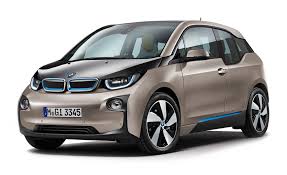 If you have a family with four children, this electric car with an optional gasoline engine isn’t for you. It may not even be what you want if you have a family at all, with two doors and limited seating in the back.
The BMW i3 was the top-ranked green car by KBB.com. It has an electric range of 81 miles and has a small gas generator that nearly doubles that range to get you to the next gas station. It can go to 60 mph in just over seven seconds. It has a base price of $42,400.
It’s a sporty looking car that’s “probably a bit over the top for your average consumer,” says Michael Harley, chief analyst at AutoWeb, a search engine for car shoppers.
You don’t want to suffer “range anxiety”: Chevrolet Volt
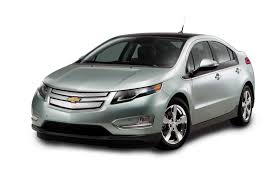 Like the BMW i3, the Volt is an extended range electric vehicle, or EREV. In addition to being electric, it has a small gas engine to extend the electric range when the batteries are close to empty. KBB put the Chevy Volt at No. 7 on its list of the best green cars.
This extended range is meant to help eliminate “range anxiety,” a fear that an all-electric car won’t reach its destination because there isn’t a charging station along the way.
Many plug-in hybrids deliver only 10-20 miles of all-electric range before switching to gas, but the Volt delivers 38 miles of range on electricity alone, according to KBB. It gets 98 miles per gallon gasoline equivalent, or MPGe, for the first 38 miles, and gets 37 MPG for the next 342 miles.
The Volt is popular with its owners, who have seen it rank high at JD Power for long-term reliability, says Tucker Marion, a professor of entrepreneurship at D’Amore-McKim School of Business at Northeastern University in Boston.
A second-generation Volt with increased range is expected to be released in the fall with the 2016 model. It will seat three passengers in the rear and will have more sporty styling, Marion says.
You want zero emissions and low price: Nissan Leaf
 The Leaf is the top seller among electric vehicles, or EVs, which only run on electricity. The Leaf gets 126 MPGe in the city, 101 on the highway and 114 combined. KBB listed it as the third-best green car. It has a range of 84 miles on a full charge, and has a base price of $29,010.
More electric charging stations for the Leaf and other electric cars are being built, but it will probably be 10 to 15 years before they’re nearly as common as gas stations are, says AutoWeb’s Harley. EVs usually cost more than hybrids, he says, at least for now.
You want to drive far on electricity only: Tesla Model S
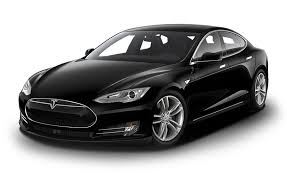 If range anxiety prevents you from buying an EV, the Tesla Model S can drive the greatest distance to hopefully stop you from sweating out those last few miles home. The base model has a range of 240 miles and a starting price of $69,900. KBB ranked it sixth in its list of green cars.
The range of 200 miles is the current 4-minute mile barrier for EVs, Marion says, with GM and the Chevy Bolt racing Tesla to meet that range.
“For pure EVs, the Tesla Model S is the most capable, with the longest range, best performance, safety and a proprietary charging network” that’s free for Tesla owners, Marion says.
You want to drive a long-favored green car: Toyota Prius
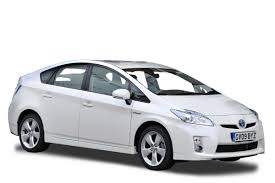 KBB listed the Prius as its fourth best green car for a reason: It’s the best selling hybrid in the country. It’s an iconic hybrid that comes in many versions, including the Prius C that starts at $19,540.
Toyota also sells a plug-in version of the Prius, but it only gets 11 miles of electric range before its gas engine turns on.
One thing to consider when buying a hybrid versus an EV is the price of gas. Gas prices have dropped in the past year, causing the advantage of low cost per mile for EVs to fall, Marion points out. Nationwide increases in electrical costs can make matters worse, he says.
“In the end, you need to balance the desire for reduced emissions, cost per mile, and the driving experience,” Marion says. “Even if the total cost per mile for a pure EV suffers in the short term, ask a Tesla driver if they would give up the driving experience of smooth, instant power for a traditional vehicle that may be similar in terms of costs? The answer would probably be no.”
“EVs and their various off-shoots are here to stay,” he says.
By Aaron Crowe
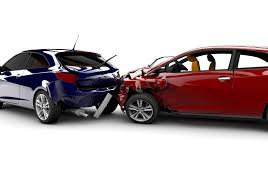 One of the first inclinations after being in a car accident is to call your auto insurance company. After making sure everyone is safe and you’ve contacted the other driver, calling your insurer for help can be one of the first things you want to do.
That can often be a smart move. Insurance agents are there to help you through the insurance process and want to make sure that your car and any injuries you have from the accident are taken care of quickly.
There are some times after an auto accident, however, when there really isn’t a need to contact your insurer. Filing an insurance claim could lead to a rate increase somewhere down the road.
Going it alone without insurance isn’t right in every circumstance. You should at least exchange insurance information at the accident scene with the other driver, just in case you need to contact them later or decide to file a claim anyway.
Here are some times when it’s worth considering not contacting your insurer:
1. You’re in a minor accident.
If no one is injured and both cars have minor damage, or if it’s only your car that was damaged — such as from backing out of a parking space — then a claim might not have to be filed.
A minor accident in a parking lot where you barely hit another car, for example, could be the right time not to file a claim. But only if the other person doesn’t dispute it and you can pay for the damage yourself, says Spencer Ruyle, a State Farm agent in Jefferson City, Missouri.
Get an estimate from a mechanic for the cost of repairs, and if it’s more than the amount you can afford to pay, then you may want to call your insurer.
A simple rule of thumb to remember after getting an estimate is if the cost is greater than your deductible, you may want to consider using your insurance to pay for it, Ruyle says.
2. You don’t have questions for your agent.
If the accident doesn’t lead you to any questions that you’d have to call your insurance agent to get answers to, then you might be OK by dealing with it yourself.
Remember to not mention this accident to your insurance agent because from an insurer’s perspective, “we should be filing a claim immediately” and are obligated by contract to do so, Ruyle says.
It can lead to a slippery slope if you call for advice because you’re upset after the accident and want answers quickly, he says.
“I’m supposed to file a claim if I hear from them,” and not just give advice, Ruyle says.
3. You’re at fault and have filed a few claims lately.
Avoiding a rate hike is a major reason not to report an accident, especially if you’re at fault and you’ve filed some insurance claims in the last few years.
Having an at-fault accident on your record could lead to higher rates after the next accident, even if it’s minor. Paying to repair that minor damage out of your own pocket could be cheaper than going through your insurance company.
“The more claims you have, the more likely you are for some adverse actions to be taken,” Ruyle says.
If the accident isn’t your fault, you won’t benefit by settling the claim privately. Your rates won’t rise if you make a claim, either through your own insurance or the other driver’s liability coverage.
4. You know the victim.
If you hit a relative’s car or somehow know the other person involved in the accident, it’s a lot easier to settle who pays for the damage than if it’s a stranger. If your cousin is responsible, you’re more likely to accept a private deal than you would with someone you don’t know.
The same goes if you’re at fault. It’s easier to deal with payment privately if you know your friend won’t take advantage of you by asking you to pay for damage that happened previously.
If you get in an accident with a stranger who you somehow find trustworthy, you should still gather their personal and insurance information in case you decide to file a claim later. An insurance claim can be filed within one year of an accident, Ruyle says.
When to file a claim
 On the other side of the insurance claim issue, there are times when it’s definitely worthwhile to call your insurance agent and file a claim. Here are four:
1. Major damage.
If either car suffers major damage, it’s an obvious sign to contact your insurer, whether or not you’re at fault. Repairs will likely be expensive, and even if the at-fault driver promises to pay for them out of pocket, you’ll be safer with the assurance of your insurer that you’re covered and they’ll represent you.
If your car is totaled, your insurer can help solve issues that are too complicated for you to deal with alone, such as determining the value of the car.
2. Someone is injured.
Whether it’s you, your passengers, someone in the other car or bystanders, you’re better off calling your insurance company if anyone is injured in a car accident you’re in.
Without it, you risk being sued, not getting all of your medical bills paid, paying for treatment for fake injuries, and other potential hassles.
3. Fault is disputed.
If there is any dispute over who is at fault in the accident, then file an insurance claim, Ruyle recommends. Your insurer will represent you and help determine who was at fault.
“The quicker that you file the claim, the quicker we can be on top of it and the sooner you can be taken care of,” he says.
4. The other driver offers cash or is adamant that you go to their mechanic.
If an at-fault driver throws down cash at an accident scene to pay for your damaged car, it’s probably not a good idea to take it. It’s too early to know the extent of the damages, to yourself or your car, and it can be a clear sign that the other driver doesn’t want their insurance company called.
The same goes if he offers to fix the car himself or insists you take your car to his mechanic. Each driver should choose their own repair shop, or better yet, have their insurance company recommend a mechanic.
Aaron Crowe is a freelance journalist who covers the auto industry for CheapCarInsurance.net.
By Aaron Crowe
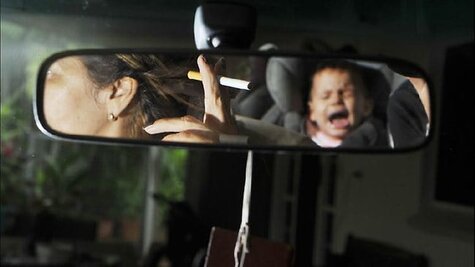 For nonsmokers driving with a smoker, slightly cracking open a window to let the smoke out isn’t enough to prevent them from breathing secondhand smoke, according to nonsmoker advocates. It certainly isn’t enough to protect children, they say.
In an effort to protect children from secondhand smoke, the city of Tempe, Ariz., is considering fining drivers who smoke with a child in the vehicle. Police wouldn’t be allowed to stop someone solely for smoking, but if a driver is pulled over for another reason, such as speeding, then they could be cited if they’re smoking and a child is in the car.
If the proposal becomes law, it would be the first in Arizona. Seven states have laws that prohibit smoking with kids in cars: Arkansas, California, Louisiana, Maine, Oregon, Utah, Vermont, along with Puerto Rico. Cities and counties in five other states also have similar laws. Nevada, Illinois and Connecticut are considering similar legislation.
Some laws apply to children under age 8, while others are for smoking in a car with anyone younger than 18. Oregon has some of the stiffest penalties, with a $250 fine for a first offense and $500 for others.
Smoking in a car exposes people “to toxic air that is many times higher than what the EPA considers hazardous air quality, even when a window is down,” according to the group Americans for Nonsmokers’ Rights. The U.S. Surgeon General says there is no safe level of exposure to secondhand smoke.
Banning smoking with children in cars is a “no-brainer,” says Dr. Mary Ann Block, a doctor in Hurst, Texas.
“Smoking in a car where a child is present is child abuse,” Block says. “The dangers of side stream smoke are well known, causing the same serious and life threatening health issues that first line smoking cause,” including cardiovascular disease and cancer.
“An innocent child has no control over this exposure unless someone steps in and makes it illegal,” she says.
VJ Slight, a former smoker and author of “How to Win at Quitting Smoking,” agrees that smoking in a car with children equates to child abuse, but says the secondhand smoke exhaled by the smoker isn’t the main problem, it’s the side-stream smoke that comes off the tip of the cigarette.
“The smoke is formed at a lower temperature, which causes more cancer-causing chemicals to be created versus the smoke that is inhaled by the smoker,” Sleight says.
When the smoker inhales, the smoke is taken in at a higher temperature because oxygen is being pulled through it and it’s then filtered by the cigarette filter and the smoker’s body, she says.
“Children are more affected by smoke because they are still developing,” Sleight says. “Children exposed to side-stream smoke are more prone to ear and respiratory infections including pneumonia and bronchitis, wheezing and coughing, (which) triggers asthma attacks, and for infants they can be at risk for sudden infant death syndrome.”
A Bigger Goal
The bigger issue with these bans and proposed laws is that they’re meant to drive smokers underground more while giving them fewer places to legally smoke, ultimately leading to preventing people from smoking in their homes, says Theodore King, the Oklahoma state coordinator for the Citizens Freedom Alliance, a smokers’ rights group.
“It’s tyranny,” says King, author of “The War on Smokers and The Rise of The Nanny State.”
“If they want to pull you over with your kid in your car, they will safely assume that the kid is in your house and that you probably smoke in your house,” he says.
One of the ultimate goals behind these laws is to collect a smoker’s name and address, and later send a representative from Child Protective Services to the home and determine that the home isn’t safe for the child to live in, King says.
“Basically, it’s trying to get into your house,” he says.
Smokers have fewer and fewer places where they can smoke legally, King says. Public parks, beaches, courthouses, and outside patios at bars and restaurants ban smoking in some cities. The University of Kentucky bans smoking on its campus.
Even in Arizona, where a hot summer day can cause a smoking driver to blast the air conditioning and not roll down a window, secondhand smoke is something that King, 46, and others lived with as children, he says.
“This thing is not the monster that people make it out to be,” King says.
Aaron Crowe is a journalist who covers the auto industry for CheapCarInsurance.net.
By Aaron Crowe
 Growing up with the Internet at their fingertips, Millennials are used to researching a car purchase with their mobile devices. Being tech-savvy doesn’t mean they don’t want to deal with a salesperson when buying a car, according to a new study.
One of every three Millennials (ages 18-34) used their phones to find contact information for a local dealership, compared to one out of four adults 35 and older, according to a study commissioned by Edmunds.com in early 2015.
But the young car buyers also heavily valued the in-dealership experience, such as talking to salespeople and taking a test drive, the study found. Online shopping is still important in how they shop for cars, with Millennials using their mobile devices to read vehicle reviews, find vehicles for sale, and research prices.
A customer’s experience online
Laura Arnold, 29, a marketing manager in Cincinnati, says she and her husband, 34, recently got new cars after doing a lot of work online before walking into the dealership.
“I did just about everything online, from talking to dealerships, getting a quote for trade-ins, and pricing out our model through the dealer chat and email,” Arnold says.
“By the time I walked into the dealership we bought from, I had the price for the car we wanted — no haggling required,” she says. “I was able to research it and knew it was already fair. I had my trade-in quotes from competing dealerships and told them what they’d have to beat.”
She visited two dealerships, and one “bungled the online experience so badly,” she says. After asking the dealer to contact her via email, they contacted her by phone, email and text multiple times, then sent her email from various people at the dealership instead of one consistent contact, Arnold says.
Even when they’re in an auto dealer’s office, Millennials use their smartphones for such things as calculating the monthly payment on a new car and evaluating vehicle options and warranties, according to the Edmunds study.
They also ranked technology features such as infotainment and Bluetooth as important factors when buying a car, behind price, fuel economy and performance.
Dealerships changing car buying process
Some auto dealerships are changing how they sell to Millennials. Toyota has a large presence at festivals, and is bringing the test drive experience to young drivers at the Stagecoach Festival in California in late April. Festival-goers can ride shotgun with expert drivers, and meet off road racer Ivan Stewart and freestyle motocross star Andy Bell.
For other first-time car buyers who tech-savvy, Toyota teamed up with Google to create what it calls the Corolla Collaborator. A potential buyer can invite up to five of their friends to customize a car, see the interior with a 360-degree, 3D viewer, and take a virtual test drive with Google Street View.
All of the online advantages often can’t beat sitting in a car and taking a real test drive. Andres Zilveti, 22, who works at a marketing agency in Houston, says he bought a car in May after comparison shopping through dealerships, Costco and other websites. Ultimately, dealing with a salesperson face-to-face was much better for Zilveti than being on the phone or online, he says.
“I felt like I was missing a personal touch,” he says. “I test drove multiple cars at multiple dealerships.”
One downfall of the online shopping experience, Zilveti says, is that when he messaged dealerships online, he didn’t hear back from many of them. Of the ones that did get back to him, they gave him information about cars he wasn’t interested in.
Instead of doing a lot more research online and buying online, he ended up going to a dealership, where he bought a car. The old-fashioned way of car buying worked for him.
Aaron Crowe is a journalist who covers the auto industry for CheapCarInsurance.net.
By Aaron Crowe
 Modifying your car can be a personal statement and a lot of fun, if you can afford it.
From stereos and entertainment systems to custom wheels, paint jobs and hydraulics that can bounce your car into the air, it can be easy to spend thousands of dollars on customized parts and equipment.
Getting those modifications insured, however, can be difficult and require additional coverage that will likely be limited.
And, just to be clear, when talking about car modifications, we’re talking about legal ones that insurance companies will at least consider covering. Illegal modifications, such as HID headlights and undercarriage lighting, aren’t covered.
Other modifications, such as lifting the suspension or frame and body, may be limited in height by state regulations. Some states measure by maximum headlight and taillight heights and others measure by maximum bumper heights.
Pennsylvania, for example, doesn’t allow front lift blocks to raise a vehicle’s height, and rear lift blocks can’t exceed five inches over original equipment. New York doesn’t have suspension lift limits.
Some modifications may not be covered because they’re not permanently attached to the car and can be easily stolen. Adding sub-woofers to the trunk that aren’t screwed in could mean no coverage if they’re stolen because they’re technically not part of the vehicle.
$4,000 in coverage
Auto insurer Esurance sells policies that offer up to $4,000 in coverage for customized parts and equipment that are damaged or need to be replaced. These include:
- Stereo and television equipment.
- Radios, citizen band radios and scanners.
- Personal computers, Internet access and navigation systems.
- Body, engine, exhaust or suspension enhancers.
- Custom grilles, spoilers.
- Custom wheels, tires, or spinners.
- Custom chrome and paint.
- Special carpeting or insulation.
- Furniture or bars.
- Height-extending roofs.
- Custom murals, paintings or other decals or graphics.
Its standard policy only covers original equipment included by the manufacturer, and customized parts must be part of any additional insurance coverage. Some states may require buying comprehensive and collision coverage in order to get customized parts and equipment coverage.
Extras installed by the dealer, such as a better stereo than what comes with the base model of a car, should be covered by a regular policy, says Keith Going, director of insurance relations for Carstar, an auto body repair business. The thinking is that the customer will argue that the “extra” was part of the car’s original equipment and should be covered by the manufacturer if damaged, Going says.
It’s still a grey area worth checking with your insurance agent, says Going, who previously worked in the auto insurance industry, because some insurers will put a $1,500 cap on after-market modifications.
“Many people do not have that dialog with their agent,” he says, and are surprised by what isn’t covered by their insurance.
“They’re just not aware, in many cases, of what their policy covers and doesn’t cover,” Going says.
When checking with an insurance agent, some will want to know not only what the modification is, but how it will be used, says Todd Balderson, owner of Balderson Insurance Agency in Silver Spring, Maryland. For example, is it for speed and increasing the performance of the car or motorcycle?
Insurance companies may also want to know who is doing the work and their qualifications, Balderson says.
“If it is your buddy down the street, you may find yourself with an uninsurable vehicle,” he says.
Higher coverage
Adding $4,000 in coverage isn’t much if you’ve spent double that on new rims, a stereo system and paint job. To get extra coverage, you can go to a collector car insurance company such as Hagerty or Grundy that specialize in custom and collectible cars.
A modified car doesn’t have to be a classic car such as a ’57 Chevy that’s only driven on weekends, or hauled on a trailer to classic car shows. A modified Honda Civic, which is one of the most popular cars to modify, can get extra coverage through a company such as Hagerty.
The company doesn’t limit how much the modified car is driven, though how much they’re used helps in determining an insurance rate.
It considers a vehicle to be modified if its performance has been significantly increased, or the body, chassis or frame have been structurally altered, or a custom paint job cost more than $10,000.
Drivers may not want extra coverage
Car owners who have added turbochargers, nitrous oxide injection systems and other ways to amplify engine power may not drive fast and recklessly, as the stereotype may dictate. Instead, they may not drive it much, keep it in a garage or other safe place, and take care of regular maintenance.
Those qualities can help get a better insurance rate. Even so, they may not get extra insurance for their vehicle modifications because they either think it’s too expensive or just don’t think of it.
“Many of them, they just don’t get the extra coverage,” says Paul Nadjarian, founder of Mojo Motors, which helps people find used cars to buy.
Some may only take their modified cars to car shows in a trailer, and feel an anti-theft device is enough to keep it safe, Nadjarian says.
“Some of these folks, they just don’t care,” he says of adding insurance.
Others may assume they’re covered by their normal insurance policy, says Carstar’s Going of young drivers with a second, modified car on their policy, along with a first car that isn’t modified that they drive regularly.
“They just don’t know that ‘I’m supposed to call my insurance company because I just upgraded from a $200 stereo system to a $1,500 system.’ A lot of times they think they’re covered, but they’re not,” Going says.
The bottom line: Check with your insurance agent before making any car modifications to see if you’re covered.
Aaron Crowe is a journalist who coves the auto industry for CheapCarInsurance.net.
By Aaron Crowe
 Having a backseat driver offer driving tips and suggest you stop at the nearest doughnut shop doesn’t sound like much fun, especially if you’re trying to avoid eating doughnuts.
But that’s what will be happening this summer with OnStar, a service that allows General Motors vehicles to be digitally connected and receive roadside assistance, get directions and make hands-free calls, among many other services.
OnStar will monitor a driver’s actions in a voluntary program over 90 days to assess how safe they drive, and offer driving tips “based on a customer’s individual assessment characteristics,” according to GM.
Drivers can also use the car’s dash screen to see nearby merchants while driving, and can be directed to a nearby Dunkin’ Donuts, which OnStar has a partnership with, for a discounted doughnut.
Their driving behavior — though probably not the doughnut shop stop — can then be used to receive insurance discounts from Progressive Insurance’s Snapshot program. Progressive already offers safe driving discounts by collecting driving data through a plug-in device to a car’s diagnostic port, but this is the first time the technology will be integrated into the vehicle.
Going beyond Pay-As-You-Drive
OnStar’s connection to Snapshot goes beyond the pay-as-you-drive, or PAYD, where insurers base premiums on metrics such as braking intensity, speed, driving hours of the day, and miles driven in determining rates, says Eric Stauffer, a former insurance agent who reviews insurance companies. Changes in the PAYD marketplace are happening faster every month, Stauffer says.
“What started out as a way to simply track miles is turning into a data-gobbling machine,” he says.
The OnStar program will also provide predictive diagnostics, such as a message a few weeks early when a low battery is predicted, or if sensors in the starter motor or fuel pump indicate a slip in performance.
Drivers who want the assessment must enroll in the program. It will be available for all 2016 GM models, most 2015 models and select 2013 and 2014 models in the U.S.
Also called Usage-Based Insurance, or UBI, the most common variables measured are distance traveling, time of day you drive, and quality of driving such as through hard braking.
“Typically, they will require you to keep the device in your car for six months in order to qualify for any rate reductions,” says Christin Wiley, who runs an independent insurance agency in Tennessee.
“The companies that offer this technology have most often offered a trial period of 30 days for you to see if it will be beneficial to you to switch and move into the six-month tracking period,” Wiley says. “Most companies are not currently using the devices for rate increases, but I wouldn’t be surprised to see that in the future.”
PAYD drivers report saving less than the 30-40 percent reductions that companies advertise, says Stauffer, who has had drivers tell him they’ve seen insurance reductions of 10-15 percent. Most companies only offer discounts, meaning they won’t raise rates for poor driving.
“The interesting complaint I see over and over is certain devices draining the car battery,” he says.
The start of data mining
These programs are voluntary and so far only offer discounts for good driving behavior. It’s a first venture into data mining by companies that haven’t yet entered the uncharted territory of raising rates after measuring driving habits, says Josh Siegel, founder of Carknow.me, which builds a telematics device and works with insurers.
Using telematics to see if a driver parks outside or inside, or drives in safe areas, can help teach them to be better drivers, Siegel says.
“You understand how a driver drives and how safe a driver is, you can incentivize them to be safer drivers,” he says.
His company’s app offers other benefits drivers may want beyond insurance discounts. It can help predict when to close a window, based on if rain is forecast. Or maintenance and repairs can be suggested before your car is stranded. The cost of not doing those repairs can be weighed by the app against the fuel economy lost.
Metrics could also be used to offer discounts at nearby gas stations, for example, Siegel says, by offering coupons on an app when you’re nearby and your gas tank is half full and you wouldn’t normally be stopping for gas.
Apps regularly ask for a user’s location and for permission to track them when the app isn’t active. That could be a privacy issue drivers don’t want their insurance company to know about, says Paul Nadjarian, founder of Mojo Motors, a site that tracks used car prices.
“It can cross the line of privacy,” Nadjarian says, “and many people are willing to trade their privacy for money.”
Consumers want PAYD option
Even though PAYD is relatively new, with Progressive Insurance an early pioneer in the field in the mid-1990s, using the number of miles driven and a driver’s safety record to help calculate auto insurance premiums isn’t new, according to the Insurance Information Institute. Both are taken into account in traditional policies, with drivers generally asked by their insurer to estimate how many miles they drive in a year, according to an III post on telematics.
And while a driver’s safety record has always been a significant factor in the price of insurance, “unless the price goes up significantly after an accident or speeding ticket, drivers do not always link price to the way they drive,” according to the III. “Telematics technology provides immediate feedback about the riskiness or a driver’s behavior and therefore may be more successful in changing habits.”
The group points out that consumers often want their driving to be tracked with a telematic device, with a 2014 survey by the Deloitte Center for Financial Services finding that about half of respondents saying they would allow such monitoring without stipulating a minimum discount for granting permission. Others said they’d do so if discounts made monitoring worthwhile.
A September 2013 survey by Towers Watson found that nearly 90 percent of respondents were open to buying a usage-based policy if there was no risk of premiums increasing. Sixty percent of those were willing to change their driving habits, and 40 percent were concerned about insurers sharing the data.
The OnStar privacy statement for subscribers states that the company has “certain rights to use and share the information or materials you provide us.”
Years ago, GM raised privacy concerns when it wanted to the OnStar system to share the number of occupants, seat belt use and severity of an accident instantaneously with first responders such as ambulances, says Jason Vines, a former chief communications officer at Nissan, Ford and Chrysler, and now an independent communications and government affairs consultant who has written a book about the car industry.
The plan was quickly dropped after complaints from privacy advocates and plaintiffs’ attorneys.
Aaron Crowe is a journalist who covers the auto industry for CheapCarInsurance.net.
By Aaron Crowe
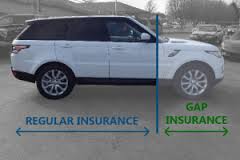 Unless you buy a Corvette that’s likely to appreciate, you could find yourself owing more on your car loan than the vehicle is worth after an accident.
That’s because the average new car loses 11 percent of its value the moment you drive it off the dealer’s lot, according to Edmunds.com. During the first five years the car depreciates by 15-25 percent each year.
If your car is totaled, your car insurance company is only going to pay you the current value of the total loss car , not the original purchase price. If you owe the bank more than that,you still have to pay the loan.
Gap insurance could fill that hole.What is Gap insurance? It covers the difference between what your vehicle is worth and what you owe. Gap coverage provides protection when a total loss might lead to two car loan payments.
How does gap insurance work
if you owe $20,000 on your car loan and the vehicle only has a Kelley Blue Book value of $15,000, your regular auto insurance will only cover up to the $15,00 and Gap insurance would pay the remaining $5,000 says Ashley Harris, a vice president of corporate communications.
A real-life gap insurance example
Harris knows first-hand the importance of gap insurance.Two years ago she bought a 2013 Lexus.After only two months, she was in an accident and the car was totaled.
She owed about $37,000 and the car was only worth $32,000. But because she had Gap insurance, she didn’t have to come up with the $5,000. Harris filed a claim and within two weeks “my auto was paid in full” she says.
Harris has a friend who didn’t have Gap insurance when the vehicle was totaled. It was valued at $17,000, though he owed $23,000 on the car loan. His insurer paid him the $17,000, and he paid was left to pay the $6,000 difference, she says.
“When he finally decided to get a new vehicle he was going to have two auto payments until his totaled auto was paid off in full,” Harris says.
Costs of Gap insurance
A car dealership is one place to buy Gap insurance. But they don’t have to buy it from the dealer, and they don’t have to buy it immediately, says Paul Nadjarian founder and CEO of Mojo Motors.
“The dealers do a good job making you feel you need it when you get a car,” Nadjarian says.It is often required for some purchases nationwide.
Dealers often charge more than your insurance company or credit union for the same Gap insurance policy.
“All Gap policies are the same no matter what the dealer tells you,” Harris says.A dealership will usually sell Gap insurance for $700 to $1,000 for the life of the loan, versus $200 to $400 at a credit union, Harris says.
Theft is covered by Gap coverage, but it doesn’t cover deductible costs. You still have to pay your deductible even in the case of a collision. Also, only damage to vehicles in a collision is covered, not bodily injury.
To collect on a Gap policy, you’ll need to show the Gap insurer documentation from an auto insurer that includes the amount they’re paying, says Thomas Simeone.
“It is important that you keep making monthly payments on your car after an accident and until the note is fully paid off,” he says.
The Gap insurer will want documentation from the lien holder that the insurance proceeds are less than the amount owed, he says, and then it will pay the lien holder the balance. “You will not see any money, but the loan will be paid in full,” Simeone says.
Other ways to cover yourself
If you buy Gap insurance from a car dealer, the cost can be rolled into the loan and you won’t see much of an increase in the monthly payment. Check the terms with your insurer to see your options.
Gap insurance often isn’t needed after three years once enough equity is accumulated. Instead of buying Gap insurance, one option is to take that savings and put it aside in case your car is totaled says Dan Young, senior vice president at Carstar.
The average age of a car on the road today is 11.5 years, Young says, so many owners probably don’t need Gap insurance. But if they do, they should consider how they’d pay for that gap if their car is totaled in a collision.
“How much of this risk can I absorb myself if something happens to my car?” Young asks.
Another option is to put a large enough down payment down when buying so that the loan is reduced to the Blue Book value or below Simeone says.
When to get Gap insurance
Most people aren’t disciplined enough to put money aside for such a payment, Young says, and Gap insurance would work for them in the three years after.
Another time when it makes sense to buy Gap insurance is if you have bad credit and have a high interest rate on your car loan, Nadjarian says.
If you’re financing a car with a minimal down payment or you have little to no equity, Gap insurance could save you thousands of dollars, says Todd Balderson, owner of Balderson Insurance Agency.The coverage is also frequently recommended for people leasing.
Some lease agreements also require Gap insurance, says Balderson, who recommends contacting your insurance agent for advice on recommended coverage.It is often required nationwide for leasing.
Gap insurance is best for people who don’t have the down payment money and can’t pay the gap if their car is totaled, says Simeone.
“If you have the money, either put it down or know that you will have to pay a gap if you have an accident,” he says.
The good news is that if you do need Gap insurance, you’ll probably only need it for three years or so. It’s a matter of deciding if you want to take the risk.
“It doesn’t happen that often,” Nadjarian says of having to use Gap insurance. “But when it does happen, it’s painful.”
Is Gap insurance worth it? The answer depends on your car and financial situation. Gap coverage especially helps protect drivers who are financing or leasing in the case of a total loss. If that’s you, Gap insurance can provide the protection you need.
Aaron Crowe is a journalist who covers the auto industry for CheapCarInsurance.net.
By Aaron Crowe
 Just as graduated driver licensing keeps teens safe by not allowing them to drive late at night and earn driving privileges gradually, would it also work for elderly drivers?
Elderly people drive a lot less than teenage drivers do. Still, per mile traveled, fatal crash rates increase at age 75 and increase notably after age 80, according to the Centers for Disease Control and Prevention. These deaths are largely due to increased susceptibility to injury and medical complications among older drivers, rather than an increased tendency to get into crashes, according to the CDC.
Would taking away an elderly driver’s driving privileges gradually lessen the amount of crashes they get into? Will not allowing them to drive at night, for example, when it can be more difficult to see the road, result in fewer accidents by elderly drivers? Or a mandated annual driving test?
The good news is that elderly drivers often self regulate their driving habits. Older drivers tend to limit their driving during bad weather and at night, and drive fewer miles than younger drivers, the CDC says.
Driving is a privilege
One basic argument against gradually taking away an elderly driver’s license is that driving is an earned privilege, and “once a test is passed, not a good idea to second guess it,” says Bonnie Russell, who writes about retirement in California.
But state Departments of Motor Vehicles have the authority to determine if someone can drive safely, and can retest them as they deem necessary. The National Highway Traffic Safety Administration, or NHTSA, recommends states require elderly drivers renew their licenses in person, says Susan Cohen, founder of Americans For Older Driver Safety, or AFODS.
The requirement could stop some unsafe drivers from coming in for their license renewal, and could help eliminate elderly drivers who are too impaired to drive.
“We want older adults to stay on the road as long as they’re safe,” Cohen says.
Another thing to keep in mind when considering taking away an older driver’s license to drive in stages is that two 80-year-olds can have different driving abilities, she says. You can’t judge someone’s driving ability by age alone. “We each age very differently from another,” she says.
Russell says she’s seen drivers well past age 80 who are safe drivers. “My dad is 92 and still driving without a problem,” she says, “and his neighbor just got his license renewed for three years — when he’s 103.”
License renewal laws for older drivers vary by state, with 28 states and the District of Columbia having provisions for older drivers, according to AFODS. Several require in-person renewal and a shorter renewal period for older drivers.
Illinois, for example, sets the standard renewal at four years, but increases it to every two years at age 81 and annually at 87 years old. Iowa requires a renewal every two years beginning at age 70, and at five years for younger drivers.
Screening supported by motorist group
The National Motorists Association, an advocacy group for drivers, “doesn’t support putting age-based restrictions on driving since they would be arbitrary and end up penalizing many responsible drivers,” says NMA spokesman John Bowman. “Extending driving privileges to anyone, whatever their age, should be based on their demonstrated ability to drive safely and responsibly.”
The NMA recommends screening criteria to ensure that older drivers meet basic safe driving requirements, Bowman says:
A license holder of any age with a combination of three separate at-fault accidents or three separate traffic violations, or a combination of the two over six months would be required to attend an evaluation session, followed by a comprehensive test.
Licensing agencies could be petitioned to do an evaluation of a license holder based on first-hand knowledge of family members, law enforcement, or the courts. A driver who loses their license could appeal.
If the evaluation finds significantly diminished physical or cognitive abilities, the agency would revoke the driver’s license.
If a pattern of bad judgment, bad luck or a short-term emotional disruption such as a divorce or death in the family, the license holder would be channeled back to the conventional system that deals with accidents and violations, the NMA recommends.
What to look for
Taking away the keys from an elderly driver isn’t easy, but there are certain signs that family members, the DMV or medical professionals can look for.
Declined vision and hearing, reduced flexibility and being unable to turn their head to check blind spots, delayed reaction time and cognitive abilities to reason and remember are some elderly driver attributes that should be checked regularly.
Cognition, for example, declines for people in their 80s on financial decision making, according to a study by the Center for Retirement Research at Boston College, though their confidence in their ability doesn’t waver.
The ability to scan their environment while driving and anticipate what happens next drops as people age, Cohen says, and they may only focus on what’s in front of them. The ability to process information quickly — a cognitive ability — drops in old age, she says.
“A lot of these changes with aging happen so gradually that people don’t even realize they’re changing,” Cohen says.
What older drivers can do
The good news is that crash rates for drivers 70 and older are falling, which has been attributed to safer vehicles and healthier seniors who are better able to survive crashes.
Older drivers are better at self regulating, meaning they’re aware of their impairments and may not drive at night if they have impaired vision, or stay off the roads during commute hours. Older drivers are less likely to drink and drive than other adult drivers, according to the CDC.
The CDC recommends older drivers:
- Exercise regularly to increase strength and flexibility.
- Have their medicines reviewed by their doctor or pharmacist to reduce side effects and interactions.
- Have annual eye exams and wear glasses as required.
- Drive during daylight and in good weather.
- Find the safest route with well-lit streets, intersections with left turn arrows, and easy parking.
- Leave a large distance from the car in front of you.
- Avoid distractions such as listening to a loud radio, talking on the phone, texting, and eating while driving.
- Consider alternatives such as riding with a friend or using public transit.
In general, auto insurance rates start to increase after age 70 because the cost to insure seniors is greater due to impaired vision, physical ability and other attributes, says, Chrissy Nigro of Nigro Insurance Agency in Philadelphia.
Things seniors can do to keep their auto insurance rates down, Nigro says, include taking a defensive driving course, exploring different carriers such as Hartford that offer discounts for seniors, changing the primary driver on their insurance policy if that child does the majority of the driving for them, and maintain a clean driving record.
Aaron Crowe is a journalist who covers the auto industry for CheapCarInsurance.net.
By Aaron Crowe
 In the next wave of zero-emission cars, hydrogen fuel cells are expected to gain ground and eventually pass electric cars, experts say.
Researchers at the Institute of Transportation Studies at UC Davis say fuel cell cars are becoming more viable as major automakers push the technology — six have announced that they’ll introduce fuel cell cars by 2019. Also, more infrastructure is being rolled out, and fuel cell systems costs are coming closer to what it costs to fill up a car with gasoline.
“We seem to be tantalizingly close to the beginning of a hydrogen transition,” writes Joan Ogden, an environmental science professor at UC Davis.
Hydrogen fuel cell cars can exceed today’s gasoline cars. They can have a driving range of 300-400 miles, and a fast refueling time of three to five minutes.
High-pressure hydrogen gas is fed into a fuel cell “stack” in the car, where it’s combined with oxygen to produce electricity. Hydrogen fuel cell vehicles, also called FCVs, have zero emissions, with the only emission being clean water vapor from the car’s exhaust.
Electric vehicles in the public’s mind, for now
“Most people would say that electric cars are undoubtedly the vehicles of the future,” says Jordan Perch of DMV.com, with the number of plug-in models available for purchase increasing all the time, the purchase price going down, and with authorities investing heavily in the electric vehicle charging infrastructure.”
“But, if you were to ask Toyota, the answer to this question would be completely different,” Perch says. “The Japanese car maker has repeatedly said that hydrogen is the fuel of the future, and has focused on advancing fuel cell technology, with plans to drop electric cars altogether.
“When the world’s biggest automaker gives preference to one novel technology over a somewhat established one, then this new technology definitely deserves to be taken into consideration when talking about the best alternative to conventional cars.”
Electric cars face two big issues: long charging times and range anxiety. Its battery can take hours to recharge, sometimes up to 12 hours, while a hydrogen car can be refueled in five minutes.
The best electric cars can travel about 80 miles on a charge, though the Tesla Model S has a range of 265 miles. Toyota, Hyundai and Honda claim that their coming fuel cell cars will have a range of up to 450 miles.
Hydrogen cleaner
Hydrogen-powered cars are considered to be cleaner than electric vehicles, Perch says, because of the way hydrogen is generated. Electricity is mostly generated in coal-powered plants, producing the carbon pollutants that EV supporters want to get rid of. Hydrogen can be extracted from natural gas or electrolysis, he says.
One argument against electric and hydrogen cars is that there aren’t enough refueling stations for them. While more EV charging stations are being built where the cars are the most popular, such as California, more hydrogen stations are planned for California and the investment is coming along, UC Davis researchers found.
California recently awarded $46 million to build 28 hydrogen fuel stations, and the state committed $20 million annually to build stations over the next seven years.
The researchers calculated that a targeted regional investment of $100 million to $200 million in support of 100 stations for about 50,000 fuel cell vehicles would make hydrogen cost-competitive with gas on a per-mile basis.
Electric advantages
Electric cars have one major advantage over hydrogen fuel cell vehicles that’s indispensable for success: an ability to refuel everywhere, says Mike Rabkin, president of From Car to Finish, which helps new car buyers negotiate prices.
“To refuel an electric vehicle, you need an outlet,” Rabkin says. “Any 120 volt outlet in your house will do, although an optional 240 volt outlet will do it faster. Either way, that means any outlet in the U.S. could in theory charge your electric vehicle.”
Hydrogen technology has its uses, but comparing it with electric power for a car is a bit of a fools errand, says Ryan Geddes, owner of Quadrant Media and a company that owns five sites that generate solar energy on 20-year contracts for the government of Ontario in Canada.
Hydrogen has to be converted through electrolysis to be useful as a fuel, and energy must be spent to carry out that operation, Geddes says. With electric power from the grid, you’re simply taking fossil fuels such as coal and natural gas and converting them into hydrogen fuel at a loss, he says.
Natural gas is three to eight times more expensive to convert hydrogen, “making it a completely inefficient process,” Geddes says. “When compared to electric cars this inefficiency becomes glaringly obvious — like driving a Hummer over a Honda Civic.”
Electric hybrid or plug-ins take the electric generation in the vehicle and “create a very efficient use of the car’s kinetic energy as well as ‘grid fed’ electricity,” he says.
The average cost in kilowatt hours to drive 100 miles in the Nissan Leaf is 34 kwh, Geddes says. With most people in Canada and the U.S. paying 10 to 12 cents per kwh, 100 miles costs about $4 in electricity. A gasoline powered Honda Civic that gets 40 mpg combined costs about $10 to drive 100 miles.
“Electric cars are the clear winners in terms of cost per mile,” he says. “Hydrogen will never happen unless they figure out some way to bypass the conversion process.”
“Electric cars are here,” Geddes says, “and they are the future. “Hydrogen technology may have its uses — but it is a red herring in the race to reduce our carbon footprint and reliance on oil.”
Aaron Crowe is a freelance journalist who covers the auto industry for CheapCarInsurance.net.
By Aaron Crowe
 Graduated driver licensing, or GDL, is meant to protect young, beginner drivers while they gain experience driving a car. The state programs typically don’t allow them to drive late at night, or with other teens in the car, and the young drivers don’t earn their licenses until after one or two years in the program.
Two studies from the AAA Foundation for Traffic Safety, however, found that waiting until you’re 18 to drive instead of 16 doesn’t mean you’re less likely to be in an accident.
Researchers found that novice drivers who got their license at 18 crashed less than 16-year-old drivers in the first few months and years after getting a license. However, novice drivers who were licensed at 18 were more likely than any other age group to be in an injury crash during their first year of solo driving.
The study found that 18-year-olds could also benefit from GDL restrictions.
One mom’s experience
That’s no surprise to SuAnn Pliner, the mother of eight children, two who are driving teenagers.
“Driving is a big responsibility, and kids look at it like it can be fun,” says Pliner, who works in customer support at Prong and lives in New York City, where adults can have just as much difficulty driving as teens do learning to drive.
Her 17-year-old daughter has a driver’s license and her son, 16, has a learner’s permit. New York state has a GDL program, prohibiting young drivers with learner’s permits from driving on bridges or tunnels under the Triborough Bridge, on certain parkways in Westchester County, and without a proper supervising driver, among other restrictions.
Once they’ve had a permit for six months, they can take a test to get a junior driver’s license, which allows them to have one passenger under age 21, though more immediate family members are allowed. The state also requires drivers who want to get their senior driver’s license at age 17 instead of 18 to take a driver education course and complete 50 hours of supervised driving, 15 of which must be after sunset.
Pliner’s children live within those rules, and others that she sets, especially for her 16-year-old son.
“It’s OK with me for him to get it,” she says of a license at 17, “if I feel he’s responsible.”
That includes rules as a passenger, too, such as not be allowed to get in a car with someone under 21 who’s driving. He can only drive his siblings for three or four months, and he’ll get more leeway when he either turns 18 or has been driving for six months, she says.
The AAA research that 18-year-olds who are new to driving are getting in more accidents in their first year of driving than younger drivers who have driven for a few years isn’t surprising to Pliner. Younger kids are being supervised by their parents and may have their siblings report their driving habits to their parents, while drivers at age 18 are more independent and may not have input from their parents, she says.
Avoiding GDL
More teens are waiting to drive — more so because they can’t afford a car than because they’re waiting until age 18 when they can avoid their state GDL requirements, according to AAA.
That puts more drivers on the road without the benefits of GDL programs. The AAA study didn’t recommend that all states extend GDL provisions to ages 18-21, but pointed out that such restrictions can keep older novice drivers safe.
GDL was shown to be effective for young drivers. In North Carolina, the three-year crash rate for 16-year-olds with GDL program licenses was 11 percent lower than for those licensed without it.
Experience also helped more than age, with total crashes highest for ages 16-21 during the first six months of having a license. Crash rates fell by 30 percent during the next 36 months as drivers gained experience.
New Jersey extends GDL
GDL restrictions are extended to all novice drivers until age 21 in New Jersey, the only state to extend the restrictions. Older novice drivers have fewer accidents and lower rates of injuries than younger ones in the state, with first-month crash rates 20 percent lower for new drivers who are 18, compared to 17-year-olds.
Kevin Foley, an insurance broker in New Jersey who has a 17-year-old daughter, says she got her driver’s permit at age 16 and followed the GDL restriction of not being an unsupervised driver until she was 17. She barely has time to drive anyway, Foley says.
“She’s so busy getting her applications out for college, she doesn’t have time to drive anywhere,” he says.
A red, reflective one-inch square decal alerting anyone that she’s a minor driver must be applied to her license plate when she’s driving. She can’t drive from 11 p.m. to 5 a.m. She’s a straight-A student who is very responsible, Foley says, and he doesn’t worry as much about her driving habits.
Foley’s 15-year-old son is who he’s more worried about as a driver. “He thinks he’s immortal. She doesn’t,” their dad says.
In his work in the insurance industry, Foley says he’s seen accidents from younger drivers who make poor, aggressive decisions, such as racing a yellow light. His young son, he knows, is in that demographic and has the potential to make bad decisions.
“I don’t want him to get a permit until he’s 21,” says Foley, only half joking.
Aaron Crowe is a journalist who covers the auto industry for CheapCarInsurance.net.
By Aaron Crowe

What Women Want , 2000 Film
Women are driving more, and they’re not happy about it.
More women (51 percent) than men have driver’s licenses in the United States, and while women are becoming more dominating in the car-buying process, they’re not so thrilled with what car manufacturers are offering them.
Those are the findings of two separate research reports by Frost & Sullivan, a consulting firm based in London.
Half of women globally are dissatisfied with their vehicles, while 74 percent feel they’re misunderstood by car manufacturers, according to Frost & Sullivan. As more women buy more cars, automakers will target them with cars designed for women.
What do women want in their cars?
Nissan, Ford and Volkswagen have already begun to aim new vehicles at women. Following a global trend for health and fitness, some are equipping vehicles with climate control systems for fine dust and ionising systems to filter out viruses and spores, high quality interior painting, and ergonomic seating.
The study identified eight key design trends for cars aimed at women:
- A customized, spacious cabin.
- High visibility around the vehicle and a sunroof.
- Green credibility and low CO2 emissions.
- Intuitive controls.
- Wellness features.
- High quality materials such as leather seating.
- Auto assist functions such as park assist and sensorial doors.
- Personalization options such as special pedals for long heels.
Another report by the same company found that cars will become more customized, particularly small city cars, with women influencing 80 percent of car buying decisions.
Some of the factors women deemed important when buying a car were spaciousness, safety, quality of materials, color and sustainability. They preferred options such as park assist, clear lighting for gas, easy access, integrated systems for mobile devices and entertainment, and will favor future cars with advanced systems such as autonomous driving, digital assistants and other health, wellness and well-being features.
Cars designed for women
To help sell the Porsche Macan to women, tennis star Maria Sharapova was hired by Porsche in April 2013 as a brand ambassador, since 85 percent of Porsche buyers are men. The car is big enough to handle a sizable Coscto haul but still drives like a sports car. The Macan has thousands of dollars worth of customization options, including colors such as “luxor beige” instrument dials, and noise-insulating privacy glass.
The 2014 Mercedes S Class has a cabin designed for “energizing fitness” with options such as a perfume atomizer, ionising air system and no plastic. There are 100 electric motors to move the seats, which have a massage option based on hot stone massage principles.
A place to put a purse
We talked with women about what they want in a new car, and one of the most popular requests was for a place to put their purse. Yvonne Miaoulis, a marketing manager for Baroan Technologies, reiterated what Rashida Jones wrote on Twitter: “Note to all people who design cars: Stop ignoring women’s purses and give us a place to put them that’s not our passenger’s lap.”
If a passenger is riding in the front seat, the handbag “has to go in the back or on the floor where it gets dirty or stepped on,” says Khadi Madama, who works at Yours Truly, a media services company.
“Ladies rely on their handbags to keep essentials that men simply just don’t need — and if they do need something — they rely on their wives or girlfriends to ‘just happen to have it’ in their bag,” Madama says.
Another popular request was heated seats, especially in snowy or cold climates.
“As we move into the winter months, I’m reminded how much I miss having heated seats,” says Megan Ingenbrandt, a public relations specialist for eZanga.com. “I personally enjoy this more than having hot air blowing directly at my face or body, because it’s more relaxing during your commute. Plus, there’s nothing worse than a cold leather seat.”
Linda Carlson, a marketing consultant in Seattle, not only wants heated seats in a new car, but a rear-window wiper, excellent visibility and power on hills. Carlson also likes having roadside assistance as part of the warranty, even for flat tires.
Horsepower was also important to Stephanie Hamilton, a communications manager at HappyFox, a helpdesk software provider. Hamilton says she used to own nothing but German cars for their horsepower.
She now owns a Jeep Wrangler Limited that has power everything: navigation, multimedia, heated seats and power outlets for charging iPads, phones and other devices.
Stacy Geisinger of Stacyknows.com already has a feature many people want in their cars — a backup camera — but Geisinger wants it to do more. “I really wish it took pictures so that when someone tailgates me, I can get a picture of their license plate and report them,” she says.
Federal law will require backup cameras on all vehicles built in and after May 2018, though they’re not required to be able to take photographs.
Car features aren’t the only areas where car companies are trying to attract more female customers. A pilot Nissan dealership in Japan is run entirely by women, with the intent to make the shopping experience more welcoming and seemless.
Female concierges are available to provide child care during car viewing appointments, and female mechanics are there to explain anything without unnecessary auto jargon.
Aaron Crowe is a journalist who covers the auto industry for CheapCarInsurance.net.
By Aaron Crowe
 The number of U.S. families with two or more cars is declining in major cities, thanks in part to ride-sharing services such as Uber and Lyft that are changing the ways people drive.
The decline isn’t in every city — about 57 percent of U.S. households have two or more cars as America leads the world in car purchases, according to a November report by auditing firm KPMG. The major declines are in metropolitan areas, such as New York City, where 14 percent of households own two or more cars, and Philadelphia at 23 percent and Chicago at 28 percent. Even Los Angeles, where freeways rule, the figure is 47 percent, which is still lower than the national average.
KPMG projects that the number of two-car households will drop to 43 percent during the next 25 years as on-demand services such as Uber and Lyft grow and more people move to urban areas. “Mobility on demand” with on-demand ride-share companies is projected to increase to 10 million vehicles by 2040, according to the report.
More drivers getting rid of cars
What does all of this mean for families that would normally buy two cars? For the future of auto suppliers if demand drops because shared vehicles are increasing?
Over the long-term, it doesn’t mean that the two-car family is going away, with car ownership still dominating in America, KPMG says. But there will be fewer families with two cars, and car sales could change from individual transactions to a car company selling many cars to a ride-sharing company.
The change has already started with some drivers giving up their car, or opting not to buy one when they normally might, because they rely on Lyft, membership rental services such as Zipcar and Car2Go, car sharing services such as GetAround and RelayRides, or even bike sharing services such as Citi Bike.
Susan von Seggern, a public relations consultant in Los Angeles, says she and her husband ditched their second car in 2008 because he biked to work and she worked at home, which is in a very walkable area.
If they needed another car they’d use a ZipCar or take Lyft or Uber. They now both work at home and spend less than $500 a month on the car services, with most months limiting it to $300.
Andrew Chapados, a communications coordinator who lives near Toronto, Canada, says he has a 1997 Cavalier that runs well and should last another two to three years, but he doesn’t plan on replacing it because ride-sharing saves him the expense.
“Why buy a car when you can find a taxi on Uber wherever you are, rent a vehicle on ZipCar to get groceries, or ride-share a five-hour drive on AskforTask?” says Chapados, who works for AskforTask, a service in Canada. “It simply makes sense economically, and reduces emissions in the environment.”
He estimates he saves about $375 per month by spending about $300 a month on ride-sharing and commuting instead of spending $675 per month on a car payment, insurance and gas.
An asset that sits around
One argument that KPMG makes against owning a car is the economics behind it. The average price of a new car in the U.S. was $31,252 in 2013. That new asset loses 11 percent of its value the minute you drive it off the lot. It then sits idle approximately 95 percent of the time, either in your driveway or in the parking lot at work.
To take advantage of that downtime, mobility-on-demand services popped up in urban settings, where car ownership can be an expensive hassle. ZipCar launched in Boston in 2000 and was acquired by Avis for $500 million in 2013. Car sharing services in the United States now have more than 1.2 million members who share 17,179 vehicles.
Increased urbanization is only expanding the opportunity to share rides, since vehicle ownership tends to be much higher in urban areas. In 2007, for the first time, more people in the world lived in urban areas than rural ones. Sixty-six percent of the world’s population is projected to live in urban areas by 2050, according to a United Nations report cited in the KPMG report.
People driving less
Could urbanization, environmental concerns, more mobility alternatives and demographic shifts someday make single occupancy vehicles as unpopular as cigarette smoking? Who knows? But they could lessen the demand for new cars.
Fewer people are getting their driver’s licenses when they reach legal driving age in the U.S. Research by the University of Michigan Transportation Research Institute shows that in 1983, for example, 87 percent of 19-year-olds had licenses, and by 2009 that figure dropped to about 75 percent.
KPMG cited another study showing that from 2001 to 2009, the average annual number of vehicle-miles driven by young people between 16 and 34 years old dropped from 10,300 miles to 7,900 miles per capita — a drop of 23 percent.
What the future may hold
The KPMG report looks ahead at efficiencies that could be gained from sharing cars. Rather than sitting idle 95 percent of the time, a shared car might be idle for only 60 percent of the time.
As vehicles are used more efficiently, the demand for additional vehicles per capita could shrink as people become more used to living with just one vehicle. The market for privately owned second and third vehicles could take a hit, KPMG says.
With more shared cars, premium brands could lose market share as cars are seen less as a status symbol and more as a utility.
Instead of driving your own car, it might be more enjoyable to have a driverless car from a car sharing service pick you up at home and take you to you destination while you recline in the back seat and watch TV with your feet up on what would have been the front seat. Where did the front seats go? They’re no longer needed because a computer is driving the car for you.
Think about that possibility the next time you consider buying a second car.
Aaron Crowe is a journalist who covers the auto industry for CheapCarInsurance.net.
By Aaron Crowe
 Getting into a Lyft, Uber, Sidecar or other ride-sharing car isn’t really about sharing. You’re paying for a taxi ride. As part of that service, you expect the driver to have auto insurance that will cover you if they get into an accident while having you as a paying passenger.
Drivers of such transportation network companies, or TNCs, along with their customers, may be a little confused about how much insurance is provided during trips and who provides it — the TNC or the driver’s personal insurance.
The TNCs require drivers, who act as independent contractors, to have personal auto insurance that can be the primary insurance if they get into an accident while working for the TNC. But in an ironic twist, most auto insurance companies don’t cover the commercial use of a private car under the “livery” exclusion, unless the driver buys a policy at the commercial rate — which can be very expensive.
Some UberX drivers might not see “sharing” their car as a business, but it is and they’d have their insurance policies canceled or not renewed if they got into an accident while driving for a TNC, says Christin Wiley, a personal lines account manager for an insurance agency in Tennessee.
For those unfamiliar with ride-sharing services, they start by using a phone app where riders can summon a ride and enter where they are and where they want to go. They’re picked up within minutes by a driver 21 or older who is using their own insured car and has a clean driving record and no criminal record. Payment is through a credit card. Drivers pick their own hours of operation and give a percentage of their fare to the TNC.
What insurance is provided
The insurance coverage that the TNCs provide is limited, and Lyft’s is secondary to a driver’s personal coverage. The driver must first ask their insurer to cover a claim, and if it’s denied, then Lyft’s coverage takes effect. The $1 million in liability coverage per accident that UberX provides is the primary coverage.
The TNC’s insurance coverage, however, isn’t available during all the time a driver is working, which is an issue that a new California law will attempt to solve when it takes affect July 1, 2015.
There are three times during a ride-sharing driver’s time at the wheel when insurance either kicked in from the TNC or there’s a gap where only the driver’s insurance is available, also called contingent coverage.
The first is when the driver logs into the TNC’s system, meaning they’re available for work but haven’t yet picked up a passenger. This time is now covered by the TNC insurance, but wasn’t before a deadly New Year’s Eve accident in San Francisco by a UberX driver in 2013.
Lyft and UberX have since added insurance, though at levels much lower than the $1 million in liability and $1 million in uninsured/underinsured motorist coverage they offer between accepting a trip to passenger dropoff.
Both companies now offer contingent coverage of $50,000 per person for bodily injury, $100,000 per accident for bodily injury and $25,000 for property damage. The new California law will mandate those amounts, though it will increase the property damage coverage to $30,000. But the $100,000 per accident coverage may not be enough if there are many passengers in the car, Wiley says.
The second time when TNC insurance changes is when the driver is matched in the app with a passenger to pickup. Again, before the San Francisco accident, matching drivers with customers didn’t cause TNC’s insurance to kick in, but has since been added to the $1 million insurance required during the third and final stage of pickup to dropoff.
California law will close all of those gaps, requiring TNC insurance from log-in to passenger dropoff. Colorado has a similar law. Other states are studying the issue, with some not allowing ride sharing at all.
The contingent coverage that takes effect when a driver logs on but isn’t yet transporting passengers. For drivers, the contingent coverage may be an ambiguity they’re willing to work with, since it hasn’t been challenged in a courtroom yet.
A solution in Arizona
 A TNC in Arizona, Total Transit, may have the best solution: Full commercial coverage whenever its drivers are on the road.
Mike Pinckard, the company’s president, says he covers his drivers with a commercial insurance policy so that there’s no dispute on coverage limits and whose responsibility it is for having auto insurance. Total Transit drivers must still have their own personal auto insurance policy, but they’re covered by the company policy that they pay into based on how much work time they put in.
They’re even covered for trips outside of the Total Transit app, Pinckard says. For example, a driver could agree to accept under-the-table payment from a passenger for a future trip without using the company’s app, and the trip would be covered by the commercial policy, he says.
“Insure your vehicles and protect the public like any good member of the business community,” Pinckard says of what ride-sharing services should do.
His company’s policy includes $1 million in coverage for bodily injury, property and vehicle damage, and the driver isn’t required to first make a claim with their own insurer. It saves the company time and money, Pinckard says.
For example, one of his driver’s cars was hit by a Uber driver, and it took 10 months for an $800 claim to be paid by Uber after the Uber driver’s personal policy denied the claim, he says.
Ride-sharing services like to brag about being an innovative way to efficiently match passengers with rides, and that innovation should go beyond the technology, Pinckard says.
“Not paying for insurance has nothing to do with insurance. It’s not innovative at all,” he says.
Until then, in California at least, TNC drivers will get help from the new law next year by being able to buy auto insurance while using their personal vehicles for business.
State Insurance Commissioner Dave Jones recently announced that his department is ready to accept insurance company filings to create commercial coverage or endorsements to personal auto insurance policies that will provide coverage for TNC drivers in California.
The new law will cover them during all of the time when the TNC app is on — not just when they’re alerted to pick up a passenger — giving them some peace of mind that they’re covered during the entire time they’re working and that their personal policy will protect them.
Aaron Crowe is a journalist who covers the auto industry for CheapCarInsurance.net.
By Aaron Crowe

Pedego Electric Bikes
As the owner of an SUV, Rhonda Martin knows how painful a trip to the gas station can be. By commuting by bike to work five days a week, Martin, who lives and works in San Diego, estimates she saves $350 to $400 a month in gas and maintenance.
She doesn’t ride just any old bike. Martin, 43, bought a Ford Super Cruiser in July. The electric bike isn’t the first entry by Ford Motor Co. into the electric bike business, following a failed attempt in 2001 with the Ford Think Mobility electric bike that was part of a line of electric vehicles. But the Super Cruiser may have more chance for success, partly because its built by Pedego Electric Bikes, a Southern California company formed in 2009.
“I find it a very comfortable ride, a fun ride,” Martin says of the Ford bike, which costs $3,695 and goes up to 20 miles at 20 mph on a full charge from a 48-volt battery and 600-watt motor. The range increases if the rider pedals.
Martin and her husband have owned several Pedego e-bikes. The Ford attracted them because it’s a comfortable ride and has a classy look to it, she says, with sleek styling and a sporty feel.
One color, and one color only
Ford Motor Co. was involved in the designing the style and look of the bike, which has an “old style Ford look to it” and comes in the same lone color that Ford’s first cars did: black, says Teri Sawyer, a spokeswoman for Pedego. “It’s available in any color you want as long as it’s black,” Sawyer says.
Pedego has sold about 150 of the bikes so far, with many owners already Ford customers with Ford vehicles, she says. Ford also sells an electric car, the Ford Focus Electric, and the e-bike could be seen as a gateway for consumers considering buying electric cars.
E-bike riders must be 16. Because federal law allows an electric bike to remain classified as a bike as long as it can’t be powered to more than 20 mph, a special license or permit isn’t needed to ride one, and they can be driven on city streets just as a pedal-powered bike would.
Smile when you see a hill
A throttle controls the motor, making an upcoming hill look a lot less imposing to a pedaling bicyclist, says Bob Bandhauer, a San Diego resident who blogs about e-bikes. “When you see a hill coming, you just smile,” Bandhauer says.
“What they truly are are bicycles with an extra accessory,” he says of the electric motor that takes up to five hours to fully charge.
Ford isn’t the only car company with its name on e-bikes. Volkswagen, Audi and Mercedes Benz have electric bikes, though some such as the Audi are more of a concept bike than physical bikes sold in U.S. stores. Ford debuted another e-bike in 2011 as a concept bike, but it apparently never made it to market. As with some green innovations, some e-bikes are first sold in Europe before they hit America, if at all.
“It’s only natural for all the car companies to get involved in the electric movement and get away from the gas and all that’s involved with it,” Bandhauer says.
Reaching the top speed of 20 mph with the Ford e-bike isn’t as fast as it may sound, Bandhauer says. Big, fat tires give it smooth ride and the top speed is about what many bicyclists would pedal at anyway, he says, with the e-bike offering “a really secure feeling.”
Maintenance isn’t much more than a regular bike requires, he says. Along with an annual maintenance checkup, the chain may need to be lubricated a little more often, and the tires will need to be inflated more often than car tires, Bandhauer says. The battery plugs into the frame and can simply be unplugged to remove the back tire for repair, he says, and the battery should last three to five years. The bike has a battery level indicator that shows the colors green, yellow or red as the battery is used.
Along with saving hundreds of dollars each month by riding her Ford e-bike to work, Martin found another benefit to riding a bike often: She’s lost 270 pounds since she started riding e-bikes two and a half years ago.
That little electric motor, it turns out, is a good incentive to ride.
Aaron Crowe is a journalist who covers the auto industry for CheapCarInsurance.net.
By Aaron Crowe
One great thing about luxury cars, especially from a proletariat point of view, is that some of the high-tech features often eventually make their way down to more affordable models.
Luxury cars are often used by automakers to test new features in the marketplace, and since the cars already come at a high price, adding new high-tech equipment that’s sold as an option package gives them a way to test it more in real life. If successful, the features are refined more and trickle down to mid-priced cars driven by the masses.
“In 2018, backup cameras will be mandatory in all vehicles sold in the U.S. A few years back, that technology was only available as an additional option in luxury cars,” says Paul Nadjarian, CEO of Mojo Motors, an online automotive marketplace that tracks used car prices at dealerships.
Some car technology travels the other way, too, says Nadjarian, a former executive at Ford and eBay Motors.
“When most people think of luxury car tech, they think of Mercedes Benz, BMW, or Tesla,” he says. “But today, high-end manufacturers are not the only ones offering high-end technology. Companies like Kia, Hyundai and Ford are offering amazing technology in affordable cars.”
Here are five high-tech luxury car features that may trickle down to all classes of cars:
Valet monitor
The 2015 Chevrolet Corvette offers something that fans of the movie “Ferris Bueller’s Day Off” will appreciate: A valet monitor with performance data recorder to record video, audio and vehicle data to show how a valet driver is handling their car after getting the keys. Corvette calls it a “baby monitor for your baby,” meaning your Corvette, that’s set with a four-digit code that locks the storage big behind the center stack display, the glove box and disables the radio and infotainment system.
The valets who took the keys from Ferris Bueller took the car for a joy ride in the film, which would have been recorded with this valet monitor. The technology was developed for the track so racecar drivers could develop their technique. It’s a system that protects a car and an owner’s belongings from potential theft, and could be followed by other carmakers.
Heartbeat sensor
If you have a fear that someone is hiding in your vehicle that’s parked in an isolated parking lot or garage, the Volvo S80 sedan has a heartbeat sensor that detects if someone is in the car. The information is transmitted to your keyfob, warning you before you reach the car door. The feature was introduce in 2011 and in 2013 became a standard feature in Volvo S80s.
GPS-linked temperature control
GPS satellites not only provide turn-by-turn travel directions, but can track a vehicle’s position relative to the sun. Acura started the system with its 2012 Acura TL, and it’s now available on the 2015 Acura RDX. Now called the climate control system, it monitors the sun’s intensity and location, enabling the system to keep each side of the cabin at a desginated temperature.
The system is automatic and doesn’t require manual adjustments, regardless of outside conditions. Almost all the climate control functions are operable by voice commands.
Auto pilot
Mercedes-Benz expects to start selling cars by 2020 that can fully drive themselves. Until then, it’s incorporating autonomous driving technology in its regular cars through what it calls an Intelligent Drive system.
“Luxury car-makers are all scrambling to be the first to incorporate autonomous features,” Nadjarian says. “In the 2000’s, the hot feature was automatic parallel parking. Now it’s all about automated highway driving technology.”
The 2012 Mercedes-Benz S-Class, for example, offered an Attention Assist feature designed to detect when the driver is displaying behavior that they’re falling asleep or not looking at the road ahead. Audio and visual prompts are given to draw the eye and mind back to driving.
In Europe, Mercedes has a feature called Stop & Go Pilot that allows the car to drive itself in gridlock without the driver touching the steering wheel. The system can come to a full stop if needed, accelerate back to a preset speed and maintain a set distance from a vehicle ahead, and steer itself to stay in the lane, but only at low speeds.
In America, its Intelligent Drive system includes such features as pedestrian detection and urban braking function, assistance staying in a lane, blind spot assistance, and a 360-degree camera.
Car as a wireless hotspot
The 2015 Buick lineup has technology that you won’t necessarily find in other luxury vehicles: in-car Wi-Fi. The 2015 Buick Verano, Regal, LaCrosse and Encore all offer OnStar with 4G LTE, which connects to AT&T’s 4G LTE wireless data network, much like a smartphone.
“Each car then features an integrated Wi-Fi hotspot, which allows up to seven wireless devices — such as tablets, smartphones, laptops, vodeo games and more — to simultaneously connect,” says Evan McCausland, a spokesman for Buick and GMC.
According to Strategy Analytics, 74 percent of tablets are sold without a data connection, making traveling in a Buick a fun trip of streaming entertainment or a place to tackle work away from the office.
Aaron Crowe is a journalist who covers the auto industry for CheapCarInsurance.net.
 What started out as a routine traffic stop on a Virginia highway ended with two church leaders handing over to police $25,000 in cash donations from their congregants.
The money was supposed to go toward the construction of a new church, and the men were transporting the money from the old site to the new location when officers pulled them over and had dogs search their vehicle. The men were not charged with any crimes, but law enforcement officers seized the money anyway.
The experience took the men completely by surprise, and they contacted an attorney and the advocacy group Americans for Forfeiture Reform in Kansas City, Mo.
“These guys said, ‘This is completely insane. We are a church. This is money we raised through donations and at services. We have no connection to any illegal activity,” says Eapen Thampy, executive director of Americans for Forfeiture Reform, an advocacy group based in Kansas City, Mo.
The men went through legal proceedings and eventually got their money back.
But the incident represents a larger trend that has been taking place for more than a decade. Highway property seizures have been on the rise in the wake of the federal Patriot Act of 2001, when the Department of Homeland Security asked state and local officers to more aggressively patrol U.S. highways. A recent investigation by the Washington Post details how police have seized hundreds of millions of dollars from motorists who were not charged with crimes.
“After the Patriot Act was passed, law enforcement around the country realized that they could derive a lot of profit from searching and seizing property from automobile drivers,” Thampy says.
Public advocates and law enforcement officials say there are ways motorists can avoid having their money seized by the police. Here are some of the steps you can take.
1. Don’t give officers a reason to pull you over.
Law enforcement officers prowl the highway looking for stops. A broken tail light, expired tags, driving too fast or any kind of minor or moving violation could get you pulled over.
“If they don’t have a reason to pull you over, they obviously can’t get started on this road,” says Charles B. Frye, a Houston attorney specializing in forfeiture law in Texas.
2. Document your valuables.
If you’re planning to take to the highway with cash and possessions, important to make an itemized record beforehand detailing what and how much you’re carrying. That way, in the event of a seizure, you know exactly what was taken. “If you’re traveling with valuables, have everything documented as well as you can,” Thampy says.
3. Say no to drugs.
If you’re driving with a lot of cash, being in possession of even a few grams of an illegal substance can almost guarantee that police will seize your money if you get pulled over, says Chief Mark Overton of the Bal Harbour Police Department in Bal Harbour Village, Fla. The same goes for passengers, too.
“And you’re going to have to prove how it wasn’t connected to narcotics,” Overton says.
4. Keep a clean record.
When an officer pulls someone over and runs a background check on that person, records will show if that person has prior drug convictions or DWI arrests. That could give an officer a reason to conduct a search. “Once you’re in the system, you have to be extraordinarily more careful,” Frye says.
5. Don’t hide your money.
 In some states, it’s against the law to have a hidden compartment, other than a glove box, in a vehicle for the purpose of transporting substances. That might be a sliding door between the back seat and trunk.
But stowing a very large amount of cash in a suitcase or paper bag also can raise eyebrows during a traffic stop. “There’s a difference between $5,000 in a person’s pocket and $200,000 in a bag in the trunk or under a tire. Depending on the circumstances, you might be justified to take that money. But you need to find some justification,” Overton says.
6. Withhold consent.
If officers do pull you over, they need to have probable cause to search your vehicle, or your consent. Frye cautions that drivers don’t have to give that consent.
“The officer uses a variety of psychological ploys to get you to consent,” Frye says.
For instance, an officer might engage a motorist in conversation, asking questions about what the driver is doing and where that person is going.
Giving consent can also lead to an officer bringing out a drug dog, which can be problematic even if you are not carrying any illegal substances. Frye points out that paper money is often tainted with traces of drugs. A 2009 study led by a University of Massachusetts scientist found that 90% of the U.S. currency supply is laced with cocaine.
7. Have a good reason.
If you’re going to have a lot of cash on you, you need to have a reasonable explanation for why you have it, Overton says.
It works in motorists’ favor if they can give the police a good, honest reason, such as working as a jeweler for a living. Most people, however, just have a one-time reason, such as they dislike banks or are transporting a cash donation. “You really need to have a legitimate reason,” Frye says.
8. Videotape
Keeping an objective record of the traffic stop is “absolutely essential” for use in court legal proceedings, Thampy says. “It is the No. 1 way to hold law enforcement accountable for what they’re doing.”
One of the best ways to do this is by recording a video of the stop, Thampy says. He contends that when law enforcement is looking for property, they will go to great lengths to generate leads. “If you have videotape evidence that shows your stop was unconstitutional or based on a lie, you’re miles ahead in any legal proceeding,” he says.
9. Fly.
If you plan to transport valuables, you might consider traveling by air instead of on the highway. Thampy suggests flying as an alternative to driving because there’s little consequence to getting money past security. “TSA is not nearly as rapacious as law enforcement. I’m not aware that they do a lot of asset forfeiture,” he says.
10. Fight the fight.
The only way to assure that you won’t get back any of your seized property is to forgo the court fight. Many people who have their property seized don’t even contest it. “If you’re a real drug dealer, do you want to come to court? No. It’s really only the innocent people who have the problem. And that’s really where the abuses are,” Frye says.
Often, the defendant still has a shot at getting the money back. Supervisors need to sign off on the seizure, and Overton says there have been instances where his department has given money back because a supervisor determined that there was no probable cause to seize the money.
While Overton advocates for aggressive law enforcement when dealing with street level-narcotics, he says that no officer should infringe on someone’s constitutional rights. “I don’t know of any statutes that say it’s illegal to carry cash.”
By Aaron Crowe
 Having a loan in hand before walking into an auto dealership is a common recommendation when buying a new car. It can keep you from being offered financing by the car dealer, who can add fees you might not recognize.
Some buyers, however, welcome the chance to negotiate finance terms with a lender through their car dealer, saying they can get a lower interest rate than they would through their bank.
Such decisions may lead to discriminatory practices against consumers when finance companies authorize the dealer to mark up the interest rate that can lead to different interest rates for similarly situated consumers, according to the Consumer Financial Protection Bureau. Discriminatory markups on auto loans may result in tens of millions of dollars in consumer harm each year, according to the CFPB.
The CFPB is proposing to oversee larger non-bank auto finance companies for the first time at the federal level. In a proposal it made in September, the CFPB said it wants to supervise non-bank auto finance companies that make, acquire or refinance 10,000 or more loans or leases in a year. It estimates about 38 auto finance companies would be subject to the new oversight, and that they originate around 90% of non-bank auto loans and leases. In 2013 they provided financing to 6.8 million consumers.
“Many people depend on auto financing to pay for the car they need to get to work,” says CFPB Director Richard Cordray in a statement. “Non-bank auto finance companies extend hundreds of billions of dollars in credit to American consumers, yet they have never been supervised at the federal level.”
How loans are financed
Auto loans are financed by bank and non-banks. You can get a loan directly from your bank, called direct financing, or you can get indirect financing where an auto dealer typically facilitates a loan from a third party. Banks, credit unions and non-bank auto finance companies provide credit to consumers both directly and indirectly.
Some non-bank finance companies are “captive” non-banks, meaning the finance companies are owned by auto manufacturers that generally do only indirect lending.
Nearly 90% of the U.S. workforce commutes to work by car. Auto loans are the third largest category of household debt, behind mortgages and student loans. The average loan for a new car is almost $27,000, according to the CFPB.
How auto dealer financing can backfire
Stephanie Jadotte, a partner and creative director at Jadoly Branding and Marketing, says she financed her first new car in September 2008 when she bought a 2009 Honda Accord coup, and saw how a dealer tried to give her a worse deal than originally promised. The dealer offered the best finance rate she could find at the time — 2.9% financing. The lowest rate she found at a bank was 4%, Jadotte says, so she went with Honda’s financing company.
Things quickly got worse. Even though Jadotte had a very high credit score and qualified for the low promotional rate, the finance person she was handed off to by the salesman “tried to finance my car with another bank instead of Honda with a higher rate,” she says, either 7 or 8 percent.
He tried shopping her loan at two banks at first, and every time was a hard inquiry on her credit, which can lower a credit score. He told her that the banks gave him the high rates and that he had no control over what she qualified for, Jadotte says. Eventually, he told her that she didn’t qualify for the promo rate because her credit report showed that she had never financed a car before.
Jadotte and her father, who was helping her shop for a car, “called him out on that because my score was good enough to warrant the promo rate,” she says. When the finance guy replied that the best he could do was 7%, they walked away from the table and said they’d go to another dealer.
He then got her the 2.9% promo deal that she was told she’d get from the beginning, and Jadotte was happy with her new car.
“So I purchased the car and was very happy with it, but I was not happy with the process I went through just to obtain the loan at a rate I knew I qualified for,” she says. “They tried to do the old bait and switch.”
Aspects of oversight being sought
The CFPB already supervises large banks making auto loans, but not non-bank auto finance companies. It wants to ensure auto finance companies treat consumers fairly throughout the life of a loan by:
- Fairly marketing and disclosing auto financing: The CFPB wants auto finance companies that market directly to consumers to not use deceptive tactics to market loans or leases. It also wants consumers to get terms they understand and accept.
- Providing accurate information to credit bureaus: The CFPB recently took action against an auto finance company that distorted consumer credit records by inaccurately reporting the consumer’s payment history and delinquency status to credit bureaus.
- Treating consumers fairly when collecting debts: Consumers have complained to the CFPB about having their autos repossessed while they are current on the loan or have a payment arrangement in place.
Aaron Crowe is a journalist who covers the auto industry for CheapCarInsurance.net.
By Aaron Crowe
 Of the 12 states with no-fault auto insurance, Florida has seen its share of auto insurance fraud, mainly through scams involving Personal Injury Protection, or PIP insurance.
In 2011, for example, a chiropractic center in Fort Myers billed an insurance company seven times that summer for treating injuries it claimed a man suffered in a car accident. The man wasn’t in a car accident, however, but was serving time in jail for a DUI, according to the Miami Herald. Three employees at the chiropractic center were arrested.
At the time, South Florida was second in the nation in PIP fraud, according to the National Insurance Crime Bureau, or NICB, a nonprofit funded by the insurance industry to investigate fraud. Tampa Bay was No. 1.
“In Florida it’s widely abused,” says Carol Kaplan, director of public affairs for NICB, of PIP fraud.
PIP premiums represent roughly 2% of Florida’s collected insurance premium, but accounts for nearly half of fraud referrals, according to the Florida Office of Insurance Regulation.
$10,000 limit
No-fault auto insurance is required for all cars in Florida, and provides up to $10,000 in immediate medical coverage without having to go through the court system to establish fault. One problem with that $10,000 limit is that criminals see it as a target, says Lynne McChristian, a spokesperson for the Florida office of the Insurance Information Institute, or III.
“Some people will be miraculously healed when they reach that dollar target,” McChristian says.
The average PIP claim is very close to $10,000, she says. Fraud can include recruiting people to be involved in staged accidents, then sending them to a medical provider who is in on the scam and has them fill out paperwork for injuries they don’t have.
PIP fraud dropping
Auto insurance fraud has dropped in Florida since a 2012 law reformed PIP. The changes included stronger penalties for medical providers who commit PIP fraud, and a 14-day, post-accident window for accident victims to seek medical treatment, and reduced benefits and treatments.
“It’s getting attention so it’s starting to go in the right direction,” Kaplan says.
According to the Insurance Information Institute, the Florida Office of Insurance Regulation reported in January 2014 that the reforms are working and that PIP coverage rates are falling. PIP coverage is expected to drop by an average of 13.2%, based on a review of insurers who provide auto insurance to more than 75% of the Florida market.
The average cost per no-fault claim in Florida hit a peak in 2012, at $9,915, with no-fault fraud and abuse the main drivers, according to III.
Other common types of fraud
Questionable claims in Florida’s PIP dropped 7.6% in 2013, and staged accidents decreased 61% from 2010 through 2013, according to the NICB. Still, Florida remains a “hotbed for fraudulent activity,” NICB President Joe Wehrle said in a statement in March.
Another popular type of auto insurance fraud in Florida is having fake insurance identity cards, says NICB’s Kaplan. Since drivers must show proof of insurance to police if they’re pulled over or are in an accident, some people buy a policy online and print an ID card, then cancel the policy, Kaplan says. They use the card with the cancelled insurance policy to show to police, who might not find out on their computers that the policy is no longer effective.
Getting in an accident and relying on such a card as proof of insurance won’t work because the insurer will find out they’re not insured, but it could work on a quick traffic stop.
“Just by a routine traffic stop you wouldn’t get caught,” Kaplan says.
In staged accidents, organized crime rings have been identified by the NICB as repeatedly conducting them, with a 2013 report by the NICB listing Florida as the top state with questionable claims by crime rings with 3,530 between 2008 and June 2012.
The fake accidents set the stage for other types of fraud ranging from fakes or exaggerated injuries to unnecessary or excessive medical treatment, according to NICB.
However the fraud is committed, it results in a “fraud tax” that drivers see in increased insurance rates, Kaplan says.
“It drives up the cost of insurance for all drivers,” she says.
Aaron Crowe is a writer who covers the auto industry for CheapCarInsurance.net.
By Aaron Crowe
 Criminals committed $120 million in auto insurance fraud in California in fiscal year 2012-13, and 1,500 people have been arrested for auto fraud since 2011, according to state statistics.
The fraud includes medical mills, organized crime, collision rings, fraudulent claims, and organized groups of thieves committing economic theft, according to the Fraud Division of the state’s insurance commissioner. The crimes aren’t unique to California and are seen throughout the country, says Patrick Storm, a spokesman for the state Department of Insurance.
“Los Angeles is the auto fraud capital of the world,” Storm says. L.A. makes up nearly 43 percent of all auto related insurance fraud in California.
While specific numbers aren’t available from the state on how often each different type of fraud is committed, it does list the most typical types of insurance fraud in auto collisions. And like chain restaurants that are everywhere, these types of fraud aren’t unique to California but can be found nationwide. Here are some of them:
Swoop and Squat
A “swoop” vehicle swerves in front of the “squat” vehicle, causing the “squat” vehicle to slam on its brakes and cause a rear-end collision with the victim’s vehicle.
This is similar to a “sudden stop” scam where the “squat” vehicle slows down to close the gap between their vehicle and the victim’s vehicle, then brakes suddenly to cause a rear-end collision with the victim.
The swoop and squat is the most common form of a staged collision in California, according to the state Department of Insurance. The collisions are commonly perpetrated by organized crime. Stagers target high value vehicles such as commercial vehicles, expensive luxury cars and vehicles owned by cities or counties because there’s a virtual guarantee of insurance coverage.
Red flags of fraudulent collisions include:
- The other car packed with passengers.
- The other driver has a relatively new insurance policy.
- The other car is in poor condition or has a “salvage” title.
- Traffic was flowing smoothly and the other driver stopped suddenly.
- The other driver or passengers made extra effort to avoid conversation about the other vehicles in the area.
- There’s a witness that substantiates everything the other driver says.
- The other driver and passengers all claim injury despite relatively minor collision damage to the vehicles.
An important step to take in any accident is to take photographs of the damage to your car, says Robert Passmore, senior director of the personal lines policy at the Property Casualty Insurers Association of America. Even if there isn’t much damage to your car, taking photos at the accident scene is important because they can show that it’s out of proportion to the injuries claimed by people in the other car in a faked accident, Passmore says.
Phantom and Paper Collisions
A paper collision is when people conspire to create the illusion of a legitimate accident using either pre-damaged vehicles or by intentionally and covertly inflicting damage to the suspect’s vehicle. Generally, law enforcement is called to the scene of the accident.
A phantom collision is a solo vehicle crash due to a vehicle of unknown origin or description.
In June in Los Angeles, an auto body shop owner and 19 others were arrested in an organized insurance fraud crime ring where phantom collisions were staged. Insurers recognized a pattern to insurance claims from the the main defendant and his friends and family. For a $500 bounty, they posed as insurance consumers and filed claims for collisions that were either staged or didn’t happen at all, according to investigators.
Up to 16 false claims were staged to receive more than $314,000 from seven insurance companies.
“This orchestrated phantom collision ring contributes to the multi-billion dollar drain on California’s economy due to insurance fraud,” state Insurance Commissioner Dave Jones said in a statement. “This is not a victimless crime. The cost of insurance fraud is borne by consumers who pay for it through higher premiums.”
Other Staged Collisions
These happen in various forms, such as when a victim’s vehicle collides with the suspect’s vehicle while backing out of the driveway or parking space in a parking lot.
There’s also the right of way auto collision where the suspect driver appears to give the right of way to the victim driver, usually in an intersection, causing the vehicles to collide. The suspect later claims no right of way was offered.
Some fraudsters stage a collision between each other. In June in Los Angeles, two people were arrested after allegedly staging a car collision and collecting $4,422 from three insurance companies. One person accidentally ran a red light, hitting the other co-conspirator’s car.
The same type of collision happened three months later at the same intersection with the same vehicles, though this time the car that was struck was the one that ran the red light. They filed another claim with another insurance company three months later using the same facts.
Auto insurance fraud is often viewed as a victim-less crime that only hurts insurance companies, or one of opportunity by people who may be having financial difficulties and need some quick cash. But it’s a crime that’s illegal and can end up costing all insurance policyholders in the long term with higher rates.
“When someone is stealing through insurance fraud, they’re stealing from everyone,” Passmore says.
Aaron Crowe is a personal finance writer who covers the auto industry for CheapCarInsurance.net.
By Aaron Crowe
Many auto insurance companies are raising rates on loyal customers who don’t shop around for better rates, even if they have a perfect driving record.
Inertia, it turns out, can be expensive.
That’s the conclusion of the Consumer Federation of America, which recently issued a warning against what it calls a “new auto insurer pricing scheme.” Insurance companies are using a practice called “price optimization,” or “PO,” to use personal consumer data and statistical models to measure how likely each customer is to shop around and how much of a price increase they’ll tolerate.
People who may be vulnerable to price increases do such things as staying with one insurer for many years, never calling the company with complaints, or buying insurance through an agent rather than online. A customer who doesn’t shop online for auto insurance, for example, can see their rates rise higher than the 5-10% discount they’ll get for being a loyal customer.
“If two people have the same risk and have different prices — that is the classic definition of unfair discrimination and is illegal in every state,” says Robert Hunter, director of insurance at CFA.
Point of no return
The PO software can measure the expected payment amount when a customer is likely to leave, and how unlikely they are to leave if they’ve been a longtime customer, Hunter says. Using PO can add a 35% profit from a customer, he says.
Many insurance companies, including about half of the larger ones, raise a driver’s premium if they conclude the driver isn’t likely to leave their company, according to the CFA. Millions of drivers are possibly being charge a premium that’s higher than the amount considered appropriate and fair for their risk profile, the CFA says.
Most customers are tolerant, to a degree, says Tim Glowa, co-founder of Bug Insights and a marketing analytics and human resources consultant. “But there is a limit to price changes,” Glowa says.
“One of the biggest mistakes any organization can make is to think of customers as being captive and loyal, especially in the absence of price as a contributing factor,” he says. “They might be inert, but that is not the same as being loyal.”
Even if you consider yourself a loyal user of a product, there’s always something that could be done to get you to switch to a competitor, Glowa says. It can be a mistake — such as raising prices, dropping product features or lowering customer service standards. Or it can be something that a competing company does, such as lowering prices, improving product features or improving customer service.
“But this is an overlooked, universal truth — customer loyalty is a fallacy,” he says. “There is always something that could be done to get a sticky customer to move.”
An airline, for example, could attract customers from a competitor by improving service and offering fares that are 50% lower.
To raise fees on inert customers, insurance companies can do better than studying how much of a price increase will get them to move, Glowa says. Instead, optimize the entire product.
His company’s research suggests that 10-20% of a product’s costs are “wasted” by giving customers things they don’t value or appreciate. Few product features have a perceived value that’s equal to the cost of delivering. A better method, Glowa says, is to identify features that are relatively inexpensive to deliver, yet produce a disproportionate amount of value to customers. Then, a price increase is easier to swallow when product value is increased.
What consumers can do
Shopping around is the first, and possibly the best, thing that consumers can do to avoid being PO’d. Twenty-four percent of drivers never shop for auto insurance, 34% rarely shop and 16% only shop every few years, the CFA found. That adds up to about three-quarters of policyholders being “sitting ducks” for PO.
CFA found one policyholder who shopped recently after having some large premium increases over several years, with the 2012 renewal offer for about $700 for six months of coverage. The person shopped around and got an offer from another insurer for just under $550. The quote was shared with the original insurer and the $700 quote was dropped to under $500.
While shopping online is good idea, shoppers should be aware that online price quotes can lead to high commissions, and not all of the good insurance companies may offer quotes online, Hunter says.
Longtime customers should also call their insurer and ask if they’re being PO’d, or at least tell them of lower prices they’ve found elsewhere.
“The better way to get a straight answer is to tell them you’ve shopped around and see what happens,” Hunter says.
Consumers should call their state’s insurance commissioner to ask that they stop insurance companies from using price optimization, Hunter says. Contact information for insurance commissioners is listed by state at the National Association of Insurance Commissioners.
Aaron Crowe is a journalist who covers the auto industry for CheapCarInsurance.net.

