 While winter weather certainly takes a toll on your vehicle, the heat of summer has its own special challenges. According to the Car Care Council, smoldering temperatures can stress your cooling system, battery and tires, so before you set off on a summer journey, whether it’s across town or across the country, be sure to follow these tips to keep your ride healthy and your journey safe.
Oil is the lifeblood of your vehicle, so check it often to make sure you have an adequate amount to keep your engine well lubricated and purring like a kitten. Let the engine run for a few minutes before dipping into your oil reservoir to ensure you get an accurate reading. If it’s time for an oil change, make sure you take it to a reputable service provider. Check your owner’s manual for the manufacturer’s recommendation on oil changes. Some recommend changing every 3,000 miles, while others let you wait until you’ve passed the 7,500 mile mark.
Your cooling system is another biggie when it comes to keeping your car healthy. During summer months, it works overtime to keep your engine from overheating, so you should always check your radiator water level, especially when heading out on a trip. The mixture should be half coolant and half water. Never open the cap on your radiator when the engine is hot, as it can boil over and cause a serious burn. Check your hoses, too to make sure they’re in good shape. Your radiator should be flushed out every year to clear out any impurities.
Check your tires: Few things are more important to your safety than a good set of tires. Make it a habit to check yours often to avoid the hazards posed when driving on worn, threadbare rubber. First off, check the tread on your tires by inserting a penny between the treads with the head side down. If Lincoln’s head is completely visible, it’s time to spring for new tires. Secondly, check your tire inflation levels with a pressure gauge to make sure they’re properly inflated. Consult your owner’s manual to see the recommended tire pressure for your vehicle. Tires that are underinflated are prone to blowouts, which is a serious safety hazard when you’re travelling at high speeds on the highway. Overinflated tires run the risk of hydroplaning on wet pavement, another driving situation that’s extremely hazardous. In addition to keeping you safe on the road, driving with properly inflated tires has the added bonus of saving you money at the pump by getting you more miles per gallon.
Most new batteries nowadays are completely sealed and maintenance free, but if your battery is unsealed, the excessive heat of summer driving can cause the water in it to evaporate. You need to check the water level periodically to see if it needs refilling. If so, always use distilled water to top it off. If your battery terminals are dirty or corroded, clean them off using baking soda and water to ensure proper operation.
Summer thunderstorms mean your windshield wipers need to be in tip top shape. Clearing winter’s snow and ice off your windshield might have taken a toll on yours, so check them to see if they need replacing. If so, they’re relatively easy to install and cheap to buy, so don’t be afraid to invest in new ones.
Taking all of the above summer maintenance issues into account, the most important tip for good vehicle health is to be a safe driver. It’s easy to become distracted, especially on long vacation driving trips, so remember that keeping your vehicle safely on the road is your most important priority. It only takes a split second to lose control of more than a ton of hurtling steel, so don’t let your cell phone, CD player or GPS distract you from the job at hand.
By Michelle Mears-Gerst
 Summer is here and that means vacations, road trips, amusement parks and so much more. This is a time of fun, relaxation and getting away from the real world. To ease your mind during these carefree weeks take a moment while your car is being tuned up and perform an insurance checkup before hitting the road.
According to the insurance agents at Fadaie Insurance in Temecula, California, summer is the time for claims.
“It is not just accidents claims,” said Kristen Jeffries an insurance agent with Fadaie. “This is the season when insurance companies receive the most claims for theft.”
Jeffries said people assume car insurance will cover their personal possessions in the car if stolen but that is not the case. Car insurance will only cover something that is attached to the car and stolen like a radio.
People planning a fun in the sun beach outing or a cross-country excursion need to review their homeowners insurance or renter’s insurance plan to check on their deductible. Jeffries said that the most popular deductible is $1,000.
“People seem to forget that insurance policies will cover an amount valued on a cash basis not the same amount paid for the item,” said Jeffries. It may be worth your while to lower your deductible to $250.
Thieves love vacant homes, so it is best to notify neighbors you trust, about your vacation.
“If possible, leave a spare set of keys with someone you feel is reliable so they can move your car every few days. Thieves watch homes and take pictures of streets to find unoccupied homes,” said Jeffries
Travel insurance is something to consider when planning a holiday. According to the U.S. Travel Insurance Association, the number of American purchasing travel insurance in the past ten years has only increased 20 percent. Adding extra coverage while on your trip can protect you against unexpected events, medical coverage, and peace of mind. Travel insurance is an intangible underutilized and underappreciated until needed.
If you are staying, home for the summer and are having pool parties be sure children are watched at all times. Liability coverage and medical coverage on a homeowners policy is used when someone is hurt on your property. It is advised to carry at least 300,000 in liability and 5,000 in medical, but you may want to go above your policy limits with a Personal Umbrella Policy.
Khashayar Fadaie owner of Fadaie Insurance said homeowners should sit down with their insurance agent and review the benefits of an umbrella policy.
Fadaie said the average homeowner could benefit from this type of insurance because it provides liability coverage over and above standard auto insurance or homeowners insurance.
As you plan and pack this summer, remember you need to shield and protect yourself from more than just the sun so make sure your insurance has you covered or you could be burned.
 For a car that not many people buy, the Mini Cooper gets plenty of safety complaints.
The Cooper had the most safety complaints last year among vehicles sold, beating out some of the most-purchased cars in America that get plenty of consumer complaints themselves.
Only 66,123 Minis were sold in 2012, but they yielded 123 complaints per 100,000 cars sold, according to an analysis of data from Edmunds.com by the website 24/7 Wall St. The complaints were made to the National Highway Traffic Safety Administration, or NHTSA, in 2012.
A complaint, however, doesn’t always result in a recall. The NHTSA reports that it received 41,912 complaints last year concerning potential safety defects, down from 49,417 the previous year.
Manufacturers filed more than 650 safety recalls last year, affecting more than 17.8 million vehicles, child seats and vehicle equipment, according to the NHTSA, which helped recall more than 9 million vehicles and 60,000 other items such as tires and equipment.
The most common complaint was about the powertrain, according to Edmunds data from February 2013, which is the same data the 24/7 website used to determine the most complained about cars. The powertrain accounted for 40% of complaints, and includes the car’s engine, transmission or driveline. Symptoms include unintended acceleration, improper shifting, engine surge or hesitation, stalling, overhearing, failure to start and fluid leaks.
Here are the top 10 most complained cars in 2012, starting with the worst:
- Mini Cooper: 123 complaints per 100,000 cars sold, with 427 complaints in 2012. The Cooper’s most common problem was the powertrain, followed by problems with steering, airbags and seat belts. Steering was the most common problem reported in February this year. It was one of the lowest selling cars, with 66,123 Minis sold in 2012.
- Jeep Wrangler: 69 complaints per 100,000 cars sold, with 2,036 complaints last year. Unlike other makes, Jeep complaints weren’t largely limited to one component of the car. Each of these accounted for more than 10% of complaints: powertrains; interior electronics and hardware; chassis suspensions and axles; fuel, emission and exhaust systems; and steering.


- Smart: 56 complaints per 100,000, with 25 total complaints. It sold 10,009 electric cars in 2012, though Smart owners don’t come back. Less than a third trade in for a second model, and the average Smart car that is traded in is three years old — the lowest age of any car brand. Still, the cars sell quickly, leaving car lots in an average of 38 days.

- Chrysler Town & Country: 40 complaints per 100,000 sold, with 1,166 complaints in 2012. Most of the complaints were about the interior electronics and hardware, which includes interior door locks, power accessories, heating and ventilation systems, keyless entry, or loss of electrical power.

- Dodge Grand Caravan: 39 complaints per 100,000, with 2,304 total complaints. The Grand Caravan is the most popular car sold by Dodge, but received more complaints than any other car it manufactures. The biggest problem was its interior electronics and hardware. Still, the company is on pace to sell more Dodges this year than it did last year.

- Nissan Altima: 38 complaints per 100,000, with 2,485 complaints in 2012. Nissan had a far lower customer loyalty than any of the other large car makers, with 42% of owners buying another Nissan when trading one in last year. The other big automakers — Chevrolet, Ford, Honda and Toyota — each had at least 47% loyalty. Nissan owners also traded in their cars sooner, with the average trade-in 5.4 years old, younger than the average for other major cars.

- BMW 3 Series: 36 complaints per 100,000, with 676 complaints last year. Most of the complaints about the 3 Series were about the powertrain. BMW sales have risen every year since 2009.

- Volkswagen Jetta: 34 complaints per 100,000, with 667 total complaints. Most of the complaints were about the powertrain, followed by the interior hardware and electronics, and the body and glass.

- Ford Escape: 33 complaints per 100,000, with 4,958 total. Ford was America’s best-selling make for the past three years, but it also led in complaints with nearly 5,000 filed last year. About 60% were about its cars’ powertrains. But Ford has some of the most loyal customers, who keep their vehicles for about 6.4 years, and almost half of its customers trade in their Ford for another one.

- Hyundai Sonata: 27 complaints per 100,000, with 1,025 total. The powertrain was the area most complained about, followed by interior electronics and hardware, and airbags and seat belts. Hyundai sales have increased every year since 2005, with about 700,000 sold in 2012.


 When it comes to using recycled materials, one of the oldest auto companies in the world is the maverick upstart. Unbeknownst to most of us, Ford Motors vehicles are made of 85% recycled materials by weight, making them the leading user of post-consumer products in their manufacturing process. Recycled detergent bottles, tires, and battery casings are some of the products used in vehicle car seats, engine covers and underbody parts like aerodynamic shields, splash shields and radiator air deflector shields.
According to a press release by Ford, the company saved approximately 30 million pounds of plastic from ending up in North American landfills by using recycled materials in their manufacturing process. That not only lessened the environmental impact of garbage on our planet, it also saved the company roughly 4.5 million dollars. The fabric in the company’s seats is made from 25% recycled materials, including plastic bottles and recycled yarns. Ford purchases the recycled fabric from four international suppliers and uses it in fifteen of their vehicle models, including the Mustang, Fiesta, Taurus and F-150.
A statement released by the John Viera, Ford’s director of Sustainability and Environmental Policy, says “By increasing the use of recycled or renewable content and reducing the use of undesirable materials whenever possible, we’re helping to reduce waste to landfills by millions of pounds – and we’re doing it around the world.”
Ford’s 2013 Fusion features seat cushions made from soy-based foam, sound dampening parts fashioned from recycled denim and plastic panels constructed from recycled car battery casings.
Ford also uses sustainable bio-mass products like wheat straw and plant based polymer resins that help to reduce carbon emissions into the environment. The Ford Flex features plastic storage bins made from wheat straw. They hope to eventually completely eliminate petroleum based plastics from their manufacturing process.
Replacement materials for the fiberglass used between vehicle headliners and roof sheet metal are also being sought by Ford researchers. Eco-friendly substitutes for fiberglass will be biologically based, produce less CO2 emissions and weigh less than fiberglass, thus improving vehicle fuel mileage.
Sustainable plant based plastics are also on the agenda for Ford researchers, who are looking for ways to incorporate materials made entirely from things like sugar beets, corn, sweet potatoes and other vegetables. Sustainable materials made from plants help lower their manufacturing reliance on petroleum. They also lower harmful CO2 emissions and when the vehicle goes to the junk yard, parts made from plants will be totally compostable.
“Natural fiber-reinforced plastics and plant-based polymer resins help reduce CO2 emissions by being entirely compostable, and in some cases reduce weight, which helps improve fuel economy,” says Debbie Mielewski, technical leader of Ford Plastics Research team. “We have to entertain the thought of bio-replacement in baby steps, looking at every aspect of a car that could be green. One day I hope to see the world of automotive plastics go totally compostable, removing petroleum by 100 percent.”
So, next time you sit down in a Ford automobile, think about the recycled and sustainably grown products it’s made from, including used laundry detergent bottles, straw and old blue jeans.
By Aaron Crowe
 It wasn’t a difficult decision for Delanie West to start driving less.
Beyond polluting less and exercising more by riding a bike, West, 38, saves money on gas, tolls and parking, totaling about $4,000 a year. She still owns a car but her insurance costs have dropped because she’s driving less.
West, a creative director in New Jersey, commutes by bike, train, subway and walking after moving into an apartment in a “live, work, play” community with a train station one block away.
She’s not alone in driving less, according to a recent report by U.S. Pirg, a nonprofit advocacy organization, showing that Millennials — ages 16 to 34 — lead a trend in driving less during the last decade.
After six decades of steady increases in per-capita driving in the United States, Americans are driving fewer miles today than they did eight years ago and fewer per person than in 1996.
Millennials are leading the nation in driving less, driving 23% fewer miles on average in 2009 than they did in 2001 — a greater decline than any other age group. The recession was likely responsible for some of the decline, but not all, the report said.
Millennials are more likely to live in urban and walk-able neighborhoods and are more open to non-driving forms of transportation than older Americans, the report says. One example is their use of mobile technology, which allows them to stay connected and rely less on driving.
The trend of less driving is expected to continue with Baby Boomers aging out of the workforce and fewer people getting driver’s licenses.
If the trend continues for another dozen years, even at half the rate of the 2001-09 period, total vehicle travel in the U.S. could remain below the 2007 peak through at least 2040 — despite a 21% population increase, the report says.
Driving less, or not at all, is easiest in large cities where public transportation is plentiful. Dan Nainan, 32, a comedian who lives in New York, doesn’t own a car and says that being in New York helps. Nainan rarely rents a car when performing around the country and the world, preferring trains and other forms of public transit when available.
For Lynn Maleh, 25, sharing a car with her boyfriend and riding bikes on errands and other tasks is a way to appreciate moving from the East Coast to sunny Southern California.
“We both feel a certain pressure to be outside as much as we can, because we remember the long, long months of winter we grew up with,” says Maleh, who lives in Los Angeles.
They bought bikes for about $200 each from Critical Cycles, and are spending less money on gas, car insurance and car maintenance, she says.
Less driving will have huge implications for how Americans drive and policy decisions and planned expenditures for new roads should be changed to meet the lower demand, the report says.
With fewer people driving and paying less gas taxes, federal and state transportation funds will drop as gas taxes fall as much as 74% by 2040, it says. Americans will use about half as much gas and other fuels in 2040 than they use today, the report says.
“Given the magnitude of these trends and the implications for the future, we need to press the reset button on our transportation policy,” says Phineas Baxandall, senior analyst at the U.S. PIRG Education Fund and co-author of the report, in a statement.
“Public officials can’t just stay on the only course they’ve known,” Baxandall says. “They need to learn from current trends to rethink whether it’s worth building all those extra highway miles that were planned based on obsolete understanding of future driving trends.”
Along with saving money, some of the biggest benefits of driving less are getting more exercise and having less stress.
“We spend the majority of our weeks sitting at dark desks,” Maleh says. “Why would we want to spend our free time in dark car seats?”
West, who runs three businesses, says she’s more productive in her down time on a train than having to be alert and focused at the wheel of a car.
“Not driving also reduce my stress level tremendously,” West says, and has become “more alert to my surroundings, and appreciative of those experiences.”
Aaron Crowe is a journalist who covers the auto industry for CheapCarInsurance.net.
By Aaron Crowe
 Apple has taken over your home and portable devices — half of all American households own an Apple product — and now the company is aiming at your car.
Its portable devices have been connected to cars for years, and last June it offered Siri Eyes Free to allow the iPhone’s voice-recognition hardware to be integrated into the car with the voice command button on the steering wheel so you don’t have to take your eyes off the road. So far GM is the only automaker to implement Siri, though more are planning it in the long lead times it takes to get product changes into cars.
But Apple has plans to get into cars in other ways, mainly with iOS7 to turn a car’s console into a larger iPod screen for Siri and Apple Maps.
Depending on how you view Apple products, having more Apple features in your car could be a great thing or destined for disaster.
Siri has had problems understanding commands, and Apple Maps was so bad when it was introduced that Australian drivers were getting lost in the bush in scorching temperatures.
But with those problems mostly gone, having more Apple in your car will hopefully be more fun than frustration.
Here are some in-car features that Apple already offers or plans to be part of, though they may take years to get to market as deals with car makers, more car testing and hardware improvements are done.
In car dashboards: As mentioned above, Apple is working with car makers to embed iOS services into cars’ center consoles, essentially turning the bigger in-car dash into a bigger screen for the iPhone or other Apple device. Apple Maps would appear in the in-car display and would provide directions, instead of the GPS system already in many cars, reports the website 9to5Mac.
Moving into a car’s dashboard with voice-activated navigation will help Apple and the cars its in move away from touch screens, says J.P. Zeni founder of DMV.com, which isn’t affiliated with government agencies but covers auto regulation news.
Some states may not allow the new technology, Zeni says. California law, for example, prohibits all forms of text messaging, including voice-activated texts. Florida, on the other hand, doesn’t have any distracted driving laws, he says.
Whether Apple can avoid the early problems it had with Siri and Apple Maps is a question consumers should ask when buying such a car, Zeni says.
“I think it’s definitely going to be a technical challenge to make it user friendly,” he says.
Consoles haven’t changed much in the last 20 years or so, mostly going from using CDs instead of tapes. If anyone can make them more exciting, Apple can, Zeni says.
“I wouldn’t bet against them being able to do it,” he says, “and if they could do it, it could be huge.”
On-board diagnostics: The Automatic Link app is already available to monitor speed, braking and rapid acceleration. It can also check engine health and provide “subtle audio cues when you do things that waste gas.” Sounds like a back-seat driver, but heard through the car’s speakers.
iPhone as smart-key: Apple has taken out two car-related patent applications. One would allow the iPhone to be used as a smart-key, using a Bluetooth connection from the phone to unlock the car, and another patent application to use the iPhone to help locate the car when it’s parked in a big parking lot.
It goes further than existing control systems, allowing access only during certain hours (daytime but not late at night, for example), setting a maximum speed limit and geofence so it can’t be driven on freeways, and limiting access to the on-board entertainment system while driving.
If Apple fans are lucky, more in-car Apple apps and uses will be released at the Worldwide Developers Conference in San Francisco from June 10-14.
It won’t likely include the iCar, a product that hasn’t been invented but was Apple co-founder Steve Jobs’ dying wish.
Aaron Crowe is a journalist who covers the auto industry for CheapCarInsurance.net.
By Aaron Crowe
 The almost daily auto recalls by carmakers could be enough to scare someone to not drive again.
Recent reasons for recalls include losing all steering control, explosive air bags that could send shards of metal around a cabin, motorhome awnings that could unexpectedly unfurl and cause a crash, and unintentional shifting to neutral that could cause a vehicle to roll away.
The list of recalls and defects announced by manufacturers and regulated by the National Highway Traffic and Safety Administration, or NHTSA, goes on and on with another recall that could become deadly. It reports about 600 recalls annually.
But regular recalls don’t necessarily mean that vehicles are becoming less safe. They’re actually good for consumers, helping to improve car safety by fixing problems and helping manufacturers learn how to make safer cars.
The number of recalls is going up, but the number of vehicles being recalled is going down, according to the Detroit News. Of six recent recalls that Chrysler had of 264,000 vehicles, none involved an accident or injury.
One reason for more recalls may be that automakers want to get ahead of the NHTSA in requiring a recall, which can lead to bad publicity. Being proactive on recalls could also help avoid lawsuits.
One of the most high-profile recalls was in 2010 when Toyota Motor Corp. was criticized for not notifying consumers after discovering potential problems with unintended acceleration in Japan. A fatal car crash in California brought the issue to U.S. drivers.
If manufacturers don’t voluntarily start a recall when a safety problem is found, the NHTSA can issue a recall. Most decisions to conduct a recall and fix a safety defect are made voluntarily by manufacturers before the NHTSA is involved, according to Safercar.gov, the NHTSA’s website on safety recalls.
Car owners are notified by mail of a recall, which is why it’s smart to alert your car maker of your new address when you move.
However, the federal government is more likely to issue safety recalls for older vehicles as cars are used more and vehicle owners report problems. A complaint can be filed by phone, mail or online form.
The NHTSA’s database is also searchable online for safety issues for vehicles, child restrains, tires and equipment. Federal law requires all recall repairs to be paid for by the manufacturer.
Along with automakers wanting to avoid mandated recalls by voluntarily recalling cars, there are a variety of reasons why recalls are increasing, says David Wood, an investigative reporter at CarComplaints.com, which tracks recalls. More manufacturers are sharing parts, which can lead to larger recalls, and the improved and expanded electronic components in cars leads to more things that can beak, Wood says.
“Just think of what’s in there,” he says of a car’s interior. “It’s turning more or less into an airplane cockpit now because of electronics.”
Recalls can also happen many years after a car is made because it can take that long for something like a seatbelt to break after a car door is slammed closed hard for years and years.
“It might be that it’s not just made to last,” Wood says.
One of the best-known recalls that offers a lesson in how carmakers can undervalue safety was the 1978 recall of the Ford Pinto after its gas tank was found to explode upon impact.
Ford did a risk-benefit analysis before the recall and determined that it was cheaper to pay $49.5 million in lawsuits for people who were killed or burned its cars than to pay $137 million to make the repairs.
Making an $11 change per vehicle was deemed more costly than the 180 less burn deaths and 180 less serious burn injuries that the repairs would prevent. Ford waited eight years after determining it wasn’t profitable to make the changes before it issued a recall.
Aaron Crowe is a journalist who covers the auto industry for CheapCarInsurance.net.
By Aaron Crowe
 In an odd twist of life that only someone with a twisted sense of right and wrong can understand, rich celebrities get expensive stuff for free.
Whether it’s goodie bags at the Oscars, free drinks at a restaurant, expensive clothes without paying, or a free car to drive, celebrities who can already afford such things are getting them for free.
And there are plenty of free cars being driven by Hollywood stars, musicians, pro athletes and others deemed worthy of being seen getting out of a car that the average American can’t afford. Such drivers include Justin Timberlake, Maria Sharapova, Kobe Bryant, Jeremy Lin and Victoria Beckham.
Some may earn some money for their services, but the cachet they give automakers by using their cars isn’t enough to warrant free use of a vehicle. They’re often called “ambassadors” and require more than just driving the manufacturer’s car.
They can be required to attend parties, where they’ll speak on behalf of the carmaker and become a walking, talking advertisement for the car.
But what do celebrity car “ambassadors” add to car sales? Do people buy a car because a famous person drives one?
Not many, according to a poll in 2010 by Whatcar.com. Car buyers actually shun celebrity endorsements when making buying decisions, with only 1% of car buyers saying celebrity endorsements would encourage them to buy a car, the poll found.
Instead of getting shoppers to rush out and buy that car, what celebrities may be adding is a change to public perception or help develop the carmaker’s profile. Timberlake, for example, could help convince young drivers that Audi is a cool car to drive.
As with any celebrity endorsement, the promotion can backfire. New England Patriots quarterback Tom Brady crashed a free Audi S8 in 2010 — he wasn’t at fault in the accident — and the Boston Globe took him to task for taking a $97,000 car and giving a fleet of Audis to his linemen that a charity got for free from Audi.
Timberlake, another Audi brand ambassador, has been promoting Audi since 2009 and seems more like a commercial spokesman that simply an ambassador. The music star is everywhere on the Internet with an Audi near him, and he’s the lead role in Audi’s Internet ads.
Some automakers go with ambassadors who aren’t celebrities, but are widely known in their field and can add some meaning behind what they say. Mountain climber Kenton Cool recently became an ambassador for Land Rover, though his gushing over the car’s technology and features is a bit over the top.
“I have to admit that the team did fight over who would drive, especially when I let slip about the heated steering wheel,” says Cool, who was soon headed back up Mount Everest.
“Ice climbing can be brutal on the fingers,” he continues, “climbers call it ‘Hot Aches,’ a searing pain that occurs when the fingers get seriously cold then warm up, wrapping cold hands around the heated steering wheel was heaven.”
Cool goes on about how the car’s panoramic glass roof let the crew see the Northern Lights for the first time “from the best seat in the world.”
Maybe that’s the best a car ambassador can do: Let the consumer see the car from their perspective — though a little less gushing might help.
Aaron Crowe is a writer who covers auto insurance for CheapCarInsurance.net.
 If you’ve ever gotten a traffic ticket, you know the stomach-clenching feeling you get when a police car pulls up behind you with its lights flashing. Whether you’re getting busted for speeding, running a stop sign, making an illegal u-turn, or some other infraction, it’s an unpleasant and often costly experience. Not only do you have to pay a fine and possibly go to court, your infraction might just add up to a hike in your auto insurance. No matter what the outcome, it’s something you want to avoid.
According to Edmunds, there are certain driving infractions that are sure to get you pulled over and ticketed. Knowing those infractions can save you from the hassle and expense of an unpleasant encounter with the law and the resulting hit on your wallet.
Edmunds polled law enforcement agencies and driving experts to ascertain the most common reasons for getting a citation. What follows are the top things to avoid in order to prevent getting a ticket.
Putting the pedal to the metal is a biggie when it comes to traffic violations. Anyone who drives on major thoroughfares notices that far too many drivers exceed the speed limit, either by a little or a lot. The fact of the matter is that there’s a reason speed limits are set, regardless of the reasons that people choose to ignore them. The faster the speed, the slower the reaction time when you need to stop to avoid a collision. This is true on interstate highways, residential neighborhoods and densely trafficked commercial areas where people are constantly changing lanes, turning and pulling out into traffic. One policeman is quoted says that ticketing drivers for speeding is law enforcement’s way of controlling the ‘mileage death rate’, or the number of fatalities per highway mile. That said, can you speed without getting a ticket? Driving experts and law enforcement officials say you can usually get away with exceeding the speed limit by five to seven miles per hour. The best advice though, is just to follow the law and travel at the posted speed.
Get off My #%!! We all know how annoying – not to mention dangerous – it is when a driver gets right up on our bumper. Are you one of those drivers? If you do tailgate, you should know that driving too closely behind another vehicle is another cause for a traffic ticket. According to the Kansas Highway Patrol, the law requires you to follow other vehicles at ‘a reasonable and prudent distance’, considering the speed of traffic and road conditions. This is true for all states. Almost half of all vehicle accidents are rear-end collisions and most of them occur due to tailgating, so don’t be surprised if you get pulled over if an officer sees you following too closely behind the car in front of you.
Hang Up the Phone: Driving while talking on the phone is another biggie when it comes to getting a ticket. Texting is a violation in many states, although it’s harder for police to tell if you’re texting because it’s often done below eye level. It’s pretty easy to spot someone talking on the phone and in states where mobile phone use is a no-no while driving, you will get a ticket if the cops spot you doing it. Keep in mind that even though it’s harder to get busted for texting, doing so is incredibly dangerous. Studies have shown that texting impairs driving even more than drunk driving, so don’t do it!
Dangerous Driving is an umbrella term for a variety of violations that will get you a citation. The category includes running a stop sign or a red light, making unlawful u-turns, failure to yield to another vehicle and changing lanes improperly. Many of these infractions can be a result of distracted driving, whether you’re talking on the phone, texting, eating, or messing around with your stereo system. The bottom line is that your first priority when you’re behind the wheel is to drive safely so as not to jeopardize the health and well being of others, as well as yourself. Dangerous driving is above all – dangerous – but it will also land you a hefty fine and possibly an equally large hike in your auto insurance.
 Want to get some exercise, fresh air and sunshine while helping to ease the environmental burden on our fair planet? Here’s an idea: pump up your tires, leave the car in the driveway and hit the road on your trusty two-wheeler on Friday, May 17. It’s National Bike to Work Day, and people will be shunning their cars and using leg power to get to work in record numbers.
The annual event punctuates National Bike to Work Week, May 13 – 17. The League of American Bicyclists started the tradition (along with National Bike to Work Month) in 1956. Since then, increasing numbers of Americans are hopping on their trusty two-wheeled steeds and pedaling their way to their place of employment. According to the U.S. Census Bureau, the nation’s bicyclists have burgeoned in numbers by 47% since 2000. Pedaling to work has seen a rise of 50% in the same period.
The nation’s municipalities are supporting Bike to Work Day in a variety of ways. In San Francisco, 26 official ‘Energizer Stations’ will be strategically positioned to supply bicyclists with free snacks, beverages and tote bags filled with goodies. Bike mechanics will be available to assist riders with issues like flat tires or broken chains. In the Washington, D.C. metro area, organizers expect over 10,000 commuters to pedal to work on the designated day. To support newcomers unaccustomed to bicycle commuting, convoys of riders will be led by people who bike to work on regular basis. A support network of 70 pit stops will provide them with refreshments and free t-shirts. Participants can also register to win a bike.
In Colorado, the traffic-easing advocacy group 36 Commuting Solutions reports that last year’s Bike to Work Day saw more than 27,000 Denver residents pedal to work. During the event, 452,000 miles were pedaled, eliminating 252,000 single occupant vehicle trips and 312,330 miles of travel from clogged roads. That one day of bike riding made a whopping impact on air quality in the area, by sparing 270,708 pounds of carbon dioxide emissions from being released into the atmosphere. This year, Bike to Work Day organizers will have 36 stations set up along the U.S. 36 corridor, fueling pedaling commuters with free breakfast and other goodies.
In New Mexico, Albuquerque bicycle enthusiasts anticipate that bike commuters will hit the road on May 17 in record numbers, urged on by eight Breakfast Stops serving granola bars, bananas, Starbucks coffee and giving away t-shirts, reflective leg bands, tire patch kits and other freebies.
The League of American Bicyclists promotes pedal power through their Bicycle Friendly America. They rank cities and states according to their level of bike friendliness using criteria such as protected bike lanes, bike trails and ‘share the road’ campaigns. San Francisco, Boulder, Minneapolis, Missoula, Tucson, Seattle, and Portland are rated highest among cities, having been awarded Gold Bicycle Friendly Community status.
The benefits of becoming a Bicycle Friendly community include reduced road congestion, community health improvement, increased property values, higher tourism rates and more money spent in local economies.
By Aaron Crowe
 Americans have bought into being charged more at peak demand times, with tickets for airlines, baseball games and plays costing more at popular times of the day, and electricity costing more at peak times. But when it comes to driving, they’re not buying it.
The simple economic theory of supply and demand deems that when supply is low and demand is high, prices will go up. That’s why airline tickets are cheaper for a 6 a.m. flight and weeknight theater ticket prices are less outrageous than Saturday night shows.
Try moving that type of pricing onto America’s roads, and you’ve got a problem. Congestion pricing hasn’t yet worked in the U.S., leaving commute-time tolls the same price when roads are packed as they are in the middle of the afternoon when there are a lot fewer drivers out.
Along with speeding up traffic and collecting money for road improvements, congestion pricing is supposed to help increase use of public transportation and lower pollution.
The city that’s probably most well known for charging drivers more at the busiest times of the day is London, where drivers are charged about $16 between 7 a.m. and 6 p.m. on weekdays to enter the city’s urban zone. Car usage has dropped 20%, $197 million in annual revenues has been raised, and London’s bus system is growing.
Other cities that have congestion pricing include Stockholm, Singapore and Milan, and some small cities in Europe also use it.
In America, congestion pricing has been limited to high-occupancy toll lanes on some highways, but has been rejected or delayed in urban areas. New York state legislators killed a plan for congestion pricing in Manhattan in 2008.
The U.S. Department of Transportation had five cities in 2007 study charging drivers to enter city centers, but the only city to move forward with plans beyond the initial trial is San Francisco, which will begin a congestion pricing trial in 2015.
More Americans don’t use public transportation because it’s cheaper to own and drive a private car than to take a bus, says Kamal Hassan, an entrepreneur and former CEO of Skymeter Corp., which specializes in payment systems for cars and trucks.
Instead of paying about 3 cents per mile through road taxes, American drivers should be charged as much as it costs to run a city bus — 30 cents a mile, Hassan says.
“If you sell your road space for zero dollars, you’re going to run out of it,” he says.
Given the rise of dog walking services, personal chefs and other tasks that people pay someone else to do so they can have more free time, it’s clear that people value their time, says Chris Carbone, an analyst and futurist at Innovaro. Getting that message across with congestion pricing on busy roads is one way to relieve traffic and get more people to use public transportation, Carbone says.
Innovaro’s report on road-use fees details how to replace gas taxes by charging drivers how many miles they drive. Miles can be tracked with GPS, radio-frequency identification, onboard diagnostic units and other methods that cause some to worry that their privacy is being invaded and that their car’s location is being kept track of.
“We have a different outlook on things — like the privacy piece — than they do in Europe,” Carbone says of Americans’ view of such ways to track miles driven.
Getting back the extra 60 hours that the average commuter wastes being stuck in traffic annually is just one benefit of congestion pricing or charging by vehicle miles traveled. Along with the $1,100 that it cost the average commuter to lose that many hours of time, there’s also the cost of gasoline and less wear and tear on cars that are driven less.
The Brookings Institution in 2009 recommended, “road-use pricing” to help relieve traffic congestion in the Washington, D.C. metro area. Congestion pricing could lead to 19.4 million fewer miles driven per day, the group found, along with reducing carbon monoxide emissions by 16.8% and cutting travel delays by up to 80%.
Its road-pricing system was also projected to not only raise enough money to replace fuel taxes, but also property and sales taxes that are used to pay for road construction, maintenance and repair.
Yes, you read that right: Lower taxes and zero gas taxes by charging drivers more during peak driving times. Maybe that will be enough incentive to get American drivers on the congestion pricing bandwagon.
Aaron Crowe is a journalist who specializes in personal finance topics and covers the auto industry for CheapCarInsurance.net.
By Aaron Crowe
 It’s hard to drive anywhere without car insurance. Or at least it is if you want to drive legally.
Even for a woman in labor who just bought a car, a stop at an insurance agent’s office after leaving the car dealer is necessary before continuing on to the hospital.
For drivers who have their auto insurance cancelled after a policy has started, or have gotten a non-renewal letter as their policy term ends, driving without insurance can lead to plenty of problems if they get in an accident or are pulled over by police.
There are some options, though most are more easily dealt with before the cancellation issue comes up:
1. Pay up. Non-payment is one of the main reasons insurers cancel policies midterm, so paying the amount due on time is the best way to avoid being cancelled for this reason. Who would expect a service if payment wasn’t made?
“They’re covering you and have no premium dollars to ensure that coverage” if you haven’t paid, says Michael Barry, a spokesman for the Insurance Information Institute.
Electronic and automatic payments make paying an insurance bill easier, Barry says.
State insurance commissions require written notice if payment is late, and usually give consumers 10 to 30 days to bring payments up to date.
If you pay up quickly, an insurance company may reinstate the policy, though they may not cover any claims for the time when the policy lapsed.
2. Don’t lie. Lying to an insurer is rare, Barry says, but it happens and can also lead to a policy being cancelled.
Potential policy holders might lie about facts so they can get lower insurance rates, including the make and model of the car, a different address where the car is stored, and not claiming a teenage driver as a new driver on the policy when they start driving the family car.
3. Know your rights. Insurers will provide 30 to 60 days of notice before cancellation, and most states allow new policies to be cancelled during the first 60 days if the insurer learned you lied. Beyond those 60 days, cancellations are rare. Policy holders can appeal to their state insurance regulator, though most insurers will work with customers so they can get the correct information, Barry says.
“They want to keep you as a policy holder,” he says.
4. Don’t get too many tickets. Being an unsafe driver, either through too many speeding tickets, driving drunk or crashing your car, could lead to a policy nonrenewal. This will normally happen when a policy ends.
5. Find another insurer. The good news in all of this is that finding another insurer should be easy, unless you’re such a bad driver that no one wants to insure you. The downside, however, is you could lose a bundling discount if you have homeowner’s insurance through the same company and drop auto insurance with them.
6. Ask your insurer to reverse its decision. As Barry stated above, insurers want to keep customers, not get rid of them. Judi Cineas, a psychotherapist in Palm Beach, Fla., says she took the advice that she gives her clients: Be their own best advocate.
After having her first accident while with an insurer, Cineas got a letter saying the policy wouldn’t be renewed. She called and told them why they should change their decision, and the company agreed and sent her a renewal quote.
But even with the nonrenewal decision reversed, Cineas says she decided to go with a different carrier because the renewal quote was at a higher premium.
By following these tips, you could avoid having car insurance cancelled; along with the higher premiums another insurer will likely charge you after a cancellation.
Aaron Crowe is a journalist who specializes in personal finance topics and covers the auto industry for CheapCarInsurance.net.
Have you ever wanted to drive a Fisker Karma or Ferrari 458 Italia? Did you ever wonder what your favorite celebrity or athlete pays for car insurance? CheapCarInsurance.net has compiled a list of vehicles that celebrities and athletes drive and what they pay for insurance.

Embed This Graphic on Your Site
| Vehicle | Insurance Rate | Celebrity |
|---|---|---|
| Fisker Karma | $461.92 | Justin Bieber |
| Ferrari 458 Italia | $461.67 | Kobe Bryant |
| Rolls Royce Phantom Drophead | $1134.17 | David Beckham |
| Mercedes SLR McLaren | $434.75 | Jay Leno |
| Porsche 959 | $470.17 | Jerry Seinfeld |
| Lamborghini Aventador | $766.92 | Kanye West |
| Bugatti Veyron | $754.90 | Simon Cowell |
| Maybach Excelero | $930.75 | Jay-Z |
| Nissan Versa | $124 | Adam Levine |
| Ford Taurus SHO | $63 | Conan O’Brian |
| Toyota Prius | $112 | Leonardo DiCaprio |
 If you thought the popularity of electric vehicles was fueled by a desire to save the planet, think again. As it turns out, saving money is the highest motivator when it comes to convincing consumers to switch from gas powered engines to electric, according to marketing experts.
An article in Automotive News quotes Dave Sullivan, an analyst at AutoPacific Inc., as saying that marketing the environmental aspect of electric vehicles “… hasn’t worked out in anyone’s favor so far. They have to sell the benefits of why you would need this on a day-to-day basis.” That means appealing to consumer’s pocketbooks, rather than their worry about climate change or their desire to save the melting polar ice cap.
Flagging sales are spurring automakers like Tesla Motors, Nissan and General Motors to take that advice by redirecting their marketing efforts toward the financial benefits of driving electric vehicles. Nissan’s new ad campaign focuses on the low lease payments available through dealers of their 2013 Leaf. The Chevy Volt, made by GM is also taking a different road when it comes to marketing their vehicles, after less-than anticipated sales.
Tesla Motors is focusing their marketing effort for their luxury priced $69,000 Model S electric sedan on the financial advantage of owning the car. They claim the lease payment of $1,000 per month would be reduced to $500 once you factor in fuel savings and tax credits.
They might also want to take a look at the ad campaign of French automaker Renault, who’s trying an altogether different marketing tack. Their marketing for the new Zoe all-electric sedan focuses on the quiet aspect of the car. The ad features a gaggle of citizens tearing down an ugly concrete wall with sledgehammers and pitchforks to the soundtrack of Simon and Garfunkel’s ‘Sounds of Silence.’ Once the giant gray edifice has crumbled, they watch the sleek little Zoe cruise by with barely a whoosh of sound. The tagline reads, ‘Zero Noise, Zero Emission.’
Both the Nissan Leaf and the GM Volt overestimated sales of their rollout vehicles, missing targets by the tens of thousands. Since then, they’ve had to reevaluate their sales and marketing strategy to find new ways of inspiring consumers to purchase the vehicles. According to Bloomberg, sales of electric vehicles amounted to less than 90,000 units since U.S. automakers ventured into the market.
 Any teenager with a driver’s license and access to a car knows that cruising around with friends during summer vacation is one of life’s great joys. Unfortunately for teens, it’s also one of life’s great dangers.
A number of factors combine to make summertime driving especially hazardous for young drivers. For one thing, freed from the confines of the classroom, they spend far more hours behind the wheel than they do during the school year. According to SADD (Students Against Destructive Decisions) http://www.sadd.org/, teenagers spend 44% more time behind the wheel in the summer months than they do while school is in session. That translates to 23.6 hours versus 16.4 hours during the school year, a considerable amount of time during which they’re at increased risk for being involved in a crash.
The National Traffic Safety Administration (NHTSA) http://www.nhtsa.gov/, says that drivers between the ages of 15 and 20 are at the highest risk for an accident between Memorial Day and Labor Day. Teen drivers are also more likely to be behind the wheel at nighttime during the summer months. In fact, studies show that almost 75% of teenagers say they stay out later during summer vacation, and 47% get behind the wheel more often late at night during the summer months. That’s bad news because there’s a direct correlation between night driving and crashes in this age group, especially among the youngest drivers. Statistics reveal that of all driving fatalities for teens between the ages of 16 and 19, 27% of them occur at night between the hours of 9p.m. and 2.a.m. Night driving teen, who are allowed to stay out later during the summer months than during the school year, are also more likely to drive under the influence of drugs and alcohol, which adds to the risk of having a crash.
Another risk is the increase of peer passengers in teen-driven vehicles during the summer. According to SADD, 23% of teens get behind the wheel with three or more teenage passengers during the summer months, versus 6% while school is in session. Studies show a direct correlation between the number of teen passengers and teen driver accidents. As the number of passengers increases, so does distracted teen driving, which in turns leads to more crashes. According to the Insurance Institute for Highway Safety (IIHS) http://www.iihs.org/, drivers aged 16 and 17 average 1.6 crashes for every 10,000 trips with no passengers, 2.3 crashes with one passenger, 3.3 crashes with two passengers, and 6.3 crashes with three or more passengers.
If you’re a parent and these statistics alarm you, there are steps you can take to keep your teen driver safer during the summer months. First of all, talk to them about driving under the influence, even if you’ve done it before. Secondly, remind them of the dangers of distracted driving. Whether it’s talking on the phone, texting, talking to passengers, eating, or messing around with the radio or CD player, distractions are especially hazardous for young, inexperienced drivers.
Seat belts are another thing to remind them about, because seat belt use is lowest among teen drivers – and having a seatbelt on during a crash can mean the difference between life and death. Always set a curfew for young drivers – the earlier the better as far as driving safety is concerned. And limit the number of passengers they’re allowed to have in the car. As statistics show, the fewer the teenage passengers in the car, the less likely they are to get into an accident.
Setting clear rules for summer driving can have a big impact on keeping your young driver – and their passengers – safe on the road during what should be one of the happiest times of their young lives.
Do you know how your commute impacts your carbon footprint? The graphic below depicts how your commute affects the environment and shows you ways to reduce your carbon footprint.

Embed This Graphic on Your Site
 For many people, buying a used car became much easier after the advent of the online research service Carfax. The site lets you research the driving records of a prospective purchase to determine if it’s ever been in an accident. If the auto gets a green check mark next to its vehicle ID number, it’s deemed without the kind of lingering damage that can be hard to detect, but can render a vehicle unsafe to drive. But does the Carfax seal of approval really give an accurate picture of a vehicle’s history?
According to an expose by ABC’s 20/20 http://abcnews.go.com/, the service is often less than accurate. They found that in many cases, Carfax missed important information detailing accident damage among the vehicles surveyed. The news source used another screening service called Autocheck and found that more than two dozen used autos that Carfax had deemed accident free, actually had suffered damage from crashes. Some of the vehicles had damage to their frames, which is almost impossible to correct and can be a serious safety hazard. Autocheck uses a feature that Carfax omits: data from vehicle auctions. Vehicle auctions are frequently the places autos end up after they’ve been ‘totaled’ by insurance agencies. If a vehicle is ‘totaled’ it’s deemed to have suffered more damage than it’s feasible to correct. Essentially, the vehicle is not fit to drive. Although both Carfax, Autocheck and similar services include disclaimers about their comprehensiveness, used car dealers often portray their reports as indisputable proof of a vehicle’s health.
According to one collision repair service, Georgia Square Collision, http://gasqcollision.com/, consumers should never put their entire faith in any online research service when it comes to diagnosing a used vehicle’s condition. A report by Carfax or Autocheck is a great tool for finding info about a prospective purchase, but a physical inspection by a reputable mechanic is the only way to determine if a vehicle has suffered collision damage. They state, “A trained service or body repair technician can identify issues with a vehicle that the purchaser would never notice, or confirm that the car is in good condition, before a purchase decision is made. Armed with the results of this inspection and the vehicle history report, you can either buy the vehicle knowing it is a sound investment, negotiate the price from a position of strength, or walk away having protected both you and your wallet from harm.”
An inspection usually takes only about an hour and can reveal critical information about damage that could cost thousands of dollars to repair, or could deem a vehicle permanently unfit to drive. Although an inspection of this type will cost you roughly $50 to $150, it’s well worth the price to avoid the headaches and safety issues that can come from purchasing a defective vehicle.
While buying a used vehicle can save you thousands of dollars over buying a brand new one, consumers should use every tool available to determine the true value and overall fitness of their purchase.
As a side effect to the rising climate, gas prices and news stories about natural phenomena, people are becoming increasingly conscious about the environment. Families are becoming more concerned about curbing the footprints they leave on the world. They are beginning to actively seek out ways to sustain a lifestyle without negatively impacting the environment.
These websites are full of tips and tricks on living green. Readers will find stories about nature, environmentally-friendly products and how to become a part of the sustainability movement. These websites truly make a mark on the blogosphere as resources for those just getting involved in green living.
Top 100 Sites For Green Vehicles And Alternative Fuels |
|
1. Autos MSNLists the top environmentally friendly cars. |
 |
2. SpectrumReviews of electric cars that do not need to be plugged in. |
 |
3. Clean and Green CarsA website to promote eco friendly transportation. |
 |
4. Auto Blog GreenWebsite that discusses with cars and the environment and how to be eco friendly. |
 |
5. Tree HuggerTree Hugger has the latest news regarding hybrids, eco friendly and various environmentally friendly transportation. |
 |
6. Fuel EconomyThis site discusses the breakdown of electric vehicle features and fuel efficiency. |
 |
7. Kelly Blue BookWebsite that discusses with cars and the environment and how to be eco friendly. |
 |
8. Cars.comLists the best earth friendly vehicle. |
 |
9. Green WikiaA wiki site of everything you want to know about hybrid cars. |
 |
10. Go Green BlogA blog that explains the difference between hybrids, electric cars, air powered cars and other eco friendly options. |
 |
11. InhabitatThis website focuses on news and articles regarding eco friendly transportation and sustainable products. |
 |
12. Mother Nature NetworkA green website that features information on hybrid and electric vehicles. |
 |
13. US News Ranking and ReviewsUS New ranking of the best hybrid and electric cars of 2013 with reviews, photos and comparisons. |
 |
14. MagnificentMagnificent discusses various features of eco friendly cars and the different types. |
 |
15. Mother Earth NewsGives advice on all forms of green transportation. |
 |
16. AutobytelUseful articles and reviews about eco friendly cars. |
 |
17. Greentech MediaComparison of the best eco friendly vehicles. |
 |
18. Organic GardeningProvides tips for washing your car that is eco friendly and easy on the environment |
 |
19. Hybrid CarsReviews of electric cars |
 |
20. Green Car CongressAutomobile blog that focuses on the environment. |
 |
21. Smart USAThis car features details on some of the popular smart green cars in the USA. |
 |
22. Eco GeekDiscusses the benefits of using eco friendly auto products and environmentally friendly cars. |
 |
23. EV WorldA site that tours the various electric cars and explains the benefits. |
 |
24. Web EcoistA guide for the best eco friendly vehicles. |
 |
25. EsuranceA eco friendly car guide and other eco friendly information pertaining to hybrid cars. |
 |
26. EurailEco friendly transportation and the benefits by traveling on Eurail are discussed. |
 |
27. Green CarsRates every car on the market on eco friendliness. Also, has a guide for greener driving tips. |
 |
28. Petrolprices.comDiscusses the various types of environmentally friendly cars. |
 |
29. Eco MallEco friendly bus transportation is discussed. |
 |
30. Green UpgraderThis site discusses hybrid vehicles by breaking down the features of the various types of autos. |
 |
31. Planet TrainA chauffeured car service with an all hybrid fleet. |
 |
32. Sustainable Business NetworkClean and eco friendly cars in Philadelphia. |
 |
33. Europe CarA list of eco friendly cars for rent in the UK |
 |
34. Green Chip StocksThis site lists trucking companies that take measures to be eco friendly. |
 |
35. Green HybridA website dedicated to hybrid cars. |
 |
36. GreenopiaThis site rates car manufacturers on hybrid cars. |
 |
37. Enviro CitizenThis site includes a forum for consumers to discuss experiences and ask questions about eco friendly vehicles. |
 |
38. Living Green MagLiving Green Mag has a section that discusses the top 5 benefits of being an eco friendly driver. |
 |
39. The GreenistThe Greenist breaks down the various modes of transportation that are environmentally friendly. |
 |
40. Next Green CarList with the most eco friendly cars to by in the UK and gives a green car rating. |
 |
41. Green YourAdvice on how to choose and eco friendly auto repair shop |
 |
42. Green Path TransfersA global airport transport service that is environmentally friendly. |
 |
43. Super Green MeThe top 10 ways to reduce emissions by driving an eco friendly car is discussed. |
 |
44. Eco Crazy MomReviews the top eco friendly family cars |
 |
45. Got 2 Be GreenReview of smart cars available in the USA |
 |
46. Raise a Green DogThis site details how to shop for an eco friendly car that is also good for a dog. |
 |
47. Bio Friendly BlogEco friendly train transportation and why it is good for the environment |
 |
48. Keen for GreenThis site is written by green bloggers and activists. There are detailed articles and discussions on hybrid vehicles. |
 |
49. Our Every Day EarthA family blog detailing the best eco friendly cars. |
 |
50. OzoCarEco friendly car service located in New York. They rent hybrid cars that use less fuel. |
 |
51. 2 Green EnergyReview of eco friendly automobiles. |
 |
52. Clean Green CarGuide to choosing a green car in the UK with reviews. |
 |
53. Green GarageProvides eco friendly automobile service in Colorado |
 |
54. Chemically GreenLists the 5 most environmentally friendly cars that are economically priced. |
 |
55. Eco PowerOil for automobiles that is recycled and eco friendly. |
 |
56. Simple Green Organic HappyA housewife’s guide to 7 of the best eco friendly cars for 2013. |
 |
57. Simple Green Organic HappyDiscusses various types of eco friendly transportation such as, cycling, walking, mass transit and carpooling. |
 |
58. AngellimoAn eco friendly car services that has an environmentally friendly fleet for business rentals. |
 |
59. Eco NationProvides customers eco friendly and technically savvy vehicles. |
 |
60. Gen GreenDescribes the benefits of owning an eco friendly car. |
 |
61. Green MotionVehicle rental service in the UK and select countries that rents green cars as well as ensuring eco friendly business practices. |
 |
62. Greener Living ExpertExplains how to create an eco friendly environment by sharing transportation and purchasing vehicles that do not emit a lot of smoke. |
 |
63. The Tomorrow CompanyA website that talks about the benefits of driving a green car. Lists the advantages and disadvantages. |
 |
64. Tomorrow is GreenerThis site discusses electric bicycles and how this mode of transportation is becoming popular. |
 |
65. Deep Green RobotThis site details hybrid cars and how driving a hybrid car helps the environment. |
 |
66. Earth Car WashThis is an environmentally friendly car wash that used eco friendly products. |
 |
67. Only Drive GreenA comprehensive site that lists all of the eco friendly and green cars. There is a breakdown between, hybrid, electric, diesel an E85 vehicle. |
 |
68. Blog on SmogBlog on how to reduce smog and methods of transportation that are eco friendly. |
 |
69. Earths FriendsThis site explains the benefits of owning hybrid and eco friendly cars. |
 |
70. Go Green AcademyA green website that lists various reasons for going green and driving an eco friendly car. |
 |
71. Eco Expert BlogThe owner of this site discusses the benefits of hybrid air as opposed to a car using a battery to charge. |
 |
72. Everything Driving BlogThis websites lists little know facts about hybrid cars and eco friendly transportation. |
 |
73. Green Machine ToursA review of Honda hybrid cars. |
 |
74. Green Ventures ConferenceDiscusses the benefits of owning an eco friendly car. |
 |
75. Change for GreenThis site gives a breakdown of some of the features on a few hybrid and eco friendly cars. |
 |
76. Strack TransportationA car service in Los Angeles that has an eco friendly fleet. |
 |
77. Ecolo Green Waterless AutocareThis is a water based product used for cleaning a car that eliminates waste water run off. |
 |
78. Environmentally FriendlyAn overview is given on how owning a hybrid vehicle can cut down on insurance costs. Also, lists a few eco friendly cars. |
 |
79. Eco Style USAProvides car services for environmentally conscious individuals and companies. Offers hybrid vehicles and is based in North Carolina. |
 |
80. Electric Cars DailyA look at the best eco friendly car shows around the world and other news regarding green and electric cars. |
 |
81. Green StumblerA source of information on hybrid cars. |
 |
82. Eco Friendly DigestThis site discusses the best way to convert to an eco friendly car and gives descriptions of features. |
 |
83. Just Live GreenerWebsite that details how to live greener and better ways to promote eco friendly transportation. |
 |
84. Solar Electric Vehicle CompanyProvides eco friendly transportation solutions. |
 |
85. A Cup of GreenReviews the top 3 practical eco friendly cars. |
 |
86. Clean -Green CarsA website that suggests various options in purchasing an eco friendly car. Also, has search categories by country. |
 |
87. Eco CarThis site explains how to save the environment by driving an eco friendly car and explains why it is more affordable. |
 |
88. Energy GreenA breakdown of the pros and cons of eco friendly cars with diagrams. |
 |
89. Friendly CabEco friendly cab service in East Bay, CA. |
 |
90. Eco Friendly PlanetEco Friendly Planet gives a breakdown on how hybrid cars work and why these cars help to save the planet. |
 |
91. Eco-Office GalsReview of eco friendly cars. |
 |
92. Era of GreenThis site discusses converting gas powered vehicles to eco friendly vehicles and the benefits. |
 |
93. Green Car HeadlinesDiscusses the benefits of hybrid cars and questions if the cars are really beneficial to the environment. |
 |
94. Green River HeartThere is a brief breakdown on this site on disadvantages of driving an eco friendly car and a little about the history. |
 |
95. Mobile Detail of Indy/LouisvilleAuto detail shop that only uses eco friendly cleaning products. |
 |
96. Green Taxi CabProvides taxi cabs that use eco friendly fuel in the Louisville, KY area. |
 |
97. Jim Ellis GreenSells fuel efficient, low emission cars in Atlanta, GA |
 |
98. Wheel WooliesLists eco friendly car products. |
 |
99. Auto TraderA list with the top 10 eco friendly cars |
 |
100. Earth GarageThe website details ways to make a car green and more environmentally friendly. There is also a list of eco friendly car products. |
 |
By Aaron Crowe
 Standing up for her man may cost actress Reese Witherspoon some cash and some dignity, after Witherspoon was arrested early Friday morning on a disorderly conduct charge in Georgia.
As a state trooper tested and later arrested her husband, James Toth, on suspicion of driving while intoxicated, she told the trooper “Do you know my name?” and “You’re about to find out who I am,” according to news reports.
Getting out of a car and arguing with an officer, including name dropping, is never a good idea, says David Diamond, a criminal defense attorney in Los Angeles who has represented celebrities, but not Witherspoon.
“That’s the part that gives her a problem because it makes it look like she’s trying to use her celebrity status,” Diamond says.
On the other side of the country on Friday, in Santa Monica, sportscaster Al Michaels was pulled over and arrested on suspicion of drunk driving. Michaels reportedly made an illegal U-turn near a DUI checkpoint.
Such cases offer lessons for all drivers, whether they star in Hollywood movies or not.
As Lindsay Lohan knows, talking to police can be a bad decision because it can lead to more charges, and a suspect can incriminate themself.
Witherspoon apologized Sunday for her actions, admitting she had “one drink too many” and saying that while she was frightened for her husband, it was no excuse for what she did. “I was disrespectful to the officer who was just doing his job,” she says. “The words I used that night definitely do not reflect who I am.”
A good attorney will try to get the misdemeanor disorderly conduct charge dismissed, Diamond says, perhaps by having her attend a set amount of Alcoholics Anonymous meetings first. The maximum penalties for misdemeanor convictions in Georgia are up to $1,000 in fines and a year in jail.
Or the charge can be negotiated down to an infraction, which is treated like a moving infraction and won’t give her a criminal record, he says.
 Toth, who blew .139% on a sobriety test — above the .08% legal limit in Georgia — he could face the same type of maximum penalties if convicted. One year in jail and a $1,000 fine is the maximum for first-time DUI offenders in Georgia, Diamond says. Since 24 hours in jail is mandatory in Georgia for a DUI conviction, Toth could get off with time served, he says. Michaels had a .08 blood-alcohol level, which should be easier to dispute, he says.
“They’ll have to learn their lesson to behave themselves,” Diamond says of Witherspoon, Toth and Michaels, “but they’ll all probably have to pay a fine.”
The bigger issue for first-time DUI offenders is potentially losing their license for four months, which the DMV will decide at a hearing, he says.
Community service, and an alcohol risk reduction class to get his license back, could be in Toth’s future if convicted, says Christopher McCann, a criminal defense attorney in Los Angeles who specializes in DUI cases.
A DUI conviction can also lead to probation for a year, McCann says, which can include checking in with a probation officer, attending alcohol treatment meetings and avoiding other criminal charges.
The first offense conviction could increase insurance costs after the insurer learns about the offense, and the insurer could cancel the policy, he says. Once the driver’s license is suspended, the driver must get SR-22 insurance, which is reported to the DMV. If there are any lapses in coverage, the license could be suspended again.
Toth, who works as an agent in Hollywood, will likely want to avoid a high-profile case and will want to resolve the case the the minimum penalties or a reduced charge, McCann says.
“It would be unlikely that he gets diversion and gets the DUI allegations dropped altogether,” he says. “That would be too ‘sweet’ of a disposition and result in accusations of favorable conduct for Hollywood celebrities.”
For Witherspoon, a criminal conviction is unlikely, says McCann, who expects she’ll receive a “diversionary” offer of community service and/or being required to stay out of trouble for a certain amount of time.
“It would be highly unlikely that formal charges get filed and a prosecutor pursues a conviction,” McCann says. “Both her and the prosecutor want to avoid that kind of public scrutiny of her and the officer’s conduct.”
Disorderly conduct arrests are a legal way to get control of an out-of-control person by putting them in custody, and Witherspoon’s acting under the influence of alcohol and being upset that her husband was being arrested may have led to her overreacting and being arrested, McCann says.
“Officers are wary of passengers getting involved in traffic stops,” he says. “They pose as much or more danger because they can’t always be watched while the officers perform their investigative functions on the driver.”
While dropping her famous name didn’t get her out of trouble, one more thing that the police report says she said to the trooper has come true: “You’re about to be on national news,” she told him. Sadly, true for all involved.
Aaron Crowe is a journalist who covers auto insurance for CheapCarInsurance.net.
 A big national push by governmental and non-profit advocacy organizations such as Mothers Against Drunk Driving (MADD) http://www.madd.org/ has helped to reduce the incidence of drunk driving in recent years, but driving under the influence of drugs hasn’t received much attention.
The fact of the matter is that drugged driving has a significant impact on public safety in the U.S. While car accident deaths have declined in recent years, the incidence of drug-related auto fatalities has risen by %5. A 2009 study by the National Highway Traffic Safety Administration’s (NHTSA) www.nhtsa.gov/ showed that in about one out of every three crashes where the driver was killed, the driver tested positive for drugs. Of those driver fatalities, one in four drivers, or 25%, was less than the age of 25. Almost half of all driver fatalities who were under the influence of marijuana were under the age of 25.
Driving under the influence of drugs, whether legal or illegal, impairs a driver’s motor skills and ability to react quickly to driving situations. Drugs can also alter perception and cognition, impairing the driver’s judgment regarding speed and distance. Impairment depends on the type and amount of the drug ingested, as well as the drug habits of the user. Drugged driving puts more than just the driver’s safety at risk – it jeopardizes the safety of their passengers, other drivers and their passengers, pedestrians and bicyclists who share the road.
 The effect of drugs on road safety has inspired groups to starting focusing their attention in that direction. Mothers Against Drunk Driving (MADD) and the Office of National Drug Control Policy (ONDCP) www.whitehouse.gov/ondcp have joined forces in a new effort to campaign against drugged driving. The incidence of poly-abuse, which refers to the combination of drugs and alcohol, is another facet of their effort.
NHTSA administrator David Strickland said of the effort, “We already know the dangers of driving under the influence of alcohol, and a growing body of research indicates that drugged driving is also a concern—especially for young drivers aged 15-20 who are at particularly high risk for traffic crashes and really need to remain fully alert and focused on driving.”
To increase driving safety, NHTSA has put together educational resources for parents and teens that emphasize the danger of drugged driving among young drivers. The Drugged Driving Kit is a toolkit aimed at raising public awareness about drugged driving through education and peer advocacy. It gives teens tips to reject peer pressure to drive under the influence of drugs and remain ‘Above the Influence’ while behind the wheel. The toolkit can be downloaded at www.TheAntiDrug.com.
Another effort of the anti-drugged driving campaign is to increase penalties for the offense. Part of the reason drugged driving laws have lagged behind those of drunk driving is the difficulty of detecting drug levels by police. While testing for blood alcohol levels has become routine, there is no blood level standard to determine drug impairment. Also, some drugs stay in the body for a long period of time after impairment has ceased, which makes it trickier to ascertain.
The most common illegal drug detected in driver and passenger fatalities and injuries is marijuana, but cocaine, opiates, and amphetamines are also routinely detected. According to Stop Drugged Driving http://stopdruggeddriving.org/laws.html, all 50 states have enacted laws to combat the offense. Roughly one-third of states use what’s known as the ‘per se standard’ which allows that any amount of a controlled substance constitutes a drugged driving offense, unless the drug is taken by prescription. Using the per se standard is easier than trying to prove that a certain amount of an illicit drug caused a driving impairment. The per se law has been in effect for commercial drivers in the U.S. for more than 25 years and is also used commonly throughout Canada and Western Europe.
By Aaron Crowe
 The “Do what I say, not what I do” mantra of parents can fall on deaf teenage ears when it comes to texting and driving.
But parents are following their own advice to not text less than their children are.
Just about every adult knows that texting or emailing while driving is unsafe, yet almost half admit they text while driving, compared with 43% of teens who admit doing it, according to USA Today.
Each day an average of more than nine people are killed and more than 1,060 injured in crashes caused by distracted driving, according to the Centers for Disease Control and Prevention.
To avoid becoming one of those statistics, parents and teens can use one of the many apps that prevent using a phone while driving. Some apps tell a parent how their teen is driving, which is a feature some teens may want to monitor their parents’ driving. Here are some of the apps we found, with details on what they offer:
Cellcontrol from Esurance, an online car insurance company owned by Allstate, is free to its teenage policyholders. It’s a hardware/app combo that will block texting, phone calls and app use such as GPS apps while a car is moving. A small device, which normally costs $100, is plugged into the car’s on-board diagnostics port and the settings for as many devices as they want to control are entered. If the teen unplugs the device while it’s in motion the parent will be alerted.
Safely Go is a free app that locks the phone and sends automatic text replies to anyone calling or texting you that you’re driving.
Text Buster is a free app on Google Play, though a salesman for the company says a monitoring device must be bought. A master phone is used to download the app, allowing a parent to set up which vehicle they want to prevent texts to. A small device is hidden under the vehicle’s dashboard and the app works whenever the driver enters the vehicle. Tracking information is provided so that a parent can view the history of trips and set alert notifications by email when there are pre-set violations.
DriveSafe.ly is an app that reads text messages and emails aloud in real time and automatically responds without drivers touching the phone.
TXT ME L8R app is $5. It works at a selected “texting speed limit” when the phone is moving and will block the phone from sending or receiving text messages or using other apps. The driver won’t know they’ve received a message, but the sender will get an automatic reply of “TXT ME L8R — I am Driving.” All incoming phone calls will go straight to voicemail. The app also sends emails to addresses set up on the phone for alerts when the car goes above the state speed limit, noting the speed and location of the phone.
Sprint Drive First app also sends automatic replies to text messages and incoming calls to voicemail. It locks Android mobile phones when the phone’s GPS detections motion above 10 mph. It’s available to Sprint customers for $2 per month.
All of these apps are meant to be discussed by parents with their teen drivers, along with the importance of not using their cellphone while driving.
One app, however, looks like it’s meant to be kept secret and installed without warning. The mSpy app runs invisibly on a phone and logs activity so that someone can remotely track the activity. Plans start at $13 a month. It allows a remote user to listen to incoming and outgoing calls, record calls, track text messages, block access to websites, view Skype messages and many other ways to see what’s happening on another phone.
If you’re going to go that far, you might as well hide the phone battery or make the teen trade the phone for car keys. Or don’t buy or allow them to have a cellphone in the first  place.
Or go the comedy route to get the message across by getting them a free pair of thumb socks so they can’t text while driving. While funny, the “Thumb Wars” campaign by DoSomething.org starts May 14 and is meant as a serious way to get teens to spread the word about the dangers of texting and driving.
They might want to get a pair for their parents.
Aaron Crowe is a writer who covers auto insurance for CheapCarInsurance.net.
Learning to drive is an exciting and scary time–especially for the parents of new teen drivers. For many parents, the idea of taking a child out for their first open road drive can actually be a nightmare.
Fortunately, the digital age has provided a wealth of new resources that can help driving students work on their skills without being behind the wheel of a real vehicle. While real driving time is important, it’s not always feasible with busy schedules and the cost of gas. Here are 5 great virtual resources to improve driving skills in a fun way.
1. Driver’s Education Simulator
There are a number of online options to help a new driver get the experience of driving a vehicle without actually needing a vehicle. A driver’s ed simulation experience can be a great learning tool where it’s okay to make mistakes.
Students can choose from a variety of simulators–some are free like the Learn4Good option–and get started. Students can choose an instructor, vehicle, skill to practice or terrain.

2. Video Games
While Grand Theft Auto isn’t the best video game to learn how to drive, there are some reputable and fun video games that also teach smart and defensive driving. In fact, in 2009 police chased down an eight-year-old child who reports say learned to drive like a pro solely from playing video games.
Games like Road Ready Teens teaches the skills necessary to drive a vehicle and offers up realistic challenges–and many reputable academic studies have collected data that supports this claim. While playing this game, teens are taught to pay attention to key dangers on the road and can even use a steering wheel in lieu of a traditional game control for the real deal.
3. A Virtual Driving World
Going a step beyond video games, Designing Digitally has created an entire virtual world dedicated to improving and teaching driving skills. It’s a part of Second Life, which many users are already familiar with, and utilizes 3D modeling to create as realistic a world as possible filled with everything from stop lights to bad drivers. The modeling of real-world behaviors is impressive, and it’s a great avenue for teens who are already immersed in Second Life.
4. Left Turn Driving School
This innovative driving school is 100 percent virtual, it’s free, and drivers get a comprehensive lesson on the basics and fundamentals of driving. Remember when driver’s ed was held after school in a stuffy classroom? Now students can take the test-driven aspect of their training from the comfort of their home. Teachers are qualified, helpful, put things in layman’s terms and there’s no fluff.
5. Driver iQ Home
This award-winning software simulates driving in all types of weather conditions from snow to rain. It focuses on driver awareness, avoiding crashes, distraction and observation. A UK product, there’s no surprise that plenty of rain-soaked roads and blustery winters are included in this experience. Since 20 percent of new drivers are in an accident within the first year of driving, it’s important to hone those skills from the beginning.
There’s no substitute for real life experience–but new drivers can get close. And every effort made to instill good driving habits in teens will go a long way in keeping them safe and their insurance rates low. By signing up for a virtual driving lesson, educational session or even video games that offer real-life experiences, students can work on their skills and have fun while doing it.
Remember: breaking the practice into easily digestible chunks, whether from an app or a game, makes it a little easier to become a great driver.
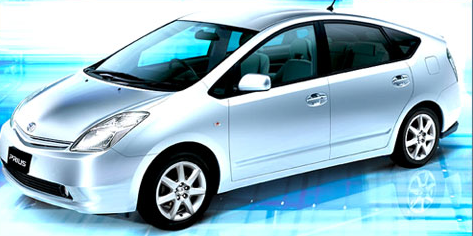
Getting a hybrid can do a lot more than cut gas bills and help reduce the impact on the environment–there are a lot of insurance discounts available, too. Most insurance companies recognize the importance of hybrids, and they want to reward drivers who choose to own these vehicles as, in general, people who buy hybrids have reduced their chance of injury by 25%, according to the Highway Loss Data Institute.
Similar to drivers who get a discount for not having an accident for a set amount of years, owners of these six hybrids should be searching for an insurance company that offers them discounts.
1. Ford C-Max
On the inside, the Ford C-Max is very similar to a Prius and owners get comparable gas mileage. However, that’s where the similarities end. Prius’ aren’t known for their power and some people aren’t very impressed with their looks. The C-Max offers up a better driving experience, more power and it starts at around $25,000 to make it a viable option for eco-friendly drivers on a budget.
2. Ford Fusion
Another Ford model that is considered to be one of the best hybrid cars due to the strong performance, fuel economy, and it even rates as the best midsize car for those on a budget (and not just for hybrid models). It has a four-cylinder engine coupled with an electric motor that produces 188 horsepower and gets around 47 mpg on the highway, which is fantastic for long commutes and road trips. Stop and go city traffic also isn’t a problem since the Fusion is known for great handling.
3. Toyota Camry Hybrid
Long touted for its reliability, when the Camry went hybrid it easily won over critics and long-term traditional Camry fans alike. It comes in right behind the Ford Fusion for affordable midsize cars, and the large cabin size is especially appreciated by families. It offers 43 mpg on the highway and 37 in the city, and it dishes up a nearly flawless transition between the gas and electric motor. For such a large vehicle, the mpg is extremely impressive and it’s slated to take over the Prius as Toyota’s hybrid of choice.
4. Chevy Volt
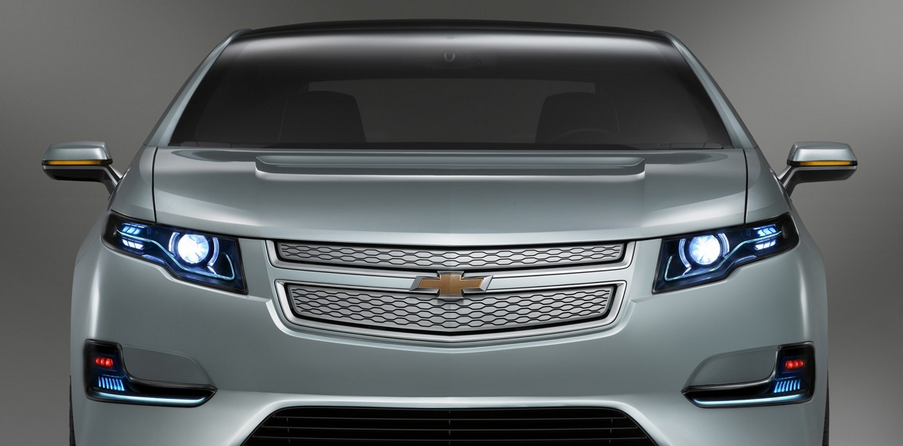
For drivers who are prone to taking long trips, or simply forget to plug in their engine, the Chevy Volt offers the best of both worlds. Extremely affordable, the Chevy Volt is the best option for combining gas savings with an electric engine and the range of a gas engine. The interior is luxurious and filled with high-tech options, which also leads to a slightly higher starting point in the mid-30s.
In general, it feels a lot like a traditional vehicle, and it’s a good transition model.
5. Nissan Leaf
As a 100 percent electric car, the Nissan Leaf makes a serious statement about being environmentally friendly. Some people think the cabin is too small, but for drivers who prefer a smaller vehicle, it also offers up beautiful, sleek lines. Just keep in mind that it can take 20 hours to charge an electrical vehicle, so for drivers who have trouble remembering to plug in their smartphones, this might be a bit of a challenge.
6. Prius V
The Prius is still a huge part of the hybrid market, and no best of list would be complete without mentioning the latest Prius V. The space is roomier, there’s plenty of cargo room and it comes with a 1.8 liter engine with four cylinders. It’s even possible to use electric-only mode for brief distances, but overall the Prius gets about 44 highway mpg. It’s prone to starting slow, but the bigger size is appreciated.
When considering a next car purchase, why not save money and the environment? There are constantly upgrades and changes in the hybrid car world, and they get better every year.
By Aaron Crowe

Big Rig Underride Crash Test
If you’re going to hit a big-rig tractor-trailer from behind, you’d better hit it straight in the center if you want to increase your chances of survival.
That’s one general conclusion from reading recent test results from the Insurance Institute for Highway Safety that show that passenger vehicles that crash into the back of large tractor-trailers are better protected when they hit the center of the underride guards on the back of trailers head-on than when they hit the far outer edge of the trailer. A $20 part may be all that’s needed to fix the problem.
An accident with a large truck, however, is never planned and a driver is lucky to have a second or more to react no matter what their speed.
The underride guards are meant to stop cars hitting the big rig from behind from sliding beneath the truck’s trailer in a crash. The horizontal guards do a good job when a car hits it straight in the center, the IIHS found.
But cars that hit the outer edge of the trailer — at 30% overlap and when half of the car overlapped the trailer — all but one of the trailers passed the test, according to the insurance institute, which is financed by the insurance industry.
“These things can do a good job if you’re fortunate to hit them on the spot” where they provide protection, says David Zuby, the institute’s chief research officer.
Otherwise, the underride guard often fails and instead of the guard absorbing the energy of the crash, the oncoming car’s windshield is the point of impact and the car can slide under the big rig. The airbags and seatbelts can’t do the jobs they were designed to do, and the windshield that has hit the big rig smashes into the front seat and can decapitate a driver. Watch the IIHS video of such a crash to see how damaging the safety feature failure can be.
“All the improvements in occupant protection that have helped drive down crash deaths in recent decades count for little when the front of a passenger vehicle ends up under a truck,” according to the IIHS press release. “When this happens, the top of the occupant compartment get crushed because the structures designed to absorb the energy of a crash are bypassed.”
A car’s engine compartment, also called the crumple zone, was meant to take such an impact. “That has to get crushed if you’re going to be protected,” Zuby says.
The tests involved a car hitting a parked truck at 35 mph. The guards would have also likely failed at higher speeds, Zuby says.
In its tests, the IIHS found that when the guards held up, the test car’s structure and airbags protected the crash test dummy in the driver’s seat. But when they failed, head and neck injuries were so high that real drivers would have died.
Of the 2,241 passenger vehicle occupants killed in large truck crashes in 2011, 260 died when the fronts of their cars struck the rears of trucks, the insurance institute reported. That’s down from 460 out of 3,693 in 2004, a decline it partly attributed to fewer people driving in a weak economy.
Federal crash data make it difficult to pinpoint how many of the deadly crashes involve underride, the IIHS says. But a 2011 IIHS study of 115 car crashes into the back of a heavy truck or semitrailer found that only about one-fifth involved no underride or negligible underride, and half had severe or catastrophic underride damage.
The underride guards can be improved simply by moving the vertical supports out more, which can take more of the impact in an overlap crash, Zuby says. Without enough support at the outer edges, the horizontal bar is just moved out of the way upon impact.
Trailer manufacturers have started installing stronger guards to meet tougher standards that trailers in Canada have had to meet since 2007 to withstand about twice as much force as U.S. trailers do.
The one trailer that passed in the 30% overlap in the IIHS tests was made by Manac, which sells trailers in the United States under the name Trailmobile. The 30% overlap test is the most challenging underride test, according to the IIHS, because “it is the minimum overlap under which a passenger vehicle occupant’s head is likely to strike a trailer if an underride guard fails.”
The supports of Manac’s underride guard are only 18 inches from the edge, is 20 pounds heavier and only costs $20, the insurance institute found.
For families of car crash victims looking to sue owners or manufacturers of tractor-trailers with faulty guardrail underrides, it can be a difficult case to win because the car driver can easily be seen at fault for driving too close and hitting the semi from behind, says Philadelphia attorney Scott Diamond, who specializes in personal injury law but has never had an underride case.
“It’s kind of hard to blame someone else for your fault,” Diamond says.
Dennis Schaefer, a personal injury attorney in Florida, says he settled a claim two years ago with a trucking company where a man whose family he represented was killed when his Corvette slammed into the back of a semi tractor-trailer. It appeared the driver hit the truck just left of center and overlapped on the left side, with the guardrail puncturing the windshield.
The car didn’t go under the truck, but spun into an adjacent lane and was run over by another semi, Schaefer says.
The claim wasn’t over a faulty guardrail or underride guard, but the plaintiffs claimed that the back of the truck didn’t have proper lights or reflectors.
The Corvette driver was intoxicated and speeding, Schaefer says — facts that a jury would likely give more weight to than how dangerous a truck is.
Aaron Crowe is a journalist who covers the auto industry for CheapCarInsurance.net.
By Aaron Crowe

Hail Storm
If you’re stuck in a car during a hailstorm and can’t get to an overpass or somewhere else to seek cover, there aren’t many options if you want to avoid damage to your car.
“When hail comes and you hear that ‘ping’ on the window, you just pray that the storm passes by and you don’t get hailed on,” says Michael Siciliano, co-founder of what he calls the Hail Protector, an airbag that makes a car look like the bouncy part of a playhouse jumper at a child’s birthday party.
There were 7,031 major hailstorms in 2012, with most happening in March, April and May in Texas, Kansas, Nebraska, North Carolina and Oklahoma. Hail causes $1 billion in damage to crops and property each year, according to the National Oceanic Atmospheric Administration.
That gives Siciliano and makers of padded covers or hail blankets plenty of business as hailstorm insurance claims averaged $3,118 from 2008 to 2011, according to the Highway Loss and Data Institute.
Marsha Jaramillo of Deltona, Fla., knows how damaging a hailstorm can be to a car. Jaramillo’s Nissan Sentra was hit by heavy hail in 1991 in Fern Park, Fla., causing the car to be deemed totaled by her insurance company. She got about $3,000 and was allowed to keep the car, which had body damage.
Since the Sentra didn’t suffer any mechanical damage, Jaramillo continued driving it until she traded it for another used can in 1995.
Comprehensive coverage in an auto insurance policy is meant to cover hail damage, and also covers such things as vandalism and theft. Minor hail damage, however, often isn’t worth claiming because repair costs don’t exceed the deductible. Major hail damage can total a car.
If you own the car outright and don’t have a loan outstanding on it, and get a check from an insurer for hail damage, you can keep the money and choose not to have it repaired, as Jaramillo did. The damaged car, however, may be difficult to insure for comprehensive and collision coverage.
Insurance claims for hail damage shouldn’t affect rates because they’re natural events that are out of a policy holder’s control.
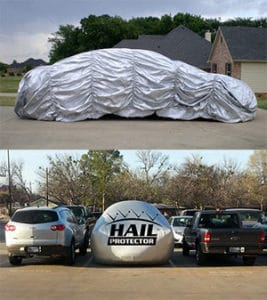
HailProtector.com
For drivers in hail-prone states who can’t get home and in a garage fast enough when a hailstorm is approaching, there aren’t many options, says, Siciliano, the Hail Protector’s inventor.
“All people could do was pray a lot or try to find cover,” he says.
Siciliano, who lives in North Texas, where hailstorms are plentiful, says he came up with the idea for the product when he saw an inflatable waterslide his daughter was using that had a constant airflow. His product expands like a balloon, with a constant airflow powered by batteries (one hour), car cigarette lighter (three hours) or continuously through an electrical outlet.
“I knew if it was too bulky, people wouldn’t use it,” he says. “So if it was just air, it would be easier to use.”
Selling for $300 to $400, depending on the size of the vehicle, the device has a cinch cord at the bottom to tie around the wheels and under the car so it doesn’t blow away in a storm, and inflates in five minutes. Hailstones bounce off the polyester material, which absorbs most of the energy of the hailstones, Siciliano says.
The Hail Protector comes with a lifetime subscription for severe weather alerts via smartphone or email, and gives hailstorm warnings of up to an hour. The National Weather Service provides the same alerts for free.
Whatever method you use to protect your car if you live in a hail-prone state, a little prayer as a storm passes overhead couldn’t hurt.
Aaron Crowe is a journalist who covers auto insurance for CheapCarInsurance.net.
By Aaron Crowe
 In the car buying world, impatience can be expensive.
Even after researching trade-in value and finding the most reliable car you can afford, you don’t want to rush into the finance manager’s office at the auto dealership and tell them to do whatever it takes to get you in the new car.
You’re probably exhausted from dealing with the car salesman, but don’t give up yet. If you’re not willing to spend a little more time checking your credit score before you go to the dealership, your impatience could cost you a few thousand dollars.
If you’re going to finance through the dealer, first check your credit score to make sure it doesn’t have any problems and to ensure it’s accurate. The Federal Trade Commission released a study in February that one in four consumers found errors on one of their three major credit reports that could lead to them paying more for products such as auto loans.
Don’t think that the dealer is doing you a favor by providing you a loan. With a credit score in hand, you can be in a stronger position to get a better interest rate, as personal finance blogger Glen Craig learned when he checked his credit score before shopping for a new car many years ago.
The finance manager offered Craig a 6.5% interest rate, a few points higher than the rate he had already gotten from an outside bank. Craig told him to take another look at his credit score and told him about the rate he had from the bank, and the manager beat that loan with a 3.5% interest rate on a three-year loan. He saved about $500.
“Even though I had gone through everything I could to negotiate the price of the car down I still would have lost out if I didn’t already have my credit score checked,” Craig says. “Once you sit in the finance manager’s office it’s a whole new ballgame.”
To get a low advertised rate from a dealer, having a preferred score and knowing what it is can be helpful, he says.
While a credit score is a key factor, it isn’t the only factor when evaluating an auto finance application, says Jacquelyn Johnson, a communications manager at Ally Financial, which provides auto financing services.
Ally Financial also looks at factors such as credit history, income, terms of the proposed transaction, and if the consumer has the ability to manager the proposed monthly payments, Johnson says. Its customers can apply for financing online before going to the dealership.
Auto loans are the third largest source of debt after mortgages and student loans, with approximately $783 billion in outstanding auto loan debt in 2012.
Though auto dealers don’t provide the financing for loans they help consumers set up, they have a financial interest in the loans and get a cut from the loan provider. The Consumer Financial Protection Bureau issued a warning in March about auto dealers making deals for higher loans to minorities, with the auto dealers getting higher revenue for loans with higher interest rates.
Good credit scores are needed more now than before the 2008 recession to get good loan rates, says Eric Counts of CreditNerds.com. Before 2008, “sub-prime” credit users with credit scores of less than 620 had approval rates of 60%, Counts says. Today, those sub-prime application approvals are down to 9%, a rise after falling to a low of 6% in 2009.
A loan for $25,000 can have major differences at different interest rates. A sub-prime borrower approved at 10% interest for 60 months would pay $531 per month and $6,870 in interest, according to Counts’ figures.
Someone approved for a first-tier prime rate of 1.9% for the same loan terms would pay $437 a month and $1,226 in interest. That’s a savings of $5,664 in interest and nearly $100 less per monthly payment.
Besides possibly having a wrong credit score, the dealer or bank could see a different score than what you see. They may be looking at a score from a different credit score agency, or their scores may be customized to help them predict how likely the borrower is to pay the loan on time.
There are plenty of imposter websites that the FTC warns against using, and only annualcreditreport.com is authorized to provide free annual credit reports that consumers are entitled to under the law.
Each of the nationwide credit reporting companies — Equifax, Experian and TransUnion — are required by federal law to provide a free copy of a credit report by request once every 12 months.
Aaron Crowe is a reporter who specializes in personal finance topics and covers the auto industry for CheapCarInsurance.net.
By Aaron Crowe
 Car ads are meant to grab your attention, with or without exclamation points: “Lease for only $99 a month!” “One at this price!” “Starting at only $15,999.”
But whether the phrases offer genuine savings requires some comparison shopping, reading the fine print, and asking the dealer a lot of questions.
Print, television, Internet and radio ads can have wording to be aware of when buying a car:
“Lease for only $99 a month.” The price is right, but a large payment of $3,000 to $5,000 is needed to start the lease. That caveat should be in the fine print of the ad. If you total the car after signing a lease, insurance will cover the car but not the $5,000 spent to start the lease.
The lease contract can also allow no more than 10,000 miles per year be driven, and 20 cents per mile thereafter, which doesn’t help people who drive the average of 15,000 miles per year, says Jarrod Holland, 38, who owns a public relations firm in North Carolina and has leased most of the 29 cars he has owned over his lifetime. Stellar credit may also be required to get the low lease price, Holland says.
If no money down is needed, a lease can be a worthwhile deal, he says. Holland once heard a radio ad for a Ford truck lease at $299 a month with no money down, and he made a U-turn to the dealership and immediately leased the truck.
“One at this price.” This phrase is often found in the small print at the bottom of an ad for what dealers call an “ad car,” and while it can be technically true, it could also be a bait and switch tactic to get shoppers in the door. The car may be an ugly color with no extras, or the dealer may say it has already been sold or is out being test driven.
The ads make clear that only one vehicle is offered at the low price, and a vehicle identification number, or VIN, will be provided.
The one “loss leader” car is used to get people in the door, Holland says. Some of the best deals are offered in August as dealers try to clear inventory for new cars in September, he says.
To get the car, Holland suggests getting to the dealership before it opens and finding the car so you can be the first in line to buy it. “I’ve tried but they’re usually gone by the time I got there,” he says.
“Starting at only $15,999.” This is the base price that will usually have an asterisk next to it, slyly alerting readers that it’s for a base model that doesn’t have all of the extras that the pictured car does It could be a car with a manual transmission, for example, or not have air conditioning or certain safety features. The pictured model can cost a few thousand dollars more, though neither price doesn’t include taxes and other fees.
“Low monthly payments.” A dealer can accomplish this by offering a low interest loan. But be aware of the “dealer markup” that the Consumer Financial Protection Bureau has warned of that can discriminate against minorities by charging them higher interest rates than the rate the lender gave the dealer.
The Federal Trade Commission warns consumers to ask dealers to clarify details about low interest loans. Among them: Will a higher price be charged for the car to quality for the low-rate financing? Is a larger down payment required to get the low rate? Is the loan for condensed period such as 24 months? Is a balloon payment due at the end of the loan? Do extra services such as rustproofing have to be bought to get the low rate?
Have you ever heard a car salesman say, “How low do your monthly payments need to be for you to feel comfortable?” It’s a way to get the monthly payments low, but the overall cost can increase dramatically.
“People don’t necessarily care because the dealer got their payments where they wanted them,” Holland says.
Paying $350 a month for 36 months may look good, but stretch that payment to 60 months and that extra two years of payments adds up.
“We’ll pay off your trade.” If your car has “negative equity,” meaning you owe more on it than it’s worth, a car dealer will pay off the balance of the loan when you trade it in for a new car. The FTC warns that trade-in offers can be misleading and the negative equity can be included in the loan for the new car.
The FTC gives an example of a car with a loan payoff of $18,000, but worth only $15,000. The dealer promises to pay off the negative equity of $3,000, but it shouldn’t be included in the new loan. If it is, then you’re paying off part of the trade-in instead of the dealer.
The FTC recommends several options, including postponing the purchase until you have positive equity, and making sure that the negative equity is paid for by the dealer and that the terms are in the contract.
The best way to read a contract is to read it backwards, says Dave Phillipson of CEO Space.
“The biggest sticking points are at the end of a contract,” Phillipson says. “They put the simple ones first to create a ‘yes’ momentum so by the end, you’re just signing and agreeing because the first few were so obvious.”
Aaron Crowe is a journalist who covers auto news for CheapCarInsurance.net.
Good news for carmaker Tesla Motors http://www.teslamotors.com/. The maverick electric car company zoomed out of the red and into the black for the first time ever in the first quarter of this year. Sales of the all-electric Model S, which surpassed expected numbers, are responsible for the Silicon Valley company’s first profitable quarter since its inception in 2003. Shares of the company rose a whopping 15.94% in one day as a result of the announcement that they’d turned a corner into profitability.
The automaker’s financial picture looked gloomier at the end of 2012, when it posted a loss of $75 million. Financial experts predicted they would have trouble turning a profit any time in the near future because of their limited ability to manufacture enough cars to sustain the company.
The Tesla electric Model S sedan is the first luxury all-electric sedan and is built in Fremont, California. It’s marketed to high-end consumers and has a slick body design and deluxe features comparable to a Mercedes, BMW, Audi or Lexus. The price tag for the vehicle ranges from $52,400 to 72,400, depending on battery size. Three battery options include 40, 60, and 85 kWh. Tesla sold 4,750 of the vehicles, which amounts to roughly 250 more than their target for the first quarter. The vehicle only became available to the public in 2012, but was unveiled in 2009.
The Tesla Model S has garnered high praise from the automotive press. It received ‘Car of the Year’ awards from Automobile http://www.automobilemag.com/ and Motor Trend www.motortrend.com/ magazines.
In bestowing the coveted award, Motor Trend said, “By any measure, the Tesla Model S is a truly remarkable automobile, perhaps the most accomplished all-new luxury car since the original Lexus LS 400.” They noted that Tesla has 250 patents covering the innovatively designed vehicle, with additional patents pending.
Tesla chief executive and co-founder Elon Musk said, “I am incredibly proud of the Tesla team for their outstanding work. There have been many car startups over the past several decades, but profitability is what makes a company real.” He added that the company will keep fighting for the electric car revolution.
Tesla markets its vehicles in 31 countries. Sales have totaled roughly 10,000 vehicles.
On a less happy note, Fisker Automotive http://onward.fiskerautomotive.com/en-us, Tesla’s main counterpart in the luxury electric car market, is still treading stormy financial waters. According to the Wall Street Journal, the struggling automaker has hired a prominent legal firm to investigate the possibility of declaring bankruptcy in order to stave off creditors while it attempts to attract new investors. The company, which produces the Karma electric hybrid, which comes with a $100,000 price tag, has faced a series of major financial setbacks. They face a deadline on April 22 for a payment on a 2009 loan they were awarded from the Department of Energy. They’re seeking financial backing to produce their second hybrid vehicle, the Atlantic. Their founder, Henrik Fisker, resigned from the company in March.
By Aaron Crowe
 If you’ve ever driven a convertible on a sunny day, sped a stickshift Maserati through winding hills, or gunned a 1967 Ford Mustang to 100 mph on a desolated road, then you know the joy of driving.
I’ve done all of those, and I’ll never forget the fun of those drives.
But what if instead of being behind the wheel and taking a leisurely road trip and enjoying the sights, or otherwise finding satisfaction in driving a car, the car drove itself and you just sat there and let the car do all of the work? A driverless car might be safer, but would it take the joy out of driving while lessening a driver’s responsibilities?
For Brian Bagdasarian, founder of APerfectShirt.com who does a lot of work in his car while driving, having a self-driving car such as the Google Prius would save him a lot of time.
“How much of your driving do you actually enjoy?” Bagdasarian asks.
Driving in a traffic jam is never any fun. A driverless car, where a computer takes over and uses sensors to determine where cars are around it and can get to its destination without a person’s assistance, can make driving a skill of the past.
Self-driving cars for the masses are at least five years away, partly because it takes three years to produce a vehicle when new technology is introduced, but also because smaller safety steps are being installed on cars piecemeal as they become more affordable, says Paul Green, a research professor at the University of Michigan Transportation Research Institute.
Testing driverless cars is a long way from finding them for sale at your local car dealer, Green says.
“Having a bunch of cars driving around on the highway under limited conditions is not the same as ‘Let’s give this to the American public,’” he says.
That’s because safety systems are still being refined and added to cars. “We are just beginning to develop the technology,” Green says, such as collision avoidance braking that uses radar to detect how close a car is in front of you and automatically applies the brakes if the car in front slows down.
Other safety features — some of which are already available on cars and some that are being developed — include lane departure warnings and adaptive stop and go cruise control that isn’t available yet but will slow a car from 65 mph to zero if traffic slows without the driver having to lift a finger, or a foot.
More high-tech safety measures have the “prospect of substantially reducing crashes and fatality rates,” Green says, while also giving the driver less interest in driving during traffic congestion, for example.
The “driver” of a driverless car could become less engaged in driving and feel less responsible for driving, but safety systems must let drivers know of coming problems (such as drifting out of their lane or a child running behind their car in the driveway) so that they can take over in an emergency, Green says.
New safety devices have a history of not being as effective as originally hoped because drivers compensate with riskier behavior, such as driving faster in slippery conditions because they have anti-lock brakes, says John Wetmore, producer “Perils for Pedestrians,” a TV series that examines issues affecting people who walk.
“Self-driving cars might be safer, but you can expect much of that increased safety to be neutralized by decreased following distances and similar changes,” Wetmore says.
And, he asks: “How does a pedestrian make eye contact with a self-driving car?”
Machines assisting with driving — or parking, as the new Audi does by parking itself — are a good start to drivers becoming less relevant eventually, which is a good thing and will make driving safer, says Michael O’Shea, CEO of Abalta Technologies, which works with insurance companies and car manufacturers to make technology safe in a car.
“I would trust a machine more than I would trust an average driver on the road,” O’Shea says.
Driverless cars could lead to changes that go beyond driving, he says. If they lead to fewer accidents, then heavy cars made of steel wouldn’t be needed anymore to protect drivers in crashes.
Parking lots and car ownership could become unnecessary if a driverless car could pick you up and deliver you to your destination, and then go pick up other drivers during the day until you need a ride home, O’Shea says.
Young people prefer technology and using their smartphones, he says, and are likely to prefer a driverless car as the joy of driving leaves their memories.
That might be better for car safety, but driving a stickshift convertible on a sunny day in the hills won’t feel the same if the car can do it by itself.
Aaron Crowe is a journalist who covers the auto industry for CheapCarInsurance.net.
By Aaron Crowe
 It seems that any time gas prices start rising dramatically, scam artists come out with more products that are supposed to help drivers save gas.
They often don’t work, and even if they do work a little bit, it’s nowhere near the double-digit fuel economy improvement that they promise, according to the Federal Trade Commission and tests by U.S. Environmental Protection Agency. Some can damage a car’s engine.
While the EPA’s tests don’t check what effect gas-saving products will have on a vehicle over time, any additives or modifications to an emission control system could harm the sophisticated and complex systems that area meant to alert drivers to problems.
For a full list of gas-saving devices that don’t work, check out the EPA’s “Aftermarket Retrofit Device Evaluation Program” results. It tested aftermarket devices and fuel additives that manufacturers claim will improve fuel economy or reduce exhaust emissions.
Many of the tests were done in the early 1980s, and diminishing interest in the program led to the most recent report being issued in 2005.
Here are some of the types of products that haven’t been found to work well, along with some false claims to look out for:
Improved air intake. Products such as the $102 Fuel Genie are simple-looking devices installed into the air intake hose closest to the air filter box, with the idea being that they improve air flow and thus increase gas mileage while adding horsepower and cleaner emissions.
Consumer Reports found the Fuel Genie — a plastic device with curved blades — didn’t result in any significant improvement in performance or fuel economy. A similar device called the Tornado Fuel Saver had the same poor results.
Fuel additives. Some ads claim these products are endorsed by the EPA, which says it doesn’t certify fuel additives. Such additives are required to be “registered” with the EPA, but the EPA doesn’t determine if the fuel additive works and registration doesn’t mean it endorses the product.
There are also aftermarket alternative fuel conversions that the EPA recommends against. Using such gaseous and alcohol fuels will result in fewer miles per gallon than using gasoline or diesel, it says.
Turn water into fuel. The EPA recommends against devices that claim to turn water into fuel not only because it has “no credible and complete data showing a positive fuel economy benefit from these devices,” but the installation instructions for some of the devices are tampering. Tampering with a car’s emissions control system is prohibited by the Clean Air Act and punishable by fines.
Advertisements for such devices claim to use energy from the car’s battery to split water molecules into hydrogen and oxygen gas, which is then burned with a car’s fuel. Following instructions to adjust the air and fuel ratio, or adjust a know and listen for the engine to misfire, are tampering, according to the EPA.
Fuel line devices. These may be advertised to heat, magnetize, ionize, irradiate or add metals to a vehicle’s fuel lines and increase fuel economy and reduce exhaust emissions. The EPA has found “no substantive effect” on either, and installation of devices that retard timing or adjust the air-fuel radio may be considered tampering.
One of these devices, the Platinum Gas Saver, was found by Consumer Reports to have no change in fuel economy, despite claims to improve it by 22%. The device includes tubing and plastic reservoir that claims to extend engine life by cleaning out abrasive carbon deposits. It connects to a vacuum line leading to the intake manifold and is supposed to add microscopic amounts of platinum to the air and fuel going to the engine, helping burn gas more efficiently and cleanly.
If you’re not satisfied with a product that claims to save gas, the FTC recommends contacting the manufacturer for a refund. Most companies have money-back guarantees.
If that doesn’t work, the FTC recommends contacting your local consumer protection agency or filing a complaint with the FTC.
Before getting into that situation, the best advice is to avoid buying such products and to take real steps while driving that can increase your gas mileage by 20%: Don’t drive with a heavy foot on the gas, coast when you can, drive the speed limit and don’t be an aggressive driver.
Aaron Crowe is a journalist who writes about personal finance topics and auto insurance for CheapCarInsurance.net.

