By Aaron Crowe
Auto dealers that charge minorities higher interest rates on car loans must stop the discriminatory practice or the banks backing the loans will be sued for unfair lending, a federal watchdog agency announced Thursday.
For consumers seeking auto loans through their car dealer, future loans could either be more expensive or cheaper, depending on who you believe. Loans could get cheaper if dealers aren’t rewarded by banks to push more expensive loans, as the Consumer Financial Protection Bureau is seeking. The National Auto Dealers Association, however, says the CFPB’s approach will make auto loans less competitive.
The CFPB pointed out research that black and Latino borrowers are more likely to pay higher interest rates than white borrowers, even if they have the same credit risk.
“Consumers should not have to pay more for a car loan simply based on their race,” CFPB Director Richard Cordray said in a statement, adding that its announcement “clarifies our authority to pursue auto lenders whose policies harm consumers through unlawful discrimination.”
The National Consumer Law Center found in a 2010 study that while Hispanics were discriminated against on auto loans across the country, African-American customers were race-coded in auto loan documents in every state. In all 50 states, blacks paid 270% more when buying a car through a GMAC loan than whites did.
Here’s how the auto loans work, according to the CFPB: When buying a car, consumers may receive financing from an auto dealership instead of directly from a financial institution a practice called “indirect auto lending.”
The dealer often facilitates indirect financing through a third party lender, such as a bank or credit union, and the lender provides the dealer an interest rate.
Often, the lenders allow the dealer to charge the consumer a higher interest rate than the rate the lender gave the dealer. Called a “dealer markup,” part of the revenue from that higher interest rate is shared by the lender and the dealer.
According to the CFPB, auto dealers have discretion to charge consumers different rates regardless of their creditworthiness. This increases the risk of pricing disparities based on race, national origin and other factors, with blacks and Hispanics being charged higher markups, the agency says.
The CFPB doesn’t have authority to regulate car dealers, so it is targeting banks that fund the loans the car dealers sell. The agency warned banks that they could be sued for violating fair lending laws if they have policies that encourage discriminatory practices.
To fight it, the CFPB recommended that banks train auto dealers in how not to discriminate, and change how they pay dealers to a flat fee per loan, regardless of the interest rate.
Changing how dealers are compensated for loans could increase loan rates for buyers and the CFPB’s recommendations “will only weaken the consumer’s ability to secure financing at the lowest possible cost,” the National Automobile Dealers Association, NADA, and the National Association of Minority Automobile Dealers, NAMAD, said in a joint statement.
“The dealer-assisted financing model (indirect auto lending) has been enormously successful in both increasing access to, and reducing the cost of credit for millions of Americans,” the auto dealers said. “Consumers overwhelmingly choose optional dealer-assisted financing because it’s convenient and competitive.”
Aaron Crowe is a journalist who covers the auto industry for CheapCarInsurance.net.
By Aaron Crowe
The roundabouts of Europe may look like a driver’s nightmare with cars going every direction, and they’ve driven the Griswold family loopy in National Lampoon’s “European Vacation.”
Plant a few of those in America and the odd-looking circles might confuse too many people and lead to more accidents. Or, so says conventional wisdom.
As more roundabouts gain acceptance in the United States, drivers are learning the rules of driving in them and they’re leading to fewer accidents.
In Washington state, the city of Lynden is building two roundabouts to help reduce serious crashes on streets leading to a highway. In 2009 it removed a traffic signal and replaced it with a roundabout, decreasing traffic delays. The state has about 245 roundabouts.
Along with slowing drivers down, roundabouts reduce the likelihood of rear-end crashes and their severity by removing the incentive for drivers to speed up as they approach green lights and reducing abrupt stops at red lights, according to the Insurance Institute for Highway Safety. They also eliminate T-bone and head-on collisions that are common at traffic lights.
The IIHS found in a 2001 study that converting intersections from traffic signals or stop signs to roundabouts reduced injury crashes by 80% and all crashes by 40%.
Roundabouts are becoming more popular in the United States, with 23 states having active programs, according to the Arizona Department of Transportation. They increase efficient traffic flow by up to 50%, reduce carbon emissions, and reduce fuel consumption, the state says.
They’re not as difficult to use as you’d think, with multi-lane roundabouts easy to use if drivers stay in their lane and yield to cars in the roundabout. The key is to drive slowly and not stop in the roundabout, and to be a defensive driver and yield to cars moving in the roundabout.
Only enter a roundabout when a traffic gap appears, and be sure to yield to both lanes of traffic if you’re in a multi-lane roundabout.
As more roundabouts are built in the U.S., such as in Ohio, more people may question spending money on something that isn’t as straight forward as a stop sign or traffic signal. A circle, however, may be the simplest way to drive through an intersection without getting in an accident.
 A recent bill in Idaho which will allow insurers to deny renewal to cars that are registered out of state has made it through the state legislature by a big margin. The bill, HB 11 cleared the state House with a 65-0 vote last month and the Senate passed it by a 34-0 vote on the first of March. State House leader Scott Bedke (R-Oakley) signed it and sent it back to the Senate where it will be sent on to Gov. C.L. “Butch” Otter.
HB 11 allows an insurer to choose not to renew a customer policy if “the insured automobile is registered in a jurisdiction other than Idaho.” The new law will address the issue of policyholders that have moved out of state but keep their policies in Idaho due to the reasonable rates in the state. The National Association of Insurance Commissioners (NAIC) says that Idaho has the fourth lowest rates in the U.S for auto insurance coverage.
Insurance executives claim that some customers had moved to a state where their insurance company was not licensed to write policies and if the new state was expensive for car insurance, some policyholders were hanging onto their Idaho coverage to save money.
It should come as no surprise that the bill was heavily supported by the insurers writing policies in Idaho. Insurers brought the bill to the House Business Committee earlier in the year and worked tirelessly to get it passed. According to the National Association of Mutual Insurance Companies (NAMIC) the bill is a “reasonable and consumer-protection oriented” measure for Idaho insurers.
HB 11 does not allow an insurer to cancel a policy mid-term just because the car is not registered in the state of Idaho or is re-registered in another state during the term of the policy. Insurers do have the option of waiting till the policy term ends and then refusing to renew the policy. Insurance experts feel that the bill was written to be lenient on drivers to a certain extent but giving insurers an option to eventually cancel the policy of customers not playing by the rules.
Experts say that HB 11 was simply a clean up of some of the insurance code that regards the cancellation of policies. According to the bill, policyholders will be on their own in keeping track of customers that move out of the state.
New Jersey Considering a Similar Bill
New Jersey has a similar problem, only a bit in reverse. New Jersey consistently has some of the most expensive insurance rates in the country so drivers often misrepresent their residency in order to lower their car insurance costs.
In order to address the problem Assemblyman Wayne DeAngelo (D-Hamilton) has sponsored a bill that classifies “reverse rate evasion” as a crime. He hopes this will stop drivers from buying auto insurance coverage in states like Pennsylvania and North Carolina in order to lower their premiums.
In a recent statement DeAngelo said, “Vehicle owners who misrepresent their residence are looking to reduce their own insurance premiums, but this instead results in a loss of revenue to the state, higher premiums for those who properly register their vehicles and reduced revenue for New Jersey insurers.”
Idaho recently passed a bill giving insurers the right to not renew policies on vehicles that are registered out of state. New Jersey is considering similar legislation to cut down on fraud.
The anti-texting message is taking hold as lawmakers across the country have introduced bills to raise fines and stiffen penalties for driving while texting.
The various pieces of legislation come on the heels of a continuing stream of reports and studies that show that drivers are indifferent to the dangers of texting while driving. A recent report by the AAA Foundation for Traffic Safety talked of a “culture of indifference.” The report found that while drivers basically agree that distracted driving is dangerous, they often engage in it themselves while driving.
Texting laws vary, according to the Insurance Institute for Highway Safety (IIHS), texting while driving is currently banned in 39 states and the District of Columbia but the penalties will vary in each state.
Here are just a couple of states that are looking to strengthen their texting while driving laws:
Connecticut is Cracking Down
One of the more stringent laws is being discussed in Connecticut. Rep. Mitch Bolinsky (R-Newtown) introduced HB 5550 to the Committee on Transportation.
The bill would penalize repeat offenders with a month-long suspension of their license. Currently Connecticut drivers are prohibited from using handheld phones for calls or texting while driving. Hands free devices are acceptable but are prohibited for drivers under the age of 18.
In addition, the bill would incorporate the following penalties:
- Two time offenders would lose their license for two days.
- Three or more time offenders would have their license suspended for a month and it would only be reinstated after they had completed a retraining class.
During testimony Bolinksy said that he would like to use “e-enforcement” equipment such as police department vehicle mounted cameras to capture images of distracted drivers. He said, “Use and abuse is rampant, with state and local police resources stretched thin. I submit that it’s time to ‘think outside the box’ to save lives.”
The Connecticut DMV is concerned about the license suspension plan saying that it would dramatically increase the number of suspensions and the DMV does not have the resources or staff to deal with the huge increase.
Rep. Jason Perillo (R-Shelton) also introduced a bill, HB 5545 which would raise
fines associated with texting while driving. The bill proposes the following fines:
- First-time offenders who currently face a $125 fine would see an increase to $200.
- Second time offenders currently face a $250 fine which would increase to $300.
- Third and over violators currently face a $400 fine and that would increase to $500.
Florida Joining the Texting Ban
While Florida currently has some of the loosest laws in regards to texting while driving, state lawmakers hope to change that. Currently Florida does not have a statewide ban on the use of hand held phones or texting while driving. The state also allows young and novice driver to us their phone while behind the wheel.
This puts Florida in the company of Hawaii, Montana, South Dakota and South Carolina who also do not have statewide bans.
Reps. Doug Holder and Ray Pilon (R-Sarasota) recently introduced HB13 which would ban texting while driving and also charge points to the licenses of drivers who were found to be texting while driving and were involved in an accident. It would add six points to a license putting it on the level of a hit and run. Putting six points on a license will drive up a consumers insurance premiums.
A companion bill, SB 52 would bar drivers from using any non-hands-free device while driving.
Virginia Looking to Stiffen Penalties
Virginia currently bans all drivers from texting while behind the wheel but wants to stiffen the penalties for violators. There are currently two bills working their way through the legislature.
SB 1222 would increase the fines for texting behind the wheel from a very low $20 to $250 for a first time offender. If it was your second or above violation the ticket would go from $50 up to $500. The bill also moves the violation to a primary offense which means that police can pull you over for texting alone.
States across the country are tightening up their texting while driving laws as studies have shown that drivers have an attitude of indifference to the dangers of distracted driving.
By Aaron Crowe
 Segway users who drink and drive when using the “personal transporters” recently got a break when a Minnesota Court of Appeals ruled that the Segway isn’t a motor vehicle and drunken driving laws don’t apply to it.
Police in Medina, Minn., arrested a man for driving with an alcohol concentration of .08% or more, along with a DWI charge, or driving while intoxicated. He appealed and won, partly based on an earlier case where a wheelchair was ruled to be a pedestrian.
That’s one of the few times when DWI laws were lessened. Most states — whether through legislation or court rulings — aim to increase penalties for drunken driving.
Every state has a minimum .08% blood alcohol content level required before someone can be declared legally drunk, so states start there and increase penalties. Here are some recent DWI and DUI (for driving under the influence) laws that are being revised, often the result of someone being killed by a drunk driver:
North Carolina: Legislators are looking to close a loophole that treats some repeat drunken driver like first-time offenders. The bill is tied to a case where a man killed a couple and their granddaughter in the 1980s, and has since had numerous DWI charges and been in and out of prison, but still isn’t considered a habitual DWI offender in the state.
North Carolina requires someone with four DWIs within 10 years to be listed as a habitual offender, leading to more prison time. The defendant in this case wasn’t treated as a habitual offender because there was a 10-year window between convictions while he was in prison. The bill would close that window.
Arkansas: A House bill makes it easier to prosecute a DWI offender who injures someone else in a DWI wreck. It would allow the driver to be charged with second degree battery, which carries a stiffer penalty.
New Hampshire: A state DWI law that took effect Jan. 1 expands drunken driving to the use of “any other chemical substance, natural or synthetic.” The include cold medicines, sleep aides, prescription medications and sniffing paint and glue.
New Mexico: A DWI bill would require the driver’s license to be permanently taken away from a drunken driver convicted of DWI five times. An appeal for an ignition interlock wouldn’t be allowed if it becomes a law.
The bill’s sponsor told a TV station that one person was still driving in New Mexico after 13 DWI convictions. Another driver with eight convictions and 19 DWI arrests was allowed to drive with an interlock device.
Mississippi: Auditors found that the state misused millions of federal highway grant dollars designated for resolving alcohol-related vehicle crashes. More than $7 million was improperly channeled for use in general enforcement, such as curbing speeding or seat-belt violations, and not to stop drunken driving.
To fix the problem, the state Office of Highway Safety added an auditor, among other internal controls. Drivers in Mississippi, which is one of 11 states without a law barring open containers in vehicles, may expect to see police looking more for drunken drivers than speeders. The state must only prove impairment, not that it was because of a controlled substance.
Mississippi legislators are studying a bill that would require an ignition lock by people convicted of DUI. The House there recently passed the bill, which next goes to the state Senate.
Wisconsin: Six bills are being proposed to harshen the state’s drunken driving laws. They include requiring first-time offenders to go to court, and a third-time offense being a felony requiring the defendant’s vehicle be seized. Mandatory jailtime would also be imposed, from six months to three years in jail if someone is injured, and 10 years if someone is killed.
Michigan: State legislators are considering extending a law to keep the blood alcohol level at .08%. The current law setting that limit expires in October, and if legislation isn’t passed, the BAC would go back up to .10%. Alcohol related driving fatalities have gone down 25% since the .08% BAC was enacted in 2003, and the state could lose more than $50 million in federal funding if it reverts to the higher level.
Aaron Crowe is a journalist who covers auto insurance for CheapCarInsurance.net.
 Gas prices are rising fast, with $4 per gallon common and up as high as $5 per gallon in Los Angeles.
Gas prices usually rise between February and Memorial Day as the costlier summer-blend gas is produced and more people drive while on vacation. But the nationwide rise of 47 cents since mid-January is one of the earliest increases that some experts say could lead to all-time highs.
The average price across the country is $3.77 a gallon, but expect that to rise, according to a USA Today story.
Remember record high gas prices in the summer of 2008, when the national average in July was $4.11 per gallon? Those may look like the good old days.
The story cited an oil broker who speculates that prices will rise in March, but will drop in the summer. That’s because once prices hit $4 a gallon, people feel the pain enough in their wallets that they drive less.
It’s also when sales of smaller, gas-efficient cars go up, including electric vehicles, and commuters find other ways to get to work such as public transportation, biking and working from home.
“Gas is going to continue its 32-day steady rise at the pump through April to $4 a gallon,” says Chris Faulkner, CEO of Dallas-based Breitling Energy Companies, in a press release. “This number, coupled with higher heating bills and lower paychecks due to expiration of the payroll tax holiday, means shrinking budgets and increasing unrest among consumers.”
To save gas, the most common methods are to drive the speed limit and not accelerate fast. Here are 12 more tips from Faulkner on how to make your trip to the gas pump less painful:
1. Fill up your tank on Wednesday or Thursday before 10 a.m. Gas prices rise on Thursdays in anticipation of weekend travel, and 10 a.m. is when most gas station owners make their price change for the day. Unless it’s an emergency, don’t buy gas on Friday or weekends.
2. Don’t let your car idle, either when you warm it up or when you are at a standstill. If you’re going to be standing for more than a minute, running your engine wastes more gas than restarting the engine.
3. Remove unnecessary items in your car. Every 250 extra pounds eats up an extra mile per gallon of gas.
4. Avoid the convenient gas station on the side of the highway as you drive home from work. Such stations can charge up to 15 cents more per gallon.
5. Save money with self-service and look for gas stations where paying cash costs the same as using a credit card.
6. Double check the price to ensure you’re not paying more if you do use a credit card. Some stations charge a nickel or so more per gallon for using a credit card, so if you’re using cash be sure to hit “cash” on the pump.
7. Drive less by combining errands, carpool and plot the shortest route before you leave the house.
8. Check for traffic and detours online, on a smartphone or on the radio before beginning your drive so you can avoid wasteful backtracking and idling.
9. Keep your windows closed when driving on the highway. Open windows can reduce gas mileage by as much as 10%. In stop-and-go traffic, open the windows and turn off the air conditioning to save more money.
10. Rent fuel-efficient cars when you travel and research reasonably priced places to buy gas before you leave.
11. Download a gas app for your phone. GasBuddy is a free app that will help you find the cheapest gas near where you are, and Mapquest has an online finder for gas prices.
12. Be loyal to one gas company and get rewarded with its cash-back credit card reward program. You might not save money at the pump immediately, but getting cash back can help pay the credit card bill for the gas when it arrives in the mail.
By Aaron Crowe
 Driving in Colorado and Washington State is getting interesting for marijuana users.
Voters in both states passed measures in November making recreational use of the drug legal for those 21 and older, though it can only be smoked in private and not in public or while driving. Driving under the influence of marijuana — just like alcohol or drugs — is still illegal.
Each state, however, has different methods to measure if a driver has smoked enough pot to be impaired, leading to some potential problems for smokers unsure when they can drive after using the drug.
“As marijuana becomes more and more available, it’s logical to assume more and more people will drive under the influence,” says Larry Mertes, a criminal defense lawyer in Boulder, Colo., who has also been a deputy district attorney there.
Each state is taking a different view on how to measure how much THC, the active ingredient in marijuana, can be in a driver’s blood before they’re illegally driving under the influence. It’s sort of like the blood-alcohol level required to be legally too drunk to drive.
Washington has a legal limit of 5 nanograms of THC per milliliter of blood, while Colorado hasn’t set a legal limit for THC, although Colorado lawmakers are studying such a limit.
Critics question the limits, the effects of driving while high, how well trained police are to test for driving under the influence of marijuana, and other legal problems such as how to legally buy, sell, grow or transport the drug that’s now legal to smoke in private.
A THC limit is meaningless because it isn’t dispersed in the body the same way alcohol is, and in fact THC levels go down after inhalation while alcohol levels in the blood increase after use, says Paul Armentano, deputy director of the National Organization for the Reform of Marijuana Laws, or NORML.
Peak levels of THC appear at inhalation, and the impairing effects of using marijuana appear 20 to 40 minutes after use, Armentano says. In other words, the maximum effects from using the drug lag the blood content levels of THC.
Because THC levels aren’t always directly linked with levels of impairment the way blood-alcohol levels are, it’s difficult for states to come up with effective and responsible standards of how much pot makes driving under the influence of marijuana dangerous, says Jeffrey Reynolds, executive director of the Long Island Council on Alcoholism and Drug Dependence.
Still, no one should drive under the influence of pot, alcohol or other drugs, Reynolds says.
“Operating a vehicle is the most complex task most of us do all day and being impaired by anything — alcohol, marijuana, prescription drugs and even cell phones — puts us and those around us at incredible risk,” he wrote in an email.
“It’s a shame that as we make progress in reducing drunk driving, we might be going backwards with the legalization of marijuana,” he said.
Effects of marijuana on driving
The impairment effects dissipate rapidly an hour after use, and in three to four hours the THC level in the blood is back to baseline, says Armentano, who has written an analysis on the effects of marijuana on driving.
But as drinking a beer won’t affect a heavier person who drinks often as much as it would an infrequent drinker, someone who smokes marijuana often won’t feel the effects the same way a first-time user will, he says. Someone who smokes a lot of pot could have stopped smoking five hours before they’re pulled over for driving under the influence and still have high THC levels, Armentano says.
While NORML’s stance is that pot smokers shouldn’t be driving while under the drug’s influence, it points out that the effects on psychomotor skills are modest and don’t last long. The effects on driving include slow reaction times, including braking later, weaving, reduced speed, and leaving more distance between their car and the car in front of them.
While alcohol drinkers may think they’re sober to drive when they’re not, marijuana smokers see themselves as being more impaired than they actually are and are more likely to drive slower, make fewer lane changes and overestimate time, Armentano says.
One in 10 adults use marijuana, he says, and they immediately know after smoking that they’re impaired and shouldn’t be driving.
“Who is going to smoke marijuana and then decide while smoking that they’re going to go for a drive?” he asks.
In Colorado, the new law has created more questions as state legislators try to determine what level of THC is needed for impairment while driving. The Colorado Department of Transportation has an “R-U-Buzzed” app to determine blood-alcohol concentration and will call a cab for the driver. It doesn’t have one for pot smokers.
Legalization also raises the question of where to buy it, Mertes says. Cities are tasked with implementing the new law, and some are starting to ban the sale of marijuana for legal use, just as cities have done in banning medicinal marijuana dispensaries in states where it’s legal.
Police tests for marijuana
If an officer pulls someone over for weaving or another sign of being under the influence, one of the first things they may ask a driver is if he’s been smoking marijuana, Mertes says. The police want the driver to admit to using the drug within a certain amount of time so they can determine he’s still impaired by it, he says.
“Almost never does it help you to talk to police,” Mertes says “Almost never does it help you to go into details.”
A roadside exam used for alcohol impairment won’t necessarily work for pot use, and a drug recognition expert may have to be called in to check for symptoms of smoking marijuana, he says.
If a blood or urine sample is taken later, any THC could have been there from smoking weeks ago, Mertes says. THC is fat soluble and a regular pot smoker can have it in their urine for up to six weeks, and can have inert THC in their blood cells.
“Everybody who’s a regular use of marijuana isn’t going to be impaired by having one joint,” he says.
The maximum penalty for driving under the influence of the drug is six months in jail and a $500 fine, along with up to two years on probation, and mandated therapy and drug counseling sessions, Mertes says.
Aaron Crowe is a writer who writes about auto insurance for CheapCarInsurance.net.

By Aaron Crowe
Picking on Lindsay Lohan is easy, what with all of her legal problems that seem to constantly get her in the news.
Lohan’s problems, however, can be society’s gain if you consider them from the standpoint of lessons to be learned as a driver.
The movie star has a long list of run-ins with police on charges of drunken driving, lying to police, reckless driving and other crimes that have either been resolved or she’s still going to court over. The list may be growing as you read this story, so Google “Lohan driving” for the most recent updates.
Whatever her legal problems are at the moment, there are plenty of things to learn from Lohan’s driving habits, or at least alleged driving habits if she’s convicted:
1. Shut up. Lohan is accused of lying to Santa Monica, Calif., police when she told them she wasn’t driving a Porsche involved in a collision with a truck. You should never lie to a police offer — partly because it’s a crime by itself — but it rarely helps a driver to talk with police if they’re likely to be arrested for a crime, defense lawyers say.
“From our standpoint, it is almost never good to speak to law enforcement,” except to provide identification and insurance and car registration documents, says Paul Wallin, a criminal defense attorney in Southern California who has represented DUI defendants.
Miranda rights don’t apply at the scene of a crime, and police don’t have to read those rights against self-incrimination until a suspect is in custody, Wallin says. Still, people have a legal right not to talk to police, and doing so can only help police, he says.
About the only time it can help to talk is if you’re trying to explain that you acted in self-defense, such as if a road rage driver tried to harm you and you punched them, says Christopher McCann, a DUI and defense attorney in Orange and Los Angeles counties.
“The cops aren’t out there to be your friend. They’re out there to make a case,” McCann says.
2. Don’t be on probation. The sentencing for a probation violation can be just as much, if not longer, than the crimes you’re arrested for, Wallin says. When Lohan’s most recent charge of lying to police happened last summer, she was on probation in a jewelry shoplifting case, meaning a judge told her she wouldn’t go to jail if she kept out of trouble.
Any new arrest brings a probation violation charge, in which a judge and not a jury decides guilt. The threshold of being guilty “beyond a reasonable doubt” doesn’t hold for probation violation hearings, Wallin says, only a lower threshold where a judge must believe by 51% of the evidence that the probation terms were violated. Lohan could get sent to jail for nine months for the violation, more than the six-month sentence if convicted of lying to police.
3. DUI convictions are expensive. To Lohan’s credit, she served the 360 hours of labor at a county coroner’s office when she was on probation for drunken driving. Community service is the easiest part of being convicted of drunken driving. The penalties vary by state, but include having a license suspended, limited driving privileges during the suspension, jail time, ignition interlocks that a driver has to blow into without a blood-alcohol level for the car to start, vehicle impoundment, alcohol treatment counseling, and enough court fees to deplete a saving’s account. And of course, legal fees.
“Most of the time offenders don’t go to jail,” McCann says.
Unless someone is killed or the defendant has a long record of convictions or is a two-time drunken driver, they’ll likely be offered probation, community service, counseling and fined, he says.
California charges first-time DUI offenders a $390 fine, but various court fees raise the total cost to approximately $2,000, McCann says. Mandatory classes cost $500 or so, and attorney’s fees can range from $2,500 to $5,000. A second conviction in California results in a minimum of 30 days in jail or 96 hours in jail with an 18-month counseling program, Wallin says.
4. Get a designated driver. For Lohan, hiring a professional driver is worth the cost and will prevent her from getting behind the wheel after drinking. Having a friend drive may not work because the friend might be drinking with her, McCann says, so having a sober driver who is paid for their time is best.
5. Quit going out. This is the simplest thing Lohan, or anyone else who doesn’t want to get arrested for driving drunk, can do. Stay home and drink, or better, stay home and don’t drink. If she does go out to clubs, McCann suggests she hire bodyguards to keep fans away who may want to get in a fight with her so they can sue her for money.
Lohan may be continuing to go out because she seeks the attention, though the bad publicity may ultimately hurt her career.
“She may be an objection to the rule that any publicity is good publicity,” Wallin says.
Aaron Crowe is a journalist who writes about auto insurance for CheapCarInsurance.net.
By Aaron Crowe
 Viewing corpses in a morgue as part of a four-hour course on the ramifications of drunk driving isn’t the best way to spend an afternoon, but it beats going to jail.
That and other programs that judges impose on people convicted of drunken driving or other driving offenses are meant to discourage recidivism. Lesser offenses can have sentences less imposing than looking at dead bodies, but can be just as creative.
An Ohio judge made national news last year when he sentenced a woman who was caught in a video driving on a sidewalk around a stopped school bus to wear a sign reading “Only an idiot drives on the sidewalk to avoid a school bus.”
Another Ohio judge required a drunk driver who ran a stop sign and nearly killed a couple to view bodies of car crash fatalities. He dropped the man’s jail sentence from 65 days to five days if he viewed two dead bodies from car accidents.
In California, the Hospital and Morgue Program, or HAM, does the same type of thing and is aimed at youthful offenders. At the end, offenders must write a 500-word essay on how the course has changed their life and give their opinion about driving under the influence.
“It’s a very common punishment in Los Angeles County,” says Christopher McCann, a DUI defense attorney there.
But because offenders might not see a drunken driving victim who was killed, and instead see the body of a victim from an accident where alcohol wasn’t involved, it might not have the same effect, McCann says.
“I really don’t think it does anything,” he says of not seeing a drunken driving victim.
“If it’s not someone who was killed by a drunken driver, it’s really just a theoretical in your mind anyway,” he says.
What such sentencing may not be doing, however, is having a long-term impact, says Jeffrey Reynolds, executive director of the Long Island Council on Alcoholism and Drug Dependence.
“Viewing corpses and other shock techniques may have a short-term impact, but the images quickly fade, especially for those struggling with alcoholism,” Reynolds wrote in an email. “Requiring multi-session educational workshops (conducted over the span of 8-12 weeks) is far more productive, especially when paired with an addiction screening and access to chemical dependency treatment where indicated.
“While not everyone who drives drunk is an alcoholic, the level of untreated addiction in our communities is significant and a trip to the morgue won’t cure that.”
Reynolds says he recently saw a TV station in his area report that a 24-year-old driver who was high and found to have heroin on him crashed head-on into a young woman who had a newborn baby in her car. Police handcuffed him and made him watch her and her baby being cut from her car for an hour.
“Not a bad idea,” Reynolds wrote, “but at the end of the day, this is a guy who in addition to being punished, needs treatment if the rest of us are going to be truly safe when he eventually gets out of jail.”
Lori Freson, a therapist in Encino, Calif., says she heard of a situation where a driver had to write a check for $1 every week to the family of the victim he killed. The idea was that he’d be reminded every week of what he did and that he hopefully wouldn’t do it again.
While HAM is common in L.A., some judges may not want to impose creative sentencing such as having an offender carry a sign around for a day because it could get them attention and the presiding judge could frown on it, McCann says. But it could also work in favor of a judge seeking re-election.
“It makes good politics,” McCann says. “People like the sound of it.”
Aaron Crowe is a personal finance writer who writes about auto insurance for CheapCarInsurance.net.
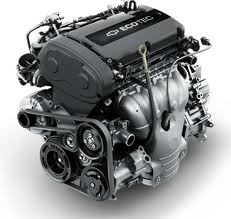 If U.S. carmakers have anything to do with it, diesel engines will soon lose the image of being primarily for delivery vehicles and semi-trucks.
European drivers have happily gone the diesel route for decades because of their high performance value and fuel efficiency, but Americans have been slow to adopt the vehicles. The perception among most consumers is that they’re noisy, smelly and slow, but changes in diesel technology mean that’s not true anymore.
Manufacturers like Mercedes-Benz, Porsche, Audi, BMW and Volkswagen have all attempted to sell consumers on the attributes of diesel vehicles, yet they still only amount to roughly 3% of the market, a figure that’s about the same as hybrid sales. In Europe, diesel-powered vehicles amount to about half the auto market.
Automakers are geared to make a big push to convince U.S. buyers to embrace diesel technology. New CAFE (Corporate Average Fuel Economy) laws http://www.nhtsa.gov/fuel-economy that require an increase in fuel economy to the equivalent of 54.5 mpg for cars and light-duty trucks by 2025, means that manufacturers are gearing up to find ways to meet those standards by all means necessary. They’re poised with new diesel models and new marketing efforts to convince buyers to buy them.
GM is leading the pack of automakers with the Cruze 2.0 Turbo Diesel http://www.chevrolet.com/cruze-diesel-reveal.html that it just introduced at this year’s Chicago Auto Show. The vehicle, which begins mass production in Ohio this spring, will hit showrooms this summer with a price tag of $25,695. That figure is higher than that of the gas version of the vehicle, which is priced at $17,940. However, the company rationalizes the rise in price by saying that the average cost in the U.S. is roughly $28,000 per vehicle. The diesel’s gas savings at a combined city and highway rate of 42 miles per gallon makes the price increase well worth it. They estimate the car will get 50 mpg on the highway. GM says the engine has an impressive 248 lb.ft. of torque and can accelerate from 0 to 60 mph in a speedy 8.6 seconds. They expect sales of the Cruze diesel to be roughly 10,000 vehicles per year, mostly on the East and West coasts.
GM’s press release about the vehicle boasts: “Cruze Clean Turbo Diesel fills an important role in Chevrolet’s diverse four-cylinder lineup, and is primed to win over diesel devotees and compact car buyers with its performance, torque and fuel economy. We leveraged engineering expertise from around the globe to develop a world-class, low-emissions engine to give U.S. and Canadian customers a car that’s both fun to drive and practical at the pump.”
The Cruze is the first diesel sedan that GM has made since it unleashed the Chevrolet Chevette diesel in 1986. Oldsmobile’s diesel version of the Cutlass Supreme in 1979 is considered by auto aficionados to be one of the worst cars ever manufactured. Its colossal failure is blamed for turning Americans against the vehicles and making diesel a dirty word, according to Edmunds http://www.edmunds.com/.
With gas prices continuing to escalate, 2013 might just be the year that auto buyers learn to love the diesel engine. According to Diesel Technology Forum http://www.dieselforum.org/, U.S. sales of diesel vehicles rose by 35% in the first quarter of 2012, over 2011. Diesel-powered engines are estimated to be 30 to 35% more fuel-efficient than gasoline engines. They also produce a higher rate of torque, which gives them more power.
The trade-off in diesel power and fuel efficiency is the higher price of diesel fuel, which is averaging around $4 a gallon, versus about $3.56 for gasoline. But then again, diesel engines tend to last longer than those powered by gas, and diesel vehicles have a higher resale value.
As more car makers jump on the diesel bandwagon, consumers in the U.S. will see more vehicles hit showroom floors in the near future. According to the Practical Environmentalist, http://www.practicalenvironmentalist.com/, the 2012 diesel lineup includes the Volkswagen Beetle TDI, the BMW 33d Sports Wagon, the Mercedes GL250 BlueTEC SUV and the Porsche Cayenne Diesel SUV. They estimate that more rigorous diesel emissions standards in Europe as of the year 2014 will result in more diesel vehicles crossing the Atlantic to U.S. markets.
Other new American diesel models include the Jeep Grand Cherokee sport utility vehicle and the Mazda6 sedan. Time will tell if consumers on this side of the Atlantic will embrace the benefits of diesel power over gasoline.
Advocates for Highway and Auto Safety (Advocates) recently released their 2013 Roadmap of State Highway Safety Laws which is its 10th annual report card. It grades all 50 states and the District of Columbia on the performance of 15 basic traffic laws. The report this year focused on new incentive grants which are to be used to encourage states to toughen teen licensing and distracted driving laws. The grants will also be used to affect ignition interlock laws and occupant protection programs.
Jacqueline Gillan, president of Advocates said at a new conference, “The traffic safety progress we’ve made since 2005 is at risk of being undone. Several states have been moving backwards and most states are not moving at all to enact lifesaving laws. Last year only 10 state highway safety laws were enacted, in contrast to 16 laws passed in 2011 and 22 laws passed in 2010. Now is the time for states to act and get the ‘triple bonus’ of preventing deaths, saving taxpayer dollars, and reaping additional federal dollars available from the MAP-21 grant program. Every state legislature is in session this year and there is no excuse for inaction by Governors and elected leaders.”
Preliminary data from the National Highway Traffic Safety Administration (NHTSA) shows the largest increase in traffic fatalities since 1975. There has been a 7.1 percent increase in auto accident deaths during the first nine months of 2012 when compared to the same time period in 2011. In an average year roughly 33,000 people are killed and 2 million are injured. The cost of auto accidents is estimated at $230 billion a year which equates to roughly $750 per person in the United States.
Dr. Adewale Troutman, President, American Public Health Association said in a press release that “In addition to the loss of life and debilitating injuries, there are many other health impacts of traffic crashes, such as costs of medical care and lost work days and productivity. These ‘hidden’ health care costs of transportation-related injuries are at an unnecessary and unacceptable level. They are putting undue financial burdens on our families and on our state and federal budgets, and ultimately on taxpayers.”
The report looked at 15 highway safety laws including seat belt, booster seat and motorcycle helmet measures in addition to the laws effecting teens and texting.
States were given one of three ratings based on the effectiveness of the 15 laws. Rankings were Green (Good), Yellow (Caution – state needs improvement), and Red (Danger – state falls dangerously behind).
The best states according to the rankings were: New York, District of Columbia, Illinois, Kansas, New Jersey, North Carolina, Oregon, Delaware, Georgia, Rhode Island and Washington.
The worst ranked states were: South Dakota, Mississippi, Arizona, Montana, Nebraska, Wyoming, Iowa, Florida, Missouri, New Hampshire, North Dakota, South Carolina and Texas.
During 2012 a total of 10 states enacted safety laws which were recommended by Advocates’.
- Arizona – Booster Seats – children ages 4 through 7
- Ohio, Michigan and Wisconsin – Graduated Driver Licensing (GDL) for teen drivers
- Missouri, Virginia and Mississippi – Impaired Driving
- Alabama, Idaho and West Virginia – All-Driver Text Messaging Restriction
The report found there is still a lot of work to do. A total of 316 new laws need to be passed in all states and D.C. to fully meet the recommendations by Advocates’.
By Aaron Crowe
 Buying a Corvette — the iconic American sports car — is expensive enough at a base price of $56,000 for the 2014 Chevrolet Corvette Stingray. Now try insuring it.
Introduced at the Detroit Auto Show on Jan. 14, the latest Corvette is the seventh generation of the car and replaces the C6 generation of 2006-13. The original Sting Ray (two words) came out in 1963 and sold for $4,257, and the original Corvette was introduced 60 years ago in 1953 for $3,498.
Insuring a sports car can be more expensive than a family car because the faster cars have a higher risk for insurers. Corvettes are two-seaters that are more likely to be stolen or broken into, and their low frame makes them more likely to be in a rollover when they crash, says Dale Jewett, technical editor at Autoweek.
While he’s not versed in insurance costs, Jewett says the Corvette, like many sports cars, will likely have higher premiums because it has qualities that insurers consider risky. The 2014 Stingray sits on a light aluminum frame and has a 450 horsepower engine that can get to 100 mph in a few seconds.
“From everything I can see, it’s a modern, comfortable, technologically advanced sports car,” Jewett says.
Any sports car can be expensive to insure for a variety of reasons, with speed high on the list, says Tim Dodge, head of communications for the Independent Insurance Agents & Brokers of New York, which doesn’t quote insurance prices but works with agents.
“There’s the assumption that anyone who buys a sports car drives it at a fast speed,” Dodge says.
And not only is the car expensive to buy, it’s probably costly to repair, he says.
“There’s probably going to be a relative few car insurers that are willing to insure a car like that,” he says, adding that bigger insurers might be more willing to take on the risks.
Security precautions such as garage alarms could be required by insurers. “A car like that can definitely be a target for theft,” Dodge says. How much protection a car provides its occupants in a crash is also a concern.
Since Corvettes retain their value so well, many drivers of the older models take good care of their cars and don’t drive them much, says Brian Duncan, a Seattle resident who owns four Corvettes and plans to buy the new Stingray. Duncan says he typically keeps a Corvette for 10 years before selling it for more than he paid.
He once bought a used Corvette from an owner who never drove it in the rain, and wouldn’t let Duncan drive it home in the rain after buying it from him.
Duncan, 52, says he pays less than $70 a month to insure a Corvette. The price is low because he’s an older driver with a clean driving record, and he also doesn’t drive them much, he says, mostly in local car shows.
Most major car insurers offer discounts for low mileage drivers. Driving less than 7,500 miles a year can reduce premiums 10-12%. Changing driving habits from “drive to work” to “pleasure driving” can drop rates 5-15%.
Duncan estimates he drives 3,000 to 4,000 miles in a Corvette each year, a low enough amount to help keep his insurance premiums low.
A Corvette can get to 120 mph in six seconds, which Duncan sees as making it less reckless than other sports cars because it doesn’t take as long to get a Corvette to more than 100 mph. Someone wanting to test the car’s speed will get it to 100 mph in a shorter distance, meaning less time driving fast, he says.
“I’m not one who likes the attention of driving the car. I could care less,” he says. “It’s a fun car to drive.”
As with many Corvette fans, Duncan says the new Stingray has an appealing look and is supposed to have seats that are more comfortable in turns.
“They’re a great driving car,” he says of Corvettes. “They have a ton of storage. The only downfall is they’re only two-seaters.”
As far as downsides go, that’s not much for a sports car.
Aaron Crowe is a journalist who covers auto topics for CheapCarInsurance.net.
By Aaron Crowe
 For something that wasn’t designed to kill, a car is more likely to kill you than a gun.
Motor vehicle traffic deaths killed 33,687 in 2010, more than the 31,672 firearm deaths that year, according to data from the Centers for Disease Control and Prevention. The numbers are close, equating to 10.9 deaths from car accidents and 10.3 from guns per 100,000 people.
That’s a lot of non-medical deaths that get both sides of the gun debate talking about if guns should be licensed and users tested as much as cars are. There are a lot more controls on who can drive a car and what condition the car is in — from driver’s licenses to insurance and safety requirements — than there are for firearms.
But because guns are less deadly than cars, there’s no need to have mandatory training for guns, the pro-gun argument goes.
Firearm fatalities are projected to exceed traffic fatalities for the first time in 2015, according to a Bloomberg analysis. Based on the 10-year average trend, Bloomberg projected that firearm deaths would rise to 32,929 and motor vehicle deaths would drop to 32,036, marking the first time gun deaths would exceed autos.
Ten states had more guns deaths than automobile deaths in 2009, possibly showing a trend that Bloomberg projected.
But Bloomberg’s statistics include suicides by guns, which the CDC reports as 65% of gun deaths, and suicides should be removed from the equation because they’re not accidents or the killing of someone else, says Mike Arman, a long-time gun owner who lives in Florida.
“Can you really control that?” Arman says of suicides. “Because if someone wants to kill themselves and they can’t get a gun, they’ll get something else.”
Like many pro-gun arguments, that’s misleading, says Margot Bennett, executive director of Women Against Gun Violence. Suicide rates escalate with a gun in the house, and without one people are more likely to reconsider killing themselves, Bennett says.
While auto deaths have dropped from more regulation, education and safety features, gun regulations have become more relaxed, she says.
“Cars were not designed to kill people,” Bennett says, adding that because guns are meant to kill, they should be regulated more.
“When somebody dies in a car accident, it really is an accident,” while when a gun is used, it’s fulfilling its purpose of killing, she says.
Gun owners should take a basic firearms course — but it shouldn’t be mandated by the government, as some states do, Arman says. It’s a slippery slope, he says, that could lead to records that officials could one day use to track down and confiscate guns.
That slippery slope argument is fear mongering among gun supporters, Bennett says.
“Is anybody coming to take away our cars?” she asks. “Because cars have been legislated and regulated to death but no one is taking away our cars.”
There are only so many safety devices that can be put on a gun, says Jason Hanson, who teaches how to get a concealed firearms permit online. Picking up a gun and flipping off the safety makes it easy to fire, Hanson says.
“There’s a lot more margin for error with a car and with a gun there’s a lot less,” he says.
More people may die from cars than guns simply because cars are used daily, Hanson says. “People are doing a lot more driving than gun handling,” he says.
A list compiled by Bennett’s group, Women Against Gun Violence, points out that cars are much more heavily regulated than guns are. Here are some it cites:
User training/probationary period: To drive, a learner’s permit from age 15 to 16 recognizes the inexperience and differences in biological capacity for judgment inherent to youth, but there is no probabtionary or youth level gun permits.
User age requirement: Drivers must be 15 to get a learner’s permit and 16 to hold a license. To own a long gun federal law requires owners to be 18, and 21 to buy a handgun. The age requirement only applies if buying from a licensed seller. The 40% sold privately require no age or background check.
License renewal: Driver licenses are renewed periodically, with the driver’s eyesight and knowledge of rules of the road checked. Unless you’re a felon or another prohibited user, your guns are yours for life.
Prohibitions during operation: Alcohol use and distractions such as texting while driving are illegal. No such regulations exist for gun use. A firing range in George obtained an alcohol permit last year.
Safety inspection: Smog checks for cars can include mandatory checks for working brake lights and headlights. No initial or follow-up inspections are required to check if a gun or its safety mechanism are functioning properly.
Insurance: Auto insurance is mandatory, along with financial incentives to drive safely and have safety features on cars. No such insurance is required of gun owners, including liability insurance.
Safety equipment: Air bags, seatbelts and ignition safeties are required safety equipment for cars. The U.S. Supreme Court ruled in 2008 that trigger locks for guns are unconstitutional.
Hanson, the concealed-carry permit instructor, says that while he doesn’t want gun training to be mandated, voluntary training is a smart move for any gun owner.
“Don’t ever carry a gun if you’re not willing to use it and you’re not trained,” he says.
Aaron Crowe is a writer for CheapCarInsurance.net.
By Aaron Crowe
 One of the most difficult situations to discuss with an elderly relative is whether they should be driving anymore.
Some elderly drivers might take it as a personal affront that their freedom to drive when they want is being taken away. Family concerns not only include the health of the elderly driver, but the potential harm to others and property, says Dr. Marion Somers, an elder care expert and author of the book “Elder Care Made Easier.”
In taking the car keys from her elderly father, Somers also had to deal with the important issue of how he would get to appointments. They covered that by selling his car and putting the money toward a transportation tab with a local taxi service; riding together by bus to many appointments so he could get used to using public transportation; having the local senior center and other groups pick him up at home; move a regular poker game with friends to his house; buying a three-wheeled adult bike with a basket; setting up deliveries from a local grocery store; and having prescriptions delivered.
Knowing when an elderly driver shouldn’t be driving any longer isn’t easy, but it’s an important discussion to have.
Elderly driving statistics show that it’s a discussion worth having. NHTSA data on elderly drivers show that they accounted for 13% of all traffic fatalities and 18% of all pedestrian fatalities. A 1997 NHTSA study found that on the basis of estimated annual travel, the fatality rate for drivers 85 and older is nine times as high as the rate for drivers ages 25-69.
As the youngest of six children, Liz Dunlap Hersey, a marketing director, found the task of taking the keys from an elderly driver fell to her when her mother was in her 80s and unable to drive safely. Instead of going it alone in telling her mom she shouldn’t be driving anymore, Hersey went to an auto mechanic — who was also an old friend — to back her up.
“When we took her car in for maintenance, he reminded her that due to the age of the car, she would need to keep investing in it to keep it in safe working order,” Hersey wrote in an email. “I used that as the launching point into a discussion on driving safety in general and how it might be time she give up rather than keep dumping money into a losing proposition.”
Her mother agreed to stop driving, and an age issue was rationalized as an economic one.
Beyond the signs of Alzheimer’s disease or dementia, there are other signs that relatives should look for in elderly drivers, says Letha Sgritta McDowell, an elder law attorney in Virginia who advises families on when and how to take the keys away.
They include scrapes and bumps on their car, getting lost, swerving often, driving slow on a highway, and physical ailments such as slow reflexes and being unable to turn their head enough to check a blind spot, says McDowell, who adds that signs of dementia may take years to spot.
Since the elderly have more physical problems than other drivers, it’s natural for them to have difficulty driving. If you’re walking with a walker, do you have the strength to lift your foot quickly to respond to a merging car that hasn’t signaled?
Mandy Chizek, president of Charism Elder Living Services, says the elderly should be aware of how their bodies and response times change with age. Cardiac disease can slow thinking time due to blood flow changes to the brain, arthritis can make movement painful, neurologic disease such as strokes can cause not knowing how hard the brake or gas pedal is being pushed, and prolonged reaction time can lead to poor or urgent decision making and the ability to move feet from gas to brake pedal quickly.
Aging eyes can also affect elderly drivers, Chizek says. They include glaucoma and cataracts that can lead to halos around lights and make driving at night difficult, the inability of the eye to respond to changes in light and dark exposure or prolonged night blindness due to oncoming headlights after passing another car at night, and strokes and macular degeneration leading to distorted vision in one eye.
While the incident last summer of a 101-year-old driving into a crowded market is rare, it points out that some elderly drivers should not be driving if they can’t do it safely.
If they’re driving and they shouldn’t be, there’s the question of if they’re negligent,” McDowell says.
Elderly drivers are typically resistant to having their driver’s license taken away, so some states make it easier for a relative to do. Virginia, for example, allows anonymous reporting to the DMV of dangerous drivers, and the state will send the elderly driver a letter telling them to come in for a driving test. If they don’t come in they could lose their license.
In Tennessee, Becky Blanton had to make the hard choice of taking her mother to court to have her license taken away after her mom got in three accidents in a week because she had dementia.
Blanton said the state police told her they couldn’t stop her from driving unless she chose to go to the DMV and get tested. Blanton had to get the courts involved to prove incompetence, and she ended up having to put her mom in a nursing home that treats Alzheimer’s.
It was a tough choice but one that may have saved someone’s life — possibly her mother’s.
Aaron Crowe is a personal finance writer who writes about auto insurance for CheapCarInsurance.net.
By Aaron Crowe
 Nothing gets your heart pumping like a good song. The lyrics to a Bruce Springsteen song or the pop song of the month might stay in your head all day, but the joy of listening to a fun song in the car can be expressed while you’re driving.
That could be good — making a long drive more enjoyable — or it could give you a lead foot and a speeding ticket.
Researchers in the United Kingdom found that certain songs, and certain types of songs, resulted in more accidents, and others gave drivers more concentration to be focused on the road.
The survey points out that the “golden oldies” were the most popular driving songs, and that types of music thought to have a relaxing effect on the listener didn’t lead to a more tempered driving style.
Blues fans were found to be the most likely to be caught speeding, followed by listeners to country, reggae, rap and hip hop, classical, and easy listening music.
Country music listeners were most likely to have an accident, followed by classical, easy listening, reggae, blues, and rock and pop.
Drivers who listened to talk-radio or nothing were found to be more focused on the road, with only 22% admitted to having a minor accident, compared to 78% of drivers who listen to music.
Everyone has their favorite songs to drive to, and what may lead to speeding for one person may calm another to drive slowly.
Former traffic school teacher Walter Meyer remembers hearing often the excuse from young drivers that “this really great song came on the radio and I sort of lost track of things and suddenly I was speeding,” Meyer wrote in an email.
But one of his elderly students had an interesting excuse: “It wasn’t my fault, it was Glenn Miller’s.” The song “American Patrol” came on the radio, and having grown up a Big Band fan, she couldn’t resist driving fast to the peppy song.
Meyer’s advice to his students who insisted on driving when drowsy was to avoid familiar music or music they liked that could easily lull them to sleep. He suggested listening to music they don’t know — such as rap or country — to keep them more alert and not allow them to get lost in a song they don’t know.
Music tastes are subjective, but we wanted to offer our own suggestions — with some help from music fans — for the best and worst songs to drive to. We don’t have any proof that they’ll lead to fewer accidents or speeding tickets, but they’re worth considering to either keep in the car turn them off if they come on the radio.
10 best songs to drive to
1. “Born to Run” by Bruce Springsteen. The entire album is great, and all of the songs are great to drive to, but “Born to Run” is fun to sing to and drive fast. Just don’t get caught.
2. “Should I Stay or Should I Go” by The Clash. Yes, go, but don’t drive too fast.
3. “Radar Love” by Golden Earring. Suggested by Ann Marie van den Hurk, a public relations executive, this song has a beat that catches you from the start and may give you a reason to look out for radar detectors.
4. “Beat It” by Michael Jackson. Music blog writer Fred Goodall surveyed his readers and found that this upbeat song was their favorite.
5. “Just What I Needed” by The Cars. Another song that’s easy to sing to. Jennifer Vanderslice, who suggested this song, remembers driving when she was 17 to this hit song and getting a heavy foot. She drove too fast around a curve and had to swerve to avoid hitting a car, but the rear of her car slammed into a mud hill on the other side of the road. A good memory, though her accident is a reminder to not hit the gas when a good song comes on the radio.
6. “Pump It Up” by Elvis Costello. It has nothing to do with pumping gas, but this peppy song puts Jennifer Towner, who suggested it, in a good mood while driving.
7. “25 Miles” by Edwin Starr. It’s a song about a man walking 25 miles to see his lady, but it’s still a good song about being on the road and watching the miles tick away, says fan April Whitney, an entertainment publicist at Chronicle Books.
8. “Wheel In The Sky” by Journey. Any of this band’s greatest hits are good to drive to if they’re upbeat with rolling beats, suggests John Noland, who sells car accessories.
9. “Girls Lie Too” by Terri Clark. Many country songs are good to sing to, but this one hits the spot.
10. “Movin’ Right Along,” sung by Kermit and Fozzie. This song from the first Muppet movie, as suggested by Dave Waldman, is a fun one to get the kids singing along during a road trip.
10 worst songs to drive to
1. “Highway to Hell” by AC/DC. Another song suggested by Goodall in his informal survey of readers. The reasons should be self-explanatory.
2. “I Can’t Drive 55” by Sammy Haggar. Another self-explanatory song that could lead to driving too fast and may not help your case if a police officer pulls you over for speeding.
3. “Pour Some Sugar on Me” by Def Leppard. The song is popular in strip clubs, but it’s not safe in the car “due to the extreme urge to throw your hair all over the place any gyrate,” says Sharon Rosenblatt. Lesson: Don’t headbang in a car.
4. “Summer In The City” by The Lovin’ Spoonful. It’s a great song, says Steve Silberberg, but any song with car horns blowing or ambulance noises is bad because drivers can mistake it for the real thing.
5. “Bat Out Of Hell” by Meat Loaf. This was the top song in the UK study cited above that led to blues music listeners to get speeding tickets.
6. “Born To Be Wild” by Steppenwolf. It’s a great song, no doubt, but it’s so good and catchy that it could lead to fast driving and accidents.
7. “Don’t Stop Me Now” by Queen. An excellent song but a title you don’t want to explain to an officer if you’re stopped for speeding.
8. “Beethoven’s 5th Symphony.” Classical music was cited in the UK survey as leading to minor accidents. Could it be because fans were cranking the sound so hard and driving so fast to this song that they weren’t paying attention to the road?
9. “One Piece at a Time” by Johnny Cash. You can’t beat Johnny Cash for great country music. But remember that in the UK study, country music was high in leading to accidents and speeding. This song is about a man who stole a car one piece at a time from the GM plant he worked at. Be careful not to let your singing along lead to carelessness.
10. “Are You Gonna Go My Way” by Lenny Kravitz. A strong beat that may be a little too strong for potential speeders.
That’s our list. What’s yours?
Aaron Crowe is a journalist in the San Francisco Bay Area who writes for CheapCarInsurance.net.
 If you’ve stood on a street corner while a hybrid car zipped silently by, you might have wondered about the safety ramifications of vehicles that emit barely a sound when driving on battery power at low speeds.
While a reduction in noise pollution is certainly a plus, particularly in large metro areas, pedestrians, bicyclists and even other drivers rely on the sound of a car’s motor to alert them to its presence. People who are visually impaired are even more reliant on the sound of an approaching vehicle. Stepping out into the roadway because you think the coast is clear can have dire ramifications.
The U.S. Department of Transportation’s National Highway Traffic Safety Administration (NHTSA) http://www.nhtsa.gov/ aims to do something about the safety concern with a proposal under the Pedestrian Safety Enhancement Act (PSEA) that mandates hybrid and electric vehicles meet minimum sound standards to alert people to their approach.
“Safety is our highest priority, and this proposal will help keep everyone using our nation’s streets and roadways safe, whether they are motorists, bicyclists or pedestrians, and especially the blind and visually impaired,” said U.S. Transportation Secretary Ray LaHood. The NHTSA estimates that pedestrian and bicyclist injuries will be reduced by 2,800 during the life of hybrid and electric vehicles.
According to NHTSA statistics, electric and hybrid vehicles are 37% more inclined to hit pedestrians and 66% more likely to hit bicyclists than gasoline powered cars when they’re traveling at low speeds. At speeds over 35 mph, when the vehicles are noisier; they have the same rate of collision with bicyclists and pedestrians as regular vehicles.
A review of the 2012 Ford Focus Hybrid in the New York Times http://www.nytimes.com/ noted that “Battery-powered cars are intrinsically quiet, the motor sound falling between a whir and a whisper, but the Focus is deep-space silent, the quietest of the many electric cars I’ve driven.” That quietude will soon change.
Manufacturers of hybrid and electric vehicles will have leeway to design a variety of sounds for their vehicles, as long as they met sound standards that are detectable alongside street noise and ambient sounds when traveling under 18 miles per hour. At speeds over 18 MPH, the vehicles make enough noise to alert people to their approach without added sound.
In a whimsical effort to gather public input about possible sounds to install in hybrid and electric vehicles, NPR http://www.npr.org/ issued a call-out to listeners for suggestions. The most popular suggestion was the sound the Jetson’s flying car made in the 1960s cartoon series. Other suggestions included the sound of playing cards attached to bicycle spokes, the noise of a skateboard, the Beatles song, “Baby You Can Drive My Car” (beep beep, beep beep, yeah!), and the sound of Kermit the Frog singing, “It’s Not Easy Being Green.”
The NHTSA has come up with some less humorous suggestions for acceptable sounds to install in the vehicles, some of which are the current noises that a variety of existing gas-powered vehicles make at low speeds. To hear their suggestions, go to http://www.nhtsa.gov/SampleSounds.
 A new study from the National Highway Traffic Safety Administration (NHTSA) found that electronic stability control (ESC) has saved an increasing number of driver’s lives every year since the technology was required in all new vehicles.
ESC works by applying the brakes electronically on each separate wheel to help keep directional control of a vehicle when it senses a slide or unstable conditions in the car. The report estimated that between 2008 and 2010 electronic stability control had saved 2,202 lives.
The NHTSA report discovered that 634 lives were saved in 2008 and in 2009 a total of 705 lives were spared due to ESC. The numbers climbed even higher in 2010 with 863 lives being saved, 497 of those were in passenger cars and the remaining 366 were in light trucks.
Electronic Stability Control Helps in Rollovers
Another NHTSA study which was released over the summer broke down a steep drop that was seen in roadway injuries and deaths. The report found that it was very likely that the reason drivers were getting into crashes less and less is due to “remarkable improvements to vehicle safety.”
The study also found that there was a big drop in rollover accidents which is a type of crash that an ESC system is very good at preventing. While the rollover is a very rare type of crash, it is one of the most dangerous. The study showed that rollover accidents had dropped roughly 6 percent each model year between 2000 and 2008.
The National Transportation Safety Board (NTSB) releases a Most Wanted list each year which indicates the changes it would like to see on the roads and the cars driving on them. In the recent list they recommended ESC systems be required in commercial fleets in addition to passenger vehicles. The cited statistics from the Institute for Highway Safety that estimated that ESC prevented 439 fatal accidents every year in commercial vehicles.
David Strickland, an administrator with the NHTSA praised ESC in a recent statement, “NHTSA research has consistently shown ESC systems are especially effective in helping a driver maintain vehicle control and avoid some of the most dangerous types of crashes on the highway, including deadly vehicle rollover situations or in keeping drivers from completely running off the roadway.”
The Standards Started in 2007
In 2007 federal officials issued the first regulation in regards to ESC. They mandated that the life saving technology be installed in passenger cars and light-duty trucks using a phase in period. It required that all of these types of vehicles have ESC as standard equipment on their 2012 models.
The NHTSA claims that their estimates on the lives saved due to ESC might actually be a bit low. This was due to it being impossible to determine the exact number of cars that were equipped with ESC. They expect that over the next 10 to 15 years most vehicles on the road will be ESC equipped.
A recent report from the NHTSA found that electronic stability control has saved an increasing number of lives since it was required to be installed in new cars.
 A recent report from the National Highway Traffic Safety Administration (NHTSA), which recorded a two percent drop in roadway deaths, also found a big drop in the rate of drunk-driving-related fatalities. According the NHTSA, drunk driving deaths fell 2.5 percent nationwide in 2011 when compared to 2010 numbers.
The report broke the data down by state and found that the state with the biggest percentage drop was Maine. The number of alcohol-impaired deaths fell from 40 to 23 percent between 2010 and 2011, which translates into a giant 43 percent decrease.
New Hampshire came in a close second, logging a 40 percent decline in booze-related deaths. The state dropped from 45 deaths in 2010 to 27 in 2011. Idaho rounded out the top three with a 31 percent drop, going from 72 deaths to 50 in 2011. A total of 27 states saw a drop in alcohol related fatalities.
Unfortunately, not every state was a winner. In Oregon, road deaths related to alcohol jumped up from 70 in 2010 to 97 in 2011. This is a 39 percent increase and was the largest increase in the report. North Dakota saw a 39 percent as well, recording 64 deaths in 2011 versus 46 deaths in 2010. Colorado managed a second place showing with a 34 percent increase and 41 deaths. Alaska went from 16 to 21 deaths for a 31 percent increase.
Along with the report the NHTSA is ramping up publicity for its Drive Sober or Get Pulled Over ad campaign. According to Ray LaHood, the U.S. Secretary of Transportation, this message is especially important during the holiday season. In 2011, four percent of people that were killed in drunk driving accidents died during the second half of December.
In a statement Lahood said, “The holiday season can be an especially dangerous time on our nation’s roadways due to drunk drivers — that’s why law enforcement officers will be out in full force. Our message is simple: drive sober or get pulled over.”
A DUI Will Raise Your Insurance Rates
Driving drunk is dangerous and can result in not only a totaled car but also a huge increase in your car insurance premiums. A DUI will result in big surcharges that can easily double your rates for a first offense. Cancellation is also a possibility, leaving you with little choice but to join a high-risk pool, which will result in a giant increase in your monthly payment.
Industry experts warn drivers convicted of a DUI that their premiums will increase anywhere from 25 to 200 percent depending on the age of the driver. Teen and younger drivers will see a much bigger increase than older drivers. A second DUI will can result in an increase of 300 to 400 percent and in many cases your policy will be cancelled, as insurers will rate you as a driver that regularly engages in risky behaviors.
While many states have seen a decline in drunk driving related fatalities, many states saw an increase according to a recent report from the NHTSA. Being convicted of a DUI will dramatically increase your car insurance rates and could even result in cancellation.
By Aaron Crowe
If you didn’t get a Christmas gift for your car, then consider the many wonderful things available at the recently ended Consumer Electronics Show, or CES, in Las Vegas.
While some of the items may not be immediately available and are in the early planning stages, many are at least available now in limited form if not completely. Either way, there’s plenty to get excited about when looking for the latest electronic gadgets for your car.
Here are the top seven gadgets we recommend from CES for your car:
1. Self-driving cars. This seemed to be the biggest advancement for cars at CES with Google leading the way for computer-driven cars, though Google wasn’t at CES. But Audi was,  showing off its Piloted Driving system that has the car drive itself in traffic jams while you watch a movie or play games on the in-dash video console. Audi also demonstrated a car that can park itself in a specially designed garage equipped with laser guides after dropping you off.
Audi isn’t the only car maker with self-driving cars. Toyota and Volkswagen announced such plans this year, and Mercedes-Benz already has similar technology, according to MSN Money.
2. Vehicle diagnostics service. This GPS tracker from Delphi and Verizon isn’t the sexiest car gadget at CES, but it caught our interest for its ability to track your car and report engine problems to you through an app on a smartphone. An Engadget video shows how it can be used to see where your teen is driving, including how fast, and it can send alerts if the teen drives outside of a geographic area you’ve told them not to leave.
The item is a small plastic box that plugs into most cars sold after 1996 in the U.S. It communicates wirelessly with a smartphone or tablet. It has a lot of features that other apps have, such as being able to unlock your car remotely or start the engine — but its long list of features should make it worthwhile, depending on the cost. As with too many things at CES, the cost of the device hasn’t been released yet.
3. Garmin’s K2 glass cockpit. After driverless and automated cars, car accessories such as this were the most talked about in “car conversations” in social media posts at CES 2013,  according to an analysis by ForSight, a media analysis platform from Crimson Hexagon.
The 10.4-inch capacitive touch screen is in the front and center of the car, and a 12-inch digital gauge and information readout console is fixed just behind the steering wheel, according to an Engadget review. Realtime data is pulled through your connected smartphone or from a dedicated modem, allowing access to realtime traffic, prices at local gas stations, email, texts, sports scores, news and other data feeds. For safety reasons, drivers will only be able to operate the center panel when stopped, shifting to a text-to-speech system when driving. Pricing and release dates haven’t been set yet.
4. Inductive electric car charging. Qualcomm showed this off at CES, and it is already being fleet-tested in London. The system recharges an electric car that parks on top of a three-foot-square pad by transmitting power to a receiver mounted on the underside of the vehicle, according to Consumer Reports, which picked it as one of the top forms of car tech at CES 2013.. Park and charge your electric car without plugging in, as this video shows. Your car could someday be charged as you drive, with the pads installed in HOV lanes, for example.
5. Mobile Internet radio. Instead of waiting for your favorite radio show to come on at a specified time, listen to it on a podcast or whenever you want with various applications. This  year at CES, radio apps were the rage, jumping from your smartphone to the dashboard.
Dashboard computers will be able to run radio apps, such as through Ford opening its Sync AppLink platform to more developers, and GM also offering a software development kit to developers. The idea is to make it easier to find radio stations and shows you want to listen to, instead of being distracted by too much text or video games.
6. Cars of the future. As PCMag.com points out, you don’t go to CES to attend a car show, though that’s how it can turn out sometimes. One of the cars it liked the most was the Audi  R18 e-tron Quattro, a flashy car that looks like a racecar driven here from the future. It won the Le Mans 24 Hours 2012 and has a cockpit that looks like an Xbox controller.
The Dodge Charger Pursuit was also a favorite, designed with the Los Angeles Police Department. Its gadgets include infrared cameras, license-plate recognition, bullet-proof doors and a solar panel on the roof to keep the battery charged to keep all of those electronic gadgets running.
7. Nighhawk Bluetooth Microphone Combo System. Priced at $125, this device meets all of the requirements for hand-free phone use as required by most state laws, but it’s much  more than that.
A winner of the CES 2013 Design and Engineering Honoree award, it has a universal recording app for Apple and Android users to wirelessly record high-quality audio from up to 120 feet away. Users can clip a microphone to themselves, the interview subject or capture any other audio on their smartphone. Want to record a voice memo or record a conversation while driving? This will do it.
Buying all of those gadgets are probably out of your price range, so don’t go crazy trying to buy everything. And if you can’t buy any of them, you can at least dream until the next CES in January 2014.
Aaron Crowe is a writer who specializes in personal finance topics for CheapCarInsurance.net.
With a competitive insurance market automobile insurance carriers are looking to write more and more business, but of course they also want it to be profitable. One such way to  remain competitive while still writing the best drivers is a GPS like device for drivers, or a monitoring device for driving habits. This type of insurance is referred to as usage based insurance, pay as you drive insurance, or pay how you drive insurance.
Per Forbes September 30, 2012 edition one such carrier, Progressive, uses a driver’s habits based driving monitoring system, called Snapshot, there is no GPS involved. The device tracks how often a driver brakes hard, how many miles drive daily, and how frequently the driver drives between midnight and four AM. There is no tracking of speeding or the whereabouts of the driver, a concern for privacy advocates. Per the Progressive website the driver can only receive a possible discount for what they determine is good driving, the driver will not be punished or see their rates go up if Progressive notices poor driving habits. It is currently available in most states, and it is not mandatory in any state per Progressive’s website. The device is free, but a $50 charge if it is lost. Per the Allstate website, Allstate offers a very similar program called Drivewise, it is also a plug in device, and it is not a GPS system. It tracks the same driving habits as the Progressive system, and per the Allstate website the driver’s rates will not go up.
Other carriers have similar devices but GPS based. Per the State Farm website, State Farm utilizes a third parties GPS system, such as General Motor’s OnStar service. State Farm’s system has garnered a little more criticism since it is connected to a GPS device, privacy advocates are afraid of driver’s whereabouts being tracked and logged. State Farm’s system is also more comprehensive, with more criteria. State Farm tracks miles driven, acceleration and deceleration habits, cornering, and average speed. State Farm also only credits good drivers at this time; they do not currently surcharge bad drivers if the information received is shown to be more hazardous driving. One downside is that the driver has to purchase a supplementary system such as OnStar, if they do not already have it on their vehicle. GMAC Insurance offers the Pay as You Drive program as well, through OnStar only, yet it only tracks the amount of miles driven, per the GMAC website, they call it Pay As You Go.
There are two areas of concern with these programs. The main concern is privacy. With GPS systems privacy advocates complain that location data can be tracked and or sold compromising a driver’s privacy. Another concern is the punishment aspect. Will carriers eventually require all drivers to utilize the device and thus surcharge drivers they deem bad drivers per the data collected?
With more and more competition, and more and more drivers on the road, it is apparent that automobile insurance carriers will continue to devise new ways to write more profitable business, but at what cost to the consumer?
With the continued competitive nature of automobile insurance, individualized automobile insurance policies may be coming. No longer will drivers be grouped into one class, solely  based on age or other demographics.
Currently many states rate on basic categories, age, years driving, and other factors not really individualized to each driver. A very controversial method of rating drivers is based on an individuals credit score. It assumes higher rates for drivers with bad credit scores. This has been criticized as being discriminatory to the poor and most notably minorities, and marked as a bad practice by carriers similar to the banned practice of “red lining”, where companies used to not insure in bad neighborhoods. Currently several states do not allow this practice with regards to automobile insurance, such as Massachusetts.
Another such way of favoring good drivers uniquely is persistency rating. Persistency rating offers discounts for drivers who continuously have insurance with any insurance carrier for five or more years. Per the website Ballotpedia, California voted against such a proposition, currently California offers persistency or “loyalty” discounts to existing customers only. This is deemed discriminatory against the poor as well. For one financial reason or another perhaps an individual could not afford insurance in one of the previous five years. Although it was voted down, it was not by a large margin, and could always be introduced to the voters again.
All the other historical factors will most likely still be rated for. Driving to and from work or not, driver training, married, years driving, etc. Driver experience and good or bad driving records will of course still be accounted for. Someone with perfect credit but a horrible accident record will still pay more. The good driver will still be rewarded; continuous good driving will still lead to lower rates, and perks such as vanishing deductibles for no at fault accidents over a number of years.
These along with Pay as You Drive programs will truly take the “cookie cutter” insurance policy out of the picture. No longer will very different drivers pay practically the same in insurance premiums. Of course with more individualized policies the competition will become even fiercer, with all the automobile insurance carriers vying for new business. With so much competition and the ease of attaining quotes online, not only will carriers continue build up huge internet presence, they will make quoting as easy as possible, and offer as many discounts as possible to keep their business, with as simple a discount as going online for the quote.
The increased competition is good for the consumer, but should also help encourage better driving habits. The best way for a driver to lower their premium is to drive safely.
Writing that monthly check for your car insurance premium is never fun but if you have the right job you might be able to take a little bit of the sting out of it. Certain  occupations often come with a chance for an insurance discount. While not every insurer offers these discounts it is a good idea to check with your agent to see if you qualify.
Why do some job titles qualify for a discount while others don’t? It all comes back to risk. Insurers comb their data on a regular basis and have discovered that people who reach certain educational milestones and work in a particular field tend to file fewer claims.
While some insurers broadcast their occupational discounts, many of them keep quiet about them so be sure to ask. As with all discounts and rating factors, it will vary by state.
Here are a few of the more common occupations that can lead to discounted insurance rates.
Teachers
Most insurers offer teachers and college professors a discount. The discount rate will vary by insurer but 10 percent is pretty common. The insurer may require full time status so substitute teachers may be out of luck.
Other insurers offer special benefits for teachers. Waiving the deductible if a teachers car is vandalized on the school grounds is offered by some insurers and providing up to $3000 in coverage for educational materials or equipment owned by the school that is stolen from the car is not uncommon.
Military
A number of insurers will offer discounts to active and retired military members as well as family members. Some insurers deal mainly with military members and are able to provide specially designed policies for service men and women.
In most cases, military families can expect to receive a 15 percent discount. This often only applies to vehicles that are garaged on a military base. If the car is being stored for an extended period of time due to an overseas deployment, the discount bumps up to 90 percent.
Police and Fire Fighters
First responders are often given discounts, although not as generous. In most cases it runs around 5 percent. Insurers have discovered that first responders tend to live close to work, which leads to a short commute. They often work odd hours, many times at night so they aren’t driving during rush hour. All of these factors lead to few accidents and fewer claims, warranting a discount.
Scientists
Being a big brain can pay off in the premium department. Risk analysis shows that drivers with a bachelors of science degree or a math degree are involved in fewer accidents and file fewer claims so insurers are happy to offer a discount. The discount amount will vary depending on the state and insurer but look for between 5 and 15 percent. In most cases you don’t even have to work in a science related field, your degree is what counts.
Doctors and Nurses
All of those years in medical school are finally paying off with an insurance discount. Many insurers offer doctors and nurses up to a 15 percent discount. Again, the rates will vary by state. Dentists and veterinarians qualify as well and some insurers will offer a smaller discount to chiropractors.
Professional Organizations
Even if your job is not listed here, don’t lose hope. Many professional organizations have negotiated discounts with insurers. Check with any groups that you belong too; even college fraternities.
Many insurers offer discounts to certain occupations and professional organizations, the rate will vary by state and insurer.
The debate rages on in all states about elderly drivers. Every time an older driver is in an accident that seems preventable the general public questions if the driver is  really capable to continue driving at their age. Mandatory elderly driving testing is slow to take effect in most states, as it is considered unfairly discriminatory. Studies by the National Highway Traffic Safety Administration shows that elderly drivers seem to make more bad vision or slow reaction time accidents. The NHTSA statistics show the only other age group with more incidents than drivers 65 and older were young and/or inexperienced drivers. One such statistic shows that elderly drivers are in frequent fatal left turn accidents. Apparently theories are that they cannot view and/or time accordingly the oncoming vehicle and thus cut in front of the oncoming car causing a serious at fault accident. As the driver gets older the statistics become much worse. Drivers 85 and older fatality rates are nine times higher than drivers 25 to 69.
Some states do have different requirements for elderly or older drivers. California requires drivers over 70 who are involved in two or more accidents in a year to re-test. Of course, this is a little too late to some, but can skirt some views of discrimination.
Arizona has an accelerated license renewal program for drivers over 65, requiring more frequent testing, and mail in license renewals are not allowed after the age of 70. Of other big states New York has no requirements of license renewal or mandatory testing due to age. In Texas if you are 85 and older license renewal is every two years, and if the driver is 79 and older mail in renewal is not allowed. Florida only requires a mandatory vision test for drivers 80 and older. Pennsylvania has probably the most unique age based driving laws, at least with regards to the larger populated states. Drivers 65 and older have the option to renew every two years as opposed to every four. There is a sort of lottery you don’t want to win if you are 45 and older. A random mailing to 1,800 drivers per month is sent requesting the driver to provide medical and vision tests prior to renewal. Possibly the strictest big state with regards to older drivers is Illinois. In Illinois drivers 69 to 80 must renew their license every four years, 80 to 86 every two years, and drivers 87 and up must renew annually. If the driver is 74 and older there is no renewal by mail allowed. Finally the strictest requirement, drivers 75 and older must submit to and of course pass a road test.
The American Association of Retired Persons leads the discrimination charge. The AARP feels that age should not be a determining factor in one’s driving ability. They protest that if seniors are to be re-tested solely based on age then so be it for other age groups. If a driver has a perfect driving record from 16 to 70, why should they be forced to re-test simply because of age? With the elderly population continuing to grow, and still drive, the debate will continue.
Nissan Motor Co. in an attempt to reassure customers about the durability of the batteries in the all-electric Leaf are upping the current warranty. Nissan will be  notifying current owners as well as dealers early in the new year that Nissan will repair or replace the lithium-ion battery if it loses 30 percent or more of its ability to hold a charge up to 60,000 miles or 5 years, whichever comes first.
This is a big change from the current warranty, which doesn’t directly spell out battery coverage. The new warranty will also apply to all new Leafs being sold.
Andy Palmer, executive vice president of Nissan Motor Co. in Japan recently released the warranty change on mynissanleaf.com, the U.S. Leaf owner Web site.
The change is most likely a result of months of arguments between a number of Leaf owners in the Phoenix area and Nissan. The Phoenix owners have been claiming that the batteries in their Leaf are aging much quicker than Nissan had led them to believe. This can be a very expensive problem as the Leaf is completely dependent on the integrated lithium-ion battery system, which runs the vehicle. The battery is by far the most expensive component of the vehicle.
Batteries will eventually lose charge
Nissan was up front with owners from its 2010 launch that the rechargeable batteries in the Leaf would slowly lose the ability to hold a full charge, behaving much like cell phone batteries. According to Nissan Leaf owners, they were told to expect up to a 20 percent loss of charging capacity after five years of normal driving. Unfortunately, seven Phoenix owners claim they are experiencing capacity losses at much greater rates.
These complaints have hit the Internet and are spawning customer concern, which is affecting sales. Nissan recently starting marketing the Leaf in all 50 states and had forecast sales in the range of 20,000 cars by the end of the year. It seems unlikely that they will meet these sales goals, having sold only 8,330 Leafs through the month of November, down 5 percent from last year.
Nissan, concerned about the battery issues investigated the claims this summer, sending both product planners and engineers to Phoenix to investigate. They concluded that these drivers were putting twice as many miles on the cars as would be considered normal.
Most typical Leaf owners will not be affected by the new warranty coverage. According to a Nissan spokesperson, only Leaf owners that drive heavily or live in areas where the summer heat is extreme are likely to experience rapid battery deterioration.
One of a Kind Warranty
According to the press release, Nissan is now the “first and only manufacturer in the automotive industry to provide limited warranty coverage for battery capacity loss for electric vehicles.”
The release continues “Under an expanded new Electric Vehicle Limited Warranty, Nissan will protect against capacity loss in Leaf batteries that fall below nine bars, of the available 12 bars displayed on the vehicle’s battery capacity gauge, for the first five years or 60,000 miles in the United States, whichever comes first. For Leaf vehicles whose batteries have fallen below nine bars during this period, Nissan will repair or replace the battery under warranty with a new or remanufactured battery to restore capacity at or above a minimum of nine bars.”
Nissan is also planning to unveil a gauge improvement that will increase the precision of the battery capacity display.
Whether it’s because of sticker-shock at the price of a new car or a newly found focus on saving rather than spending, Americans are holding onto their automobiles  longer than ever. While the average period of ownership before a trade-in used to be two to three years, a recent survey shows ten years is now the national average.
A study conducted by AutoMD.com polled 4,000 consumers about their auto buying habits. When the numbers were crunched, it revealed that 78% of them plan on keeping their vehicle for ten years before replacing it with a new one. Fifteen percent say they’ll keep their car for eight to ten years, 4% for six to seven years, and 3% for three to five years.
However long you plan on holding onto your vehicle, are some tips to keep it in tip-top shape for the duration of ownership:
1. After you drive that new baby off the dealer’s lot, pamper it during the break-in period. Breaking in a vehicle properly means keeping the speed to 55 mph or less for the first 1,000 miles, keeping the RPMs below 3,000 during the initial hours of driving, and avoiding carrying heavy loads or pulling a trailer. Treating your vehicle with care during break-in means it will last longer without repairs.
2. Save your engine while it’s warming up, especially in cold weather. Racing your engine when you first start your car causes undue wear and tear because the oil hasn’t had a chance to circulate throughout the moving parts.
3. Accelerate slowly when starting out to ensure the oil has had a chance to circulate throughout the drive train.
4. As tempting as it is to start your car and go back inside to let it warm up during cold weather, it’s not a good idea. An idling engine results in incomplete fuel combustion, which causes oil contamination, soot on your cylinder walls, and eventually, damaged auto parts.
5. Drive steadily, without excessive breaking or rapid acceleration. This driving style puts less wear and tear on your engine, especially during excessively cold or hot weather.
6. Shift to neutral at red lights or when idling in traffic. This alleviates strain on the engine.
7. Driving with care will extend the life of your tires and suspension. Hitting curbs, potholes and road litter causes damage that’s either immediate or appears over time. Avoiding these obstacles saves wear and tear on your vehicle. It saves you money, too.
8. Follow your manufacturer’s advice on oil changes and servicing schedules. This ensures that your vehicle stays in top notch operating condition and saves on repairs and parts replacement over time.
9. Don’t opt for the cheapest gas if it means buying from an unknown provider who might be selling inferior fuel. You want the cleanest gasoline from a gas station that changes the filters on its storage tanks regularly. And never fill up while the tanker is refilling the underground storage tanks at a gas station. The filling process stirs up sediment in the tanks, which means it ends up in your tank, clogging your fuel filters and injectors.
10. If you’re going to store your car for a period of more than a few weeks, take steps to avoid damage. Fill up the gas tank to prevent condensation that can cause rust. Protect your car’s paint by washing and waxing it before storage. Don’t leave the parking brake engaged – it causes corrosion over an extended time period. If you live in a humid area, place a dry rag in the tailpipe to keep out moisture and reduce the risk of corrosion.
Following these tips will help your vehicle stay in great shape during your ten years of ownership, or however long you end up keeping it.
The development of wireless charging for electric automobiles is as important as wireless internet has been for computers and smart-phones. Green automakers see it as imperative for the future of electric cars – and the U.S. government is in agreement. Wireless charging technology is expected to translate the somewhat tepid public enthusiasm for electric vehicles into popular, widespread use.
The Department of Energy has pledged its commitment to the technology by committing as much as $12million in grant monies towards developing the ability to charge electric vehicles remotely in a way that’s feasible for widespread production throughout the U.S. Applicants for the grants will be tasked with developing and refining wireless charging technology, as well as applying it to a light duty electric vehicle and demonstrating its performance in a fleet of vehicles over a period of three years.
The technology is called static and quasi-dynamic charging and utilizes magnetic resonance coupling, which allows electric currents to be wirelessly transmitted between metal coils. The ultimate application of the technology would be its incorporation into electric highways and roads that would automatically charge vehicles as they travel. Until then, static wireless charging means that drivers can park their vehicle near a charging station and charge their battery remotely.
According the Journal of Applied Physics, the technology would be able to transfer around 10kW of electricity to a coil at a distance of 6.5ft with efficiency of up to 97 per cent. Resonant coupling wireless transfer uses two copper coils that are tuned to resonate at the same frequency. One coil is connected to an electric current and generates a magnetic field that resonates with the second unplugged coil. The result is an energy transfer through the air from the plugged-in coil to the unplugged coil.
The Department of Energy says that although widespread wireless charging faces a number of challenges in development, it’s a worthy goal for the future of electric powered vehicles.
By Aaron Crowe
Donating a car to charity is one of the few times when the donor, and not the charity, is the biggest winner.
And we’re not talking about the emotional or intrinsic benefits, though those are good too.
While the tax break for the donor shouldn’t be more than the car is worth, the charity may end up getting less money after a middleman takes a cut, or the car may be used by the charity for deliveries or other services, which will cost it in the long run by paying for the car’s upkeep.
Musician Anand Bhatt, who has donated three Oldsmobiles in recent years when he was buying new cars, says he has given to a private school or church that is small enough that he can see first-hand where the money is going.
Bhatt says he’s received tax breaks from $500 to $1,500 for his car donations. While everyone’s tax situation is different, Bhatt says it’s worthwhile to fill out a mock tax form with your estimated earnings to see how much you’ll get from donating a car worth $1,000, for example.
No matter how easy it is to donate a used car and get a tax break, there are things to look out for to ensure you’re donating to a legitimate charity. After all, you want to make sure you’re legally getting the tax break you want, and that a reputable charity will make the most of your donations.
Here are some places to start, according to Charity Navigator, a site that evaluates charities, and based on our interviews with people who have donated cars:
1. Give directly to the charity. Many charities don’t want cars delivered directly to them for the same reasons you wouldn’t want a clunker delivered to your driveway: It’s a lot of hassle that can be better solved by giving you cash.
Charity Navigator recommends avoiding for-profit intermediary organizations that advertise everywhere for car donations. They keep the majority of the money from your donation, with even reputable agencies keeping 50% of the car’s value, and some keeping 90% or more.
If the charity handles the transaction themselves, they’ll keep all of the profit.
2. Drive your car to the charity and transfer ownership. Instead of the charity having to pay someone to pick up or tow in your car, help it cut costs by driving your car in or towing it in yourself.
Some charities will ask you to leave the assignment of ownership space blank on the charity donation papers, Charity Navigator warns. Don’t do it. Without formally signing your car over to the nonprofit, you will be responsible for any parking tickets, or liable if it’s used in a crime.
Since the charity will likely sell the car as fast as it can, if the buyer doesn’t register the car, it will still be seen as your property under the law if you haven’t transferred ownership.
Robert Baker, a technical writer in New Jersey, had this happen to him when his car with a broken transmission was towed as a donation to the Salvation Army. Baker got a court summons a few months after he donated the car because the new driver got into a hit-and-run accident in Philadelphia with the repaired car.
Baker contacted the Salvation Army and about a week later says he got a notice that the issue was resolved, leaving him satisfied with the organization’s car donation process.
3. If using an intermediary agency, find out how much goes to charity. Because the IRS doesn’t require car donation agencies to contribute a set amount from the car’s proceeds, ask what percentage it gives to charity. Ask the charity how much it will get from your car. If they don’t know or won’t tell you, move on.
According to Charity Navigator, some state attorney generals are prosecuting the for-profit middlemen for advertising themselves as charities and misleading the public on how much money goes to charitable causes.
Jeff Vail, a safety director, says he donated a car to the National Kidney Foundation after looking at its website and calling the group for more information. Vail found out that it turns over 80% of his donation to research, and used 20% for overhead, which he found to be satisfactory with apparently no middleman connection.
4. Give to a 501(c)(3) organization. That’s the non-profit status the charity must have with the IRS to be listed as a public charity. Claiming non-profit status isn’t enough for a charity to get you a tax deduction. Organizations with a similar status — 501(c)(4) — are generally not tax-deductible, and include groups such as political organizations that can lobby the government, such as Disabled American Veterans.
5. Correctly value your car. New federal laws in 2005 changed how donated cars can be valued for tax deductions. The published fair market value of cars worth more than $500 can no longer be deducted. The new rules require the deduction to be determined once the car is sold and when the charity sends the owner a receipt indicating the exact amount the car was sold for at auction.
If the car is worth more than $500, complete IRS Form 8283 for noncash charitable contributions and attached it to your tax return.
If the car is worth less than $500, it’s among the exceptions the IRS allows for using the fair market value, or FMV, of your car to determine how much of a tax break you’ll get. You can’t just use the highest value listed for the year and make of your car.
FMV can also be sued if the charity keeps and uses the car, if the charity makes improvements to the car before selling it, or if your car is sold at a discounted price to someone with a low income.
Whichever way you value your car, be sure to get a receipt.
Aaron Crowe is a freelance writer specializing in personal finance topics for CheapCarInsurance.net.
What is the future of traffic? Depending on what urban center you live in, it could take an hour to drive ten miles. All these cars, where can they go? More and more  cars are on the road and it will most likely continue to increase. What solutions do major cities have or are planning on implementing to alleviate traffic problems? What does the future hold for traffic?
In Massachusetts one solution, albeit probably temporary was a project known as the Big Dig. The project took over twenty years and cost billions, it basically took Boston’s major artery into the city and put it underground, making it an “express” through the city, with few inner city exits. It also created a new tunnel to the airport. It expanded some public transportation as well with the creation of the MBTA’s, Silver Line. Studies theorized that there would be six hour traffic jams driving within ten miles of Boston. Traffic is still pretty bad in and out of Boston, not six hours but it’s now not in the top ten cities of problem traffic areas. Many other large cities have undergone, or are planning to completely overhaul their highway layout. Denver’s project was nicknamed T-Rex, the Transportation Expansion. Highways were added and widened, no tunnels were created, but light rail was also expanded. Unlike the Big Dig the project finished early and was under budget. Most major cities are constantly studying traffic problems in order to alleviate the problem of congested highways. Not only is congested traffic a headache for drivers, but stand still idling automobiles create an environmental pollution nightmare.
Major cities try to correct traffic problems with slightly simpler solutions such as car pool lanes, or not so simple, tolls to get in the city. Increase public transportation along with a tax deduction also tries to encourage people to leave their cars at home. The problem is, people love their cars and they love to drive. There are almost as many registered passenger vehicles in the US as there are people. Many households have more registered vehicles than drivers. The high cost of gasoline, tolls and parking isn’t really impacting traffic patterns in major cities.
What does the future hold? As the population increases there will obviously be more drivers on the road, even if it is one registered car per driver. Cities have implemented GPS to alert drivers of traffic situations in order to divert them from the congestion. Added car pool lanes hope to lessen traffic as well. Public transportation is constantly being increased and improved. Putting tolls in to reduce traffic obviously has it’s opponents. One reason is that only the wealthy will be able to pay the toll, and of course people don’t want more taxes and/or tolls in general. Tolls are part of the extreme measures, along with increased charges on parking meters, or getting rid of public parking all together, which can work two fold, open up lanes on streets and discourage people from driving into the city. Again, any fees associated with tolls, car pool lanes and parking are looked upon as unfair to the not so wealthy. To offset incentives are offered for public transportation in the form of small tax breaks. Solutions are hard to find, and traffic is always forecasted to increase as the years go by. It seems the only way to discourage congestion is the tax and fee route. Good or bad to some people, pay as you go methodology is one of the biggest talked about solutions to too much traffic, since you can only build so many highways near a city, and people love to drive.
On the surface having a limit of $100,000 on your policy may seem adequate. Everything costs more nowadays. The cost of building materials, cars, and medical  expenses keep rising. $100,000 of a combined single limit may not even cover half of a major accident where you are at fault.
Some states offer liability coverage as a combined single limit. Split limit options for insurance can be purchased as one limit for bodily injury liability, one limit for property damage liability and an aggregate for all limits combined. A combined single limit is a combined limit for bodily injury and property damage liability which also equals the total aggregate. Depending on how your limits are set up, they may not be enough.
A policyholder has a personal automobile policy with a combined single limit of $100,000. The policyholder is involved in an accident where they failed to come to a stop at a red light, striking another car sending that vehicle into a house causing extensive damage to the house and the car, and sending the other driver to the hospital with a severely fractured leg. The car wasn’t an extremely pricey model, but it was only a few months old and was a total loss which will cost $30,000. The house inflicted heavy structural damage and will cost $50,000 to repair. The injured driver sued for bodily injury and pain and suffering and was awarded $50,000, the $100,000 limit has been exhausted. A combined single limit will pay up to $100,000 for bodily injury and/or property damage liability, if combined the total is under $100,000, but no more. The difference will come out of the policyholder’s pocket. The overall limit of $100,000 in the end was not enough coverage. A combined single limit set-up like this could be sufficient in a different scenario and more beneficial over a $50,000 bodily injury limit, $50,000 property damage limit with a $100,000 aggregate. Using this same claim scenario but with lower claim judgments a $100,000 combined single limit could cover the damages. A lower valued car, and a less damaged house resulted in only $15,000 in property damage, yet the other driver was awarded $80,000 for their injuries. With split limits the property damage would be covered but the bodily injury would come up short, since only $50,000 would go towards bodily injury liability, the policy can not borrow the needed extra amount from the unexhausted property damage limit.
Regardless of how a policy’s limits are set, be it a combined single limit to satisfy both property damage and bodily injury, or split limits with separate limits for bodily injury and property damage, you should have enough to cover serious claims. It is surprisingly inexpensive to increase limits from $100,000 to $500,000 to even $1,000,000, and any insurance agent would be happy to quote such options. Pay a little extra now to save a whole lot later.
The latest federal statistics from the National Highway Traffic Safety Administration (NHTSA) were filled with good news for drivers, one of the key findings being that highway deaths in the year 2011 hit their lowest levels in over six decades.
Roadway fatalities dropped 1.9 percent last year continuing a downward trend that has resulted in a 26 percent decrease in overall traffic deaths since 2005. This has been welcome new to traffic and safety experts. The numbers were compiled from the federal Fatality Analysis Reporting System (FARS) system using the most recent and updated information.
The NHTSA report brought other encouraging news. The FARS numbers show that fatalities related to drunk driving dropped roughly 2.5 percent when compared to 2010 numbers. Overall, 36 states saw decreases in their traffic death numbers during the past year.
Ray LaHood, the U.S. Transportation Secretary said in a recently released statement “As we look to the future, it will be more important than ever to build on this progress by continuing to tackle head-on issues like seat belt use, drunk driving and driver distraction.”
While most crash numbers were good news, crashes related to distraction were not as encouraging. While the NHTSA recorded a 7 percent drop in distraction related injuries in 2011, the number of people killed in crashes blamed on distracted driving went up 1.9 percent. The NHTSA said, “This increase can be attributed in part to increased awareness and reporting”. As government and state agencies have acknowledged the dangers of distracted driving, reporting of distraction based injuries and deaths has increased.
Technology Is Helping
This is just one of many reports and studies that the NHTSA released this year which emphasized the long term declines of deaths and injuries on American highways and roads. In June, a report from the NHTSA attributed the big drop in accidents resulting in injury and fatalities to the safer design of today’s car. Advances like anti-lock brakes and electronic stability control have helped keep new vehicles on the road and under control, even under extreme conditions. Electronic stability control was found to have seriously impacted the chance of being in a rollover accident, one of the most deadly types.
Experts have been debating what the implications of lower crash rates and improved technology will have on insurance rates. Research firm Celant released a report entitled “The End of Auto Insurance: What Happens When There Are (Almost) No Accidents” this year. It looked at the latest advances in safety technology and predicted that the cost of car insurance will drop dramatically over the coming decades as accidents almost disappear.
The NHTSA recently released the latest crash and fatality figures. It found that 2011 continued the downward trend in accident and fatality rates. While most categories dropped, deaths attributed to distracted driving ticked up. Technological advances in safety features are credited for much of the decline in accident rates.

