

When shopping for car insurance, you might be surprised to learn that your credit score can significantly impact your premium. While it may seem unrelated to your driving ability, insurers use credit-based insurance scores to assess risk and determine rates.
In this article, we’ll break down how your credit score influences car insurance prices, why insurers consider it, and steps you can take to improve your score—potentially lowering your premium in the process.
Most insurance companies in the U.S. (except in states where it’s prohibited) use a credit-based insurance score to predict the likelihood of a policyholder filing a claim. Studies have shown a correlation between credit history and risk—meaning individuals with lower credit scores tend to file more claims, leading to higher premiums.
How Insurers Use Credit Scores
Insurers don’t look at your traditional FICO credit score; instead, they use a credit-based insurance score, which factors in:
- Payment history: Late payments or delinquencies can raise your rates.
- Credit utilization: A high percentage of credit usage may indicate financial strain.
- Length of credit history: Longer credit histories are often viewed as more stable.
- Types of credit: A healthy mix of credit accounts can be beneficial.
- Recent inquiries: Applying for multiple loans or credit cards in a short period may negatively affect your score.
States That Restrict Credit-Based Insurance Scores
Not all states allow insurers to use credit scores when setting rates. As of 2024, California, Hawaii, Massachusetts, and Michigan prohibit the use of credit scores in determining auto insurance rates. If you live in one of these states, your premium will be based on other factors, such as driving history and location.
How Much Can a Poor Credit Score Cost You?
The difference in car insurance costs between good and bad credit can be significant. According to studies, drivers with poor credit can pay 50% to 100% more for car insurance compared to those with excellent credit.
For example:
- A driver with excellent credit might pay $1,200 per year for car insurance.
- A driver with poor credit could see that rate jump to $2,400 or more per year.
That’s a $1,200 difference—simply due to credit score.

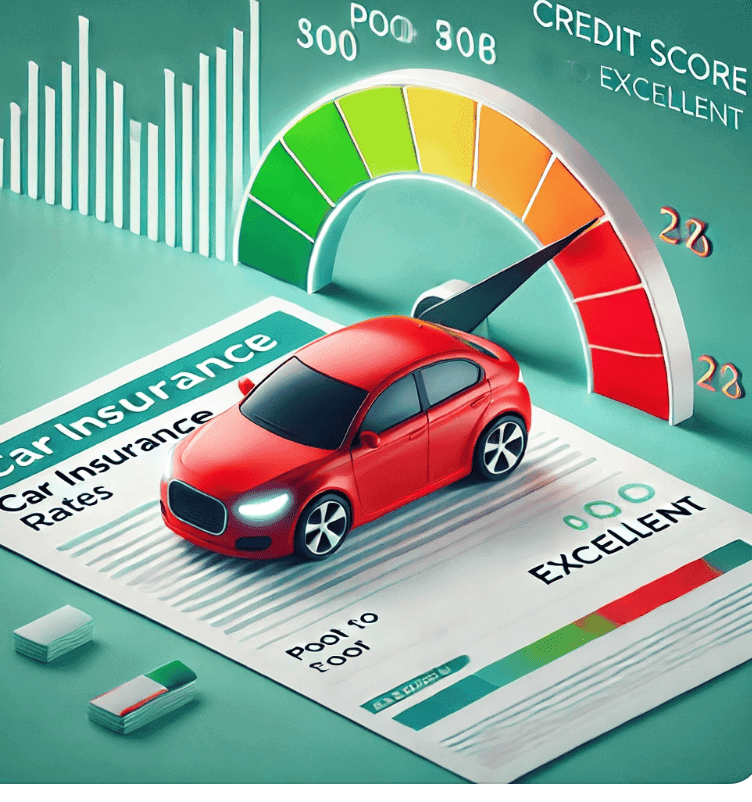
Visual Representation of Credit Score Impact on Car Insurance Rates:
How to Improve Your Credit Score and Lower Your Insurance Rates
The good news? Your credit score isn’t permanent. By taking proactive steps, you can improve your credit score and potentially lower your car insurance premiums. Here’s how:
1. Pay Your Bills on Time
Your payment history makes up 35% of your credit score, making it the most important factor. Setting up automatic payments for credit cards, loans, and utility bills can help ensure you never miss a due date.
2. Reduce Your Credit Utilization
Credit utilization—the percentage of your available credit that you’re using—should be kept below 30%, but ideally under 10%. Pay down credit card balances to improve your score over time.
3. Avoid Opening Too Many New Accounts
Every time you apply for credit, it results in a hard inquiry, which can temporarily lower your score. Limit new credit applications unless necessary.
4. Check Your Credit Report for Errors
Mistakes on your credit report could be dragging down your score. Obtain free annual credit reports from AnnualCreditReport.com and dispute any inaccuracies with the credit bureaus.
5. Keep Old Accounts Open
The length of your credit history accounts for 15% of your score. Closing old accounts can shorten your history and lower your score, so keep them open if possible.
6. Diversify Your Credit Mix
Having a mix of credit types (credit cards, auto loans, mortgages) can improve your score. If you only have one type of credit, consider adding another responsibly.
7. Become an Authorized User
If you have a trusted friend or family member with a good credit history, being added as an authorized user on their credit card can help improve your score.
Can You Ask Your Insurer to Recalculate Your Rate?
Yes! Once your credit score improves, you can request a reassessment of your insurance rate. Some insurers automatically adjust premiums at renewal, while others require you to reach out and request a review.
If your current insurer doesn’t offer a lower rate, consider shopping around for a new policy. Many companies provide free quotes, allowing you to compare options and find the best rate for your improved credit score.
Final Thoughts
Your credit score is a crucial factor in determining your car insurance premium. While it may seem unfair, insurers use it as a risk indicator. The good news is that by improving your credit score, you can lower your insurance costs over time.
If you’re currently paying high premiums due to poor credit, take action today. Implement smart financial habits, monitor your credit, and explore affordable car insurance options tailored to your needs.
Need help finding cheap car insurance? Compare quotes now on CheapCarInsurance.net and start saving today!
- About the CCI Author
- Latest Posts

Lauren Pezzullo is a seasoned strategist who specializes in helping drivers understand localized auto insurance rate trends. Her content for CheapCarInsurance.net blends SEO precision with user-friendly insurance guidance to help find the most affordable auto coverage.