

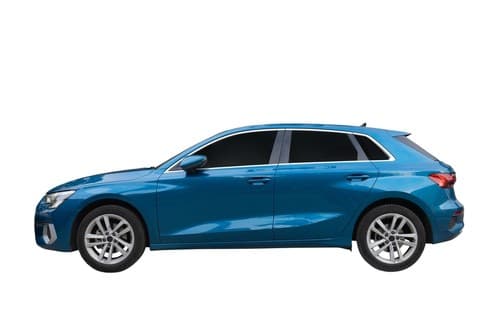
While lots of companies are working towards self-driving cars, like Audi and Google, few have thought about many of the drastic effects they will bring to society at large. While auditory processing has become quite easy for computers to do, visual processing is much more calculation intensive, which is why it is a hot frontier in modern computing as computer speed catches up. Let’s just hope the visual computation is better than the speech recognition software out there. Here’s just a brief insight into the possibilities that driverless cars will bring us:
Insurance companies attempt to remove:
Insurance companies will either get laws passed against them or go out of business, since insurance rates will drop through the floor, due to the fact that their track record is impeccable compared to human drivers. Perhaps Warren Buffet who owns Geico, should think twice about long term strategies. On the other hand, the insurance companies could kill the driverless car altogether because remember, getting laws passed in this country has a lot to do with how much money a business sector has to spend on lobbying. Just look at how taxi cab companies are passing laws in many places to prevent new competition by requiring a $1,000,000 investment in any new taxi startup for what purpose?
The moment a driverless car kills someone is the moment they will be under great scrutiny, but might I point out that such public fears will be exaggerated because although it doesnt make the news much, appliances like gas cooktops kill a decent number of people according to the CSPC, “About 200 people die each year from carbon monoxide poisoning associated with home fuel-burning heating equipment.” Perhaps the solution will simply be to sell insurance to the car manufacturers at that point, who in turn, build that cost into the car.
Extreme direct job displacement of more than 2.5%:
They will put truck drivers (like the Simpsons episode), taxis, bus drivers, delivery, limo drivers, and any other vehicle driving job out of business. In 2010, there were a total of nearly 4 million (3,754,500 to be exact according to the Beaureau of Labor Statistics) truck driving, taxi, bus, tractor, delivery driving jobs. With there being 154 million persons in the current workforce, this represents a loss of 2.5% of the workforce. Of course, self-driving cars will take some time to scale out, but consider that Foxxcon replaced 1,000,000 factory jobs virtually overnight in China. Similary, since cars can drive without breaks, a single vehicle could replace two or three regular vehicles when run around the clock. This will require that those trained in driving find a new occupation. Even companies like FedEx and UPS may eventually develop a way to offer curbside delivery as a lower cost alternative to human-powered option.
Job displacement will expand to all vehicles:
The technology will eventually lead to self-flying planes, boats, trains, and more. What should we take away from this? Help your kids avoid the thought of becoming a driver for a living. Maybe studying to become a fleet operator would be better, at least for now.
Roads will get less busy, and tailgating will become epidemic:
It is easy for a computer to drive bumper to bumper because they can capture and respond to changes in the car in front of you so much faster than you. How fast? As of Nov. 2012, Titan, a Cray XK7 system installed at Oak Ridge can run about 20 quadrillion calculations per second (20 petaflops, or in simple numbers, 20,000,000,000,000,000). The human brain, on the other hand, can barely manage roughly 100 trillion calculations per second (100,000,000,000,000), according to principle research scientist Hans Morvec, at Carnegie Mellon’s Robotics Institute. That means if a car has this processing power, it can think 200 times faster than you or I.
In reality, if we are talking strictly visual processing power, a robotic car needs much less computational power, because according to Theoretical physicist and former NASA executive, “It has been estimated that computational speeds of the order of billions of operations per second are required to match the visual capabilities of the human eye” which means an off-the-shelf computer can do this sort of calculation. Intel’s latest processors are approaching 200 gigaflops, so if such a computer can calculate at 100x the speed of us, then they can drive 100 times closer in theory. Using the 2 second rule, 60 miles an hour means you would have an 88 foot gap, so with a processor that can process 100x faster, your car could drive 10.5 inches away without any worry of the car in front of you, even if they slammed on their brakes. Tailgaters are bad enough without robots.
Less people will own cars:
Why own a car if you can get one to your house in minutes because it wont need a driver to get it to you? Just press the “Send me a car” button on your iPhone. It will become advantagous for communities to get together on such things (as long as everyone agrees to keep them clean), while commercial services will popup.
Dealerships will lose business:
Car sharing, more efficient transportation services (as explained previously), less accidents, and more predictable wear-and-tear because your kid isn’t driving it, will mean the decline of car sales.
Goodbye speeding tickets and government cash cows:
Well, we might all just assume that the driver can modify the speed at which the car drives, so maybe this isn’t going away just yet.
Goodbye rubbernecking! Commute time cut drastically due to faster speeds, more efficient driving:
I can’t begin to tell you how inefficient drivers are, especially during rush hour. Here are a few things that will be reduced:
Rubbernecking (cant believe this is still legal)
Inability to merge quickly, without slowing down
Congestion due to higher car density, because cars can drive bumper to bumper.
Other bad drivers (because of course, you are a perfect driver, we know).
This begs the big question: Is there really any job that can’t be done better by machine? I would say, the more abstract thinking that is required, the less likely, but even then, that’s also just a matter of time.
Airlines and other alternative modes of transportation will lose some business:
Why fly when your car can drive you while you remain working or sleeping? An 8 hour trip between San Francisco and Los Angeles is now a “bedtime commute.” As long as your car has a bed in it, you’re good to go. It would be ideal with a fuel range long enough to not have to fill up.
With all that said, lets hope that our cars are not based on Windows, otherwise, “crashing” will take on all new meaning.
- About the CCI Author
- Latest Posts

Brian O’Connell is a nationally recognized journalist who writes about how drivers can save money on car insurance. At CheapCarInsurance.net, he turns complex auto coverage pricing comparisons into easy-to-follow advice for finding the cheapest car insurance rates by state and city.